
Maybe you know a lot about Japan – in which case some of the things that surprised me about this country will sound laughably ignorant. Like despite being only about the size of California, it’s population is equal to half that of the US. And much of its land is not inhabitable (too mountainous, needed for agriculture) so folks are packed in pretty tight and there are a lot of strict rules about cars and such. Cremation is strongly recommended to the populace, if you opt for burial, they have to break some bones so you can fit into a small barrel they use instead of a casket, and everyone in the family goes into the same grave. It is incredibly clean, the people are very health conscious, and the toilets are hilarious and “medical” according to our guide.
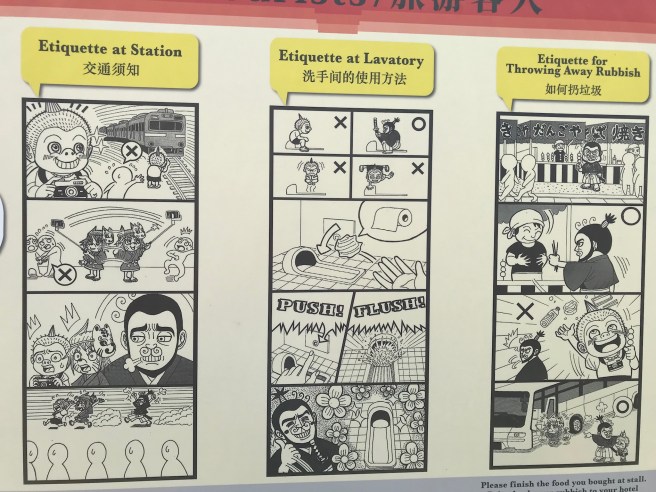
There are plenty of signs everywhere to tell you how to behave.
Kyoto is its prettiest large city, and former capital. It’s full of shrines and temples and parks. During the time we’ve been here, it’s been intolerably hot. Daytime temps are well over 100 degrees with humidity thick as pudding. Several heat related deaths are reported in the newspaper. Our guides circulate with fans, water, salt candy, damp cloths, and cold compressed air in a can.
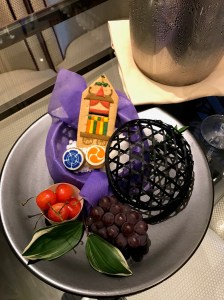
That being said, the Four Seasons in Kyoto where they stashed us is spectacular. We look out on a tea garden 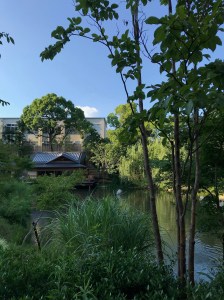 And the cookies they bring us look like jewelry
 Although the eggs Benedict at breakfast was a bit VIVID, even for Kev who generally has been able to eat any preparation
And neither of use went for the sparrows on a skewer we saw in the marketplace, which is really just an efficient way to dispose of the sparrows who are a pest to the rice farmers 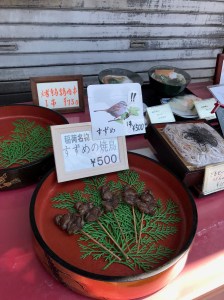
There are several spectacular sites, including the 10,000 Torii gates up to the Fushimi Inari shrine.
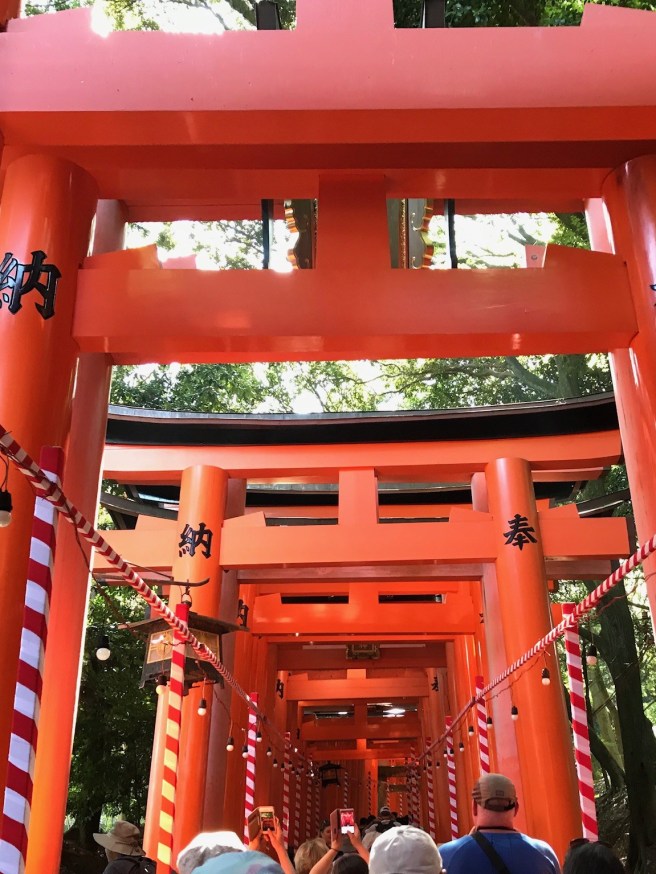
We made an offering to the Shinto God of that shrine -which looked like a fox and had something to do with commerce. There are like a million Shinto Gods and they each have their own specialty, although there is no Shinto ‘bible’ or holy book and the religion seems to be mostly about making wishes for good luck and offerings (usually saki) to ward off bad luck. The Japanese are big believers in luck. Wishes are written down on all sort of combustibles and later burned by the priests. And there is a protocol of purification that looks like this:
There are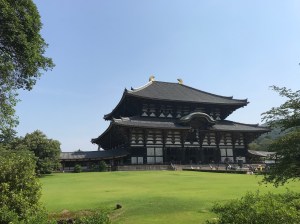 also a lot of Buddhist temples
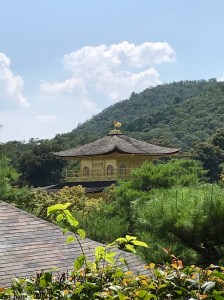 which is sort of ironic because Shinto shrines are where you go to request your hearts desire, and Buddhism is where you go to achieve freedom from desire. Each shrine and temple we visit we has been rebuilt. It seems every building in Japan has been a victim of natural disaster, earthquakes, volcanoes, tsunamis, fires (everything is built of wood which = FUEL) This golden temple Kinkakuji above was burned to the ground by a crazy monk who was imprisoned and his mother committed suicide out of shame. Because that’s what mothers do.
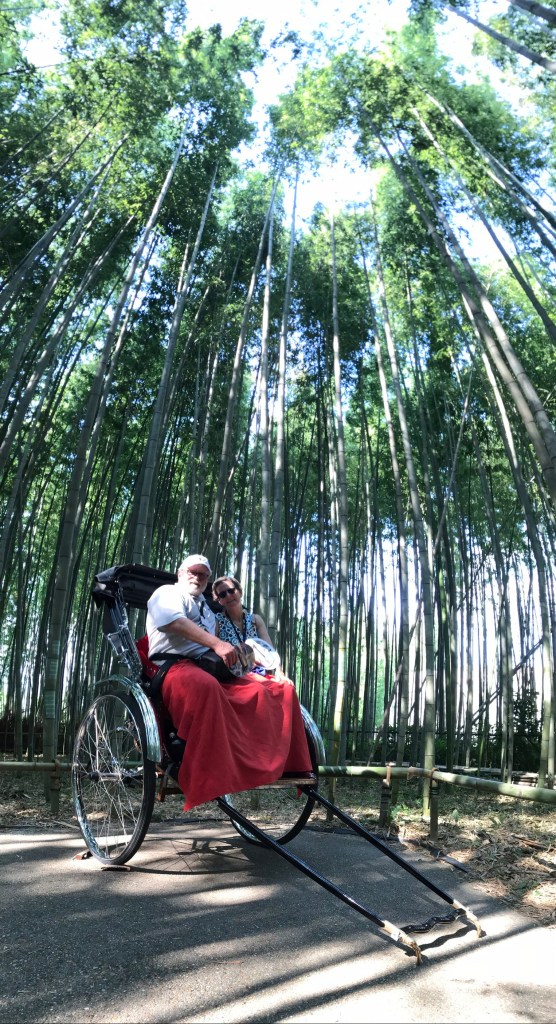
We take a hot, sweaty rickshaw ride through the bamboo forest
We go to Nara, where the shrine is ‘guarded’ by some very aggressive deer
Inside the temple are wondrous statues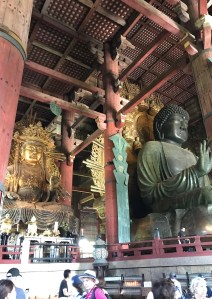 and a tunnel you can crawl through to gain enlightenment – which had a long line so you could do this: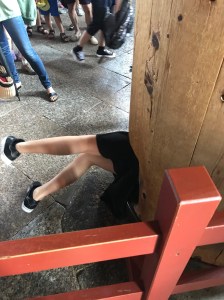
We eat some interesting things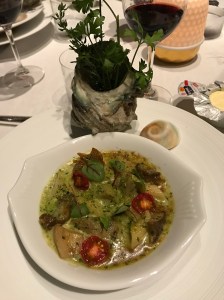 . This is conch. (It is not sparrow)
Finally a word on GEISHAS. We saw several young women dressed in full geisha regalia (despite the terible heat) at all the famous shrines and temples. It has become trendy for young Japanese women to dress up and take selfies this way. Think of all the US girls wearing non-clothes and pouting like Kardashians. Same diff. There are kimono rental shops near all the national monuments catering to them – they even do make-up and hair. For example this:
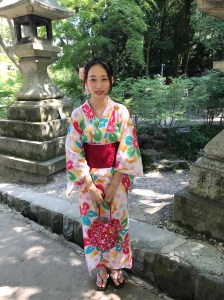 Not a geisha. According to our guide, not even Japanese.
This: 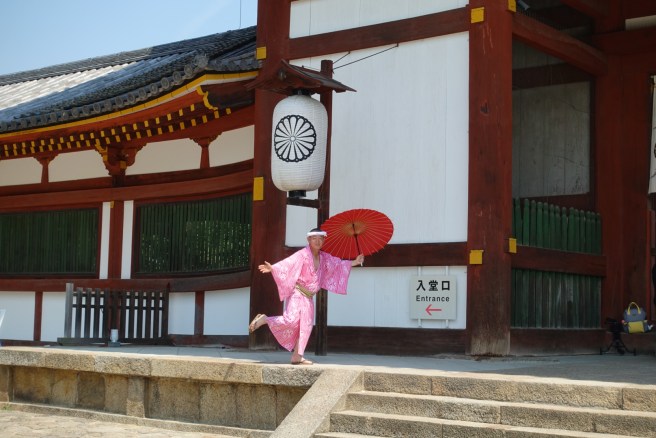
Also not geisha. In fact it’s a man.
This: 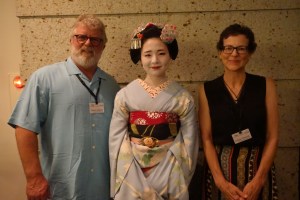 is a geisha (the one in the middle – I know…hard to tell us apart) A contemporary geisha is something like being a professional cheerleader in USA. They are rarely seen in public – and work mostly private events, many for businessmen. The hair and make-up take hours and you have to learn a ton of choreography. The career lasts as long as you are young and pretty, and the pay is not great. The unspoken hope is that you marry rich. But geishas start their career as a “maiko” when they are around 14 (high school is not compulsory) which is just nuts. If I made a career decision at fourteen, I would also choose one that allowed me to put big sparkly things in my hair. Who wouldn’t?
The white makeup is because Japanese (particularly older Japanese) are obsessed with keeping their skin pale. On the hottest days women, middle-aged and older, wear long sleeves and gloves. Some even wore full on Handmaids Tale bonnets.
We, on the other hand, ended our day here. It was swell. 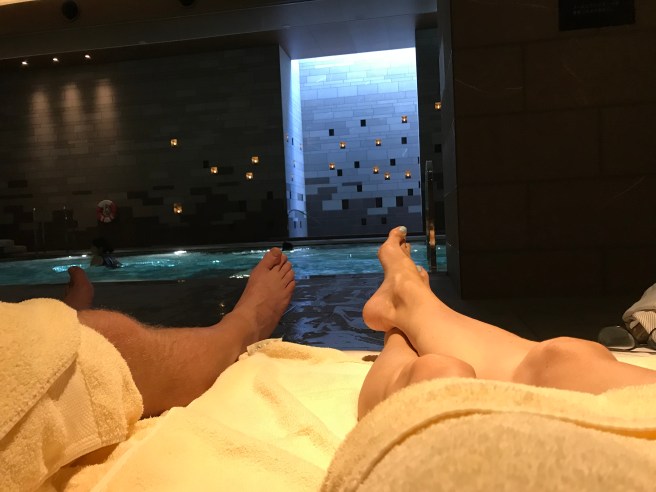
 eileengoesroundtheworlddotcom