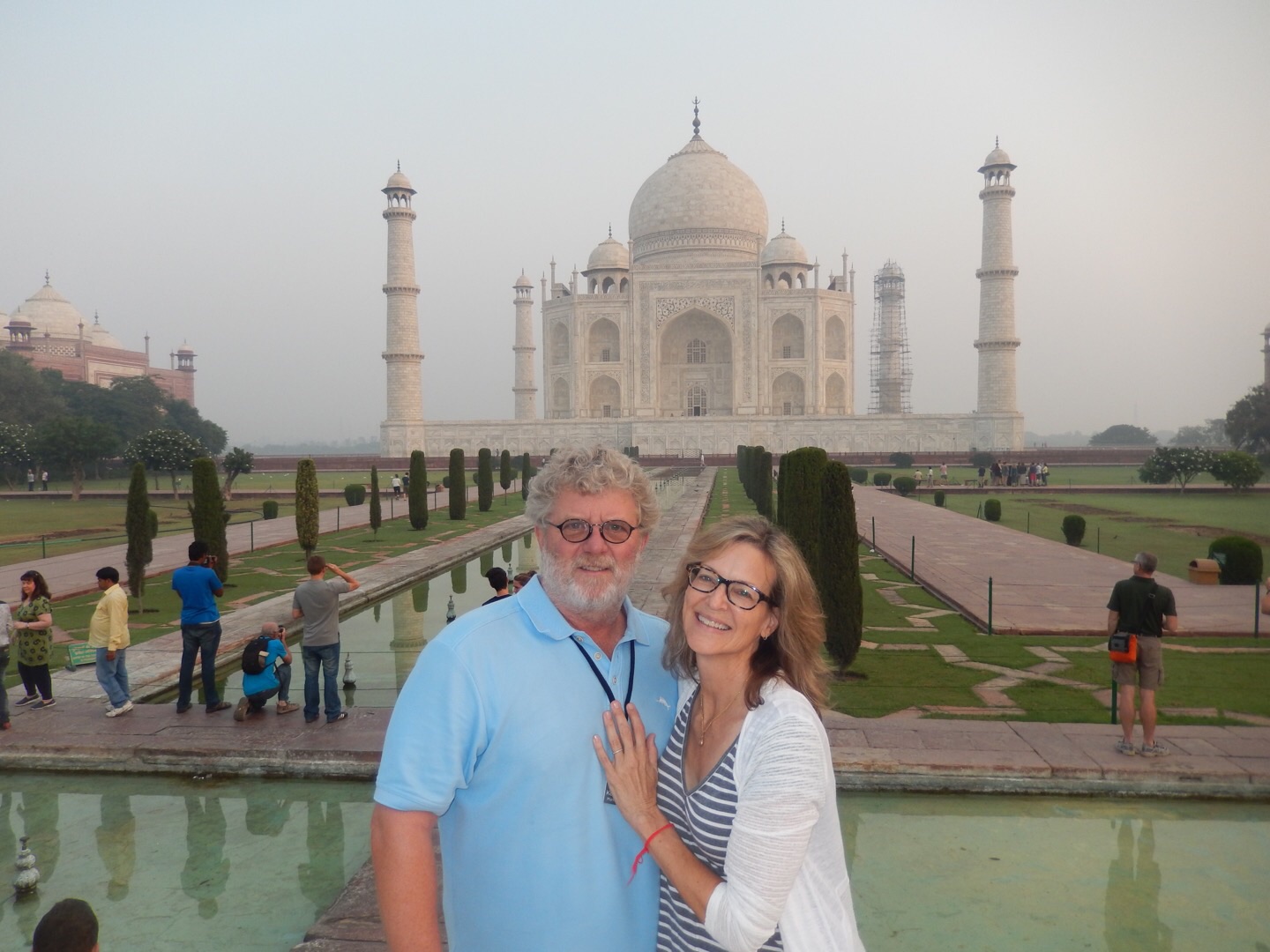
Agra, India is in the northern part of the country. It is a mid size Indian city of about 2 million people, its streets gritty and steamy and teaming with life.  Despite all the stories you may hear and all the travel stories you may read (including this one) nothing can prepare you for India. It is simply overwhelming. The streets are a riot of colors and smell and animals and vendors and every imaginable transport.
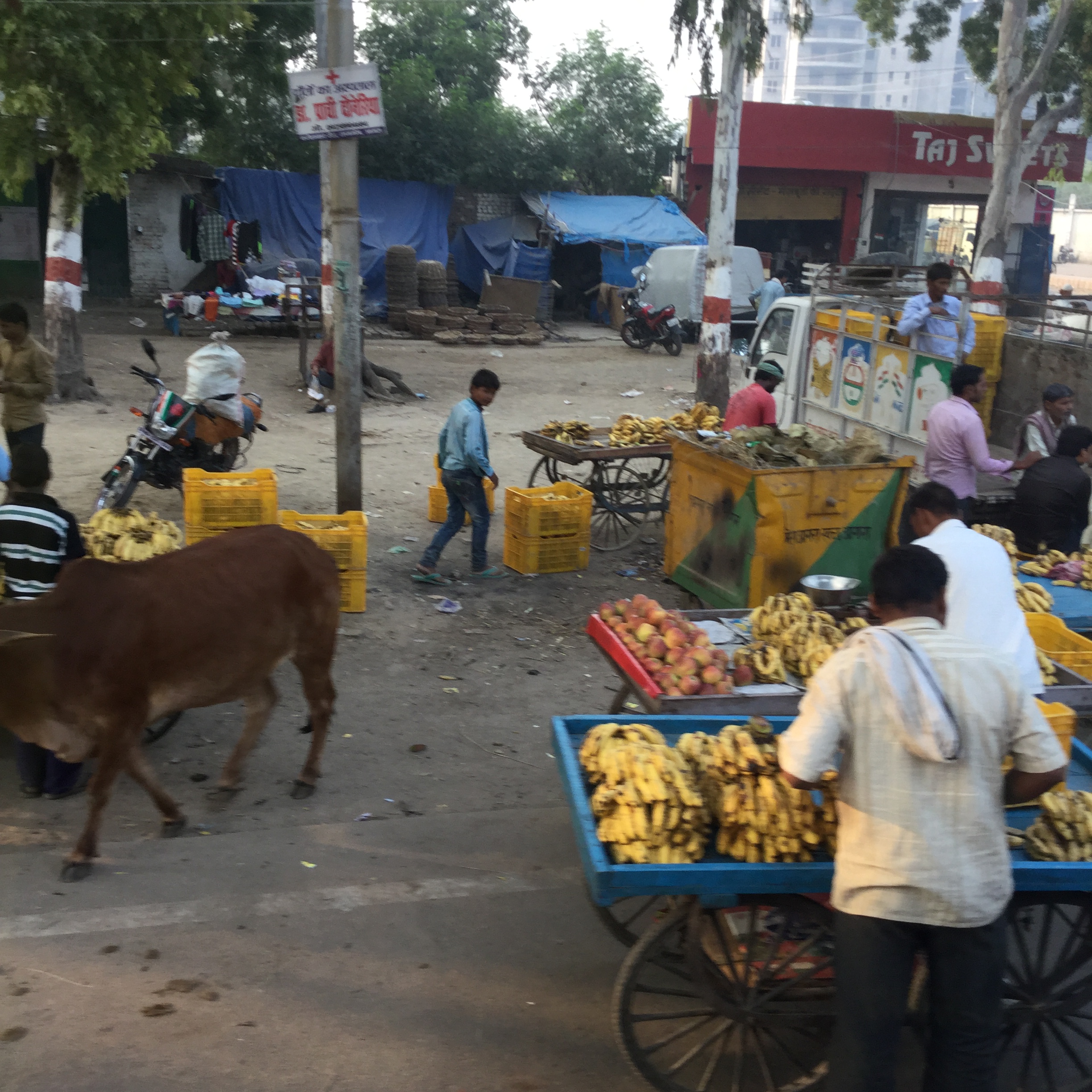 It seems impossible that it functions, that it doesn’t simply collapse into dystopian chaos. I am a traveler who enjoys ‘getting into the mix,’ but here I am grateful for our large, graceful, elegant hotel, the Oberoi Amarvilas, spacious and sparkling and scented with frangipani.
  It’s gracious staff, and beckoning pool, and rooms that, through some wonder of architecture, each have a view of the reason we are here, the Taj Majal…although our view is often obscured by a very aggressive parrot.
We opt to visit the Taj at dawn, before the heat of the day becomes too oppressive. An electric shuttle transports us the half mile through the still dark streets, and we queue up like at Disneyland and wait for the gates to open. The world around us awakens with the morning light,  shops open, a trickle of people turns into a river of saris and carts and tuk-tuks and cows.
  After a fairly rigorous security check, we join our guide Sanjay inside the gates. As we approach the pink stone gateway, which is also pretty cool, he tries to apply the brakes and offer some context,
  but the eagerness of the group to JUST GET ON WITH IT SO WE CAN SEE THE THING is palpable. We nearly charge through the entrance.
There it is, all misty and magical in the thin morning sunlight.
There’s no point in describing the Taj Majal. If you are a human being with eyes, you have seen countless photos. Perhaps it is just that, the ubiquity of the image that makes seeing it even more unreal. Like finding a unicorn.
I’d expected a crush of tourists, but whether it’s the early morning hour, or the expansiveness of the property; the series of tiered gardens and reflecting pools and surrounding structures, or the shocking crush of humanity we left just outside the gate, it doesn’t feel that crowded. There are places to sit on a pretty bench in the shade of a tree and just admire.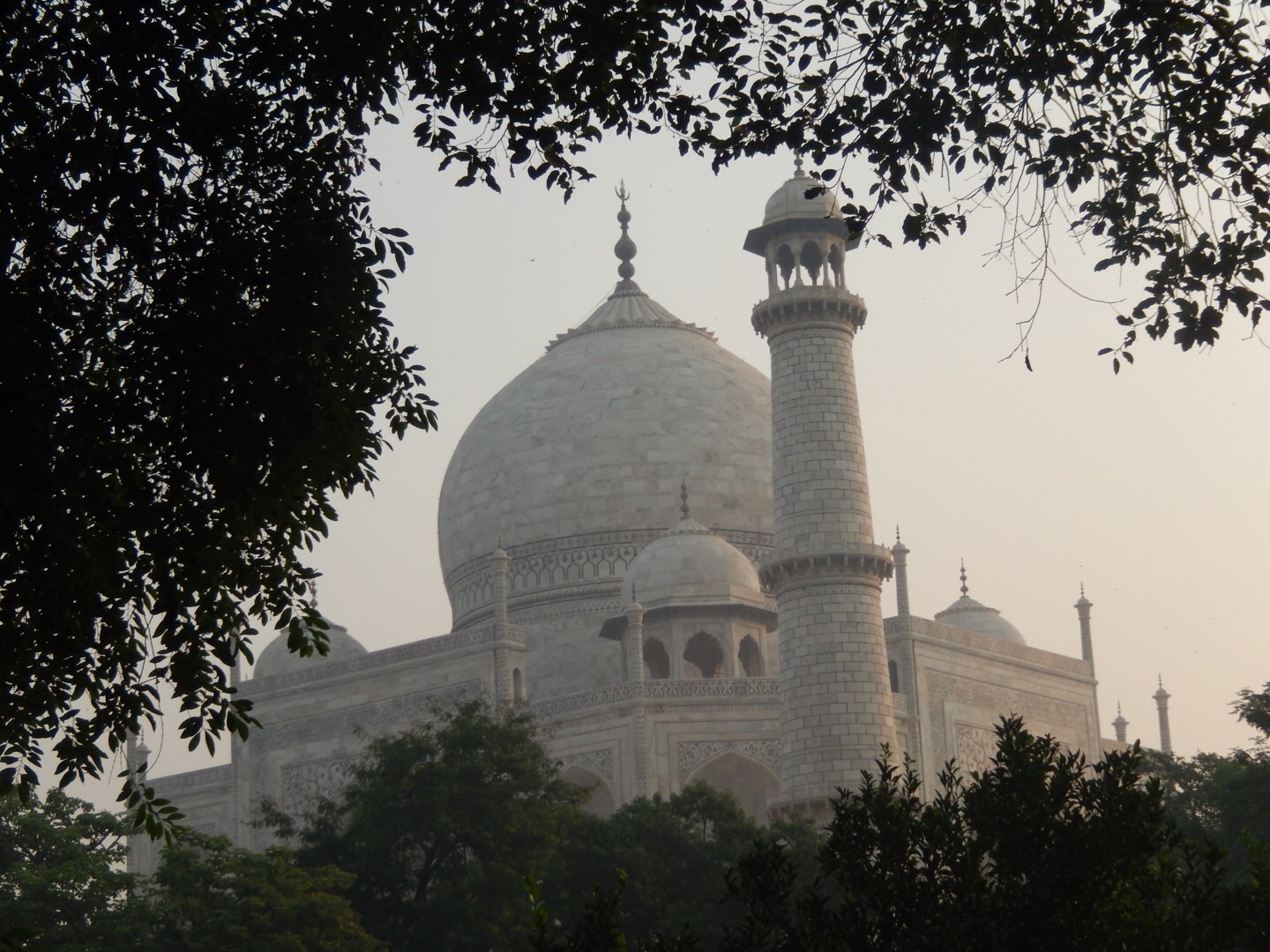
We also tour the interior, which takes about 5 minutes. The Taj is a mausoleum, built by a Mughal emperor, Shah Jahan, to house the body of his beloved wife after she died giving birth to his 14th child. Since he was a Muslim, there aren’t any statues or representations of gods or animals (Islam frowns on idolatry. In fact, ironically, strict Muslims don’t believe in any sort of death monuments) Inside it is unimpressive, just a round crypt with 2 raised tombs, one for the wife, and one for the emperor. He died after being imprisoned many years by one of his own sons (who also murdered all of his siblings) in a ‘Game of Thrones’ style coup.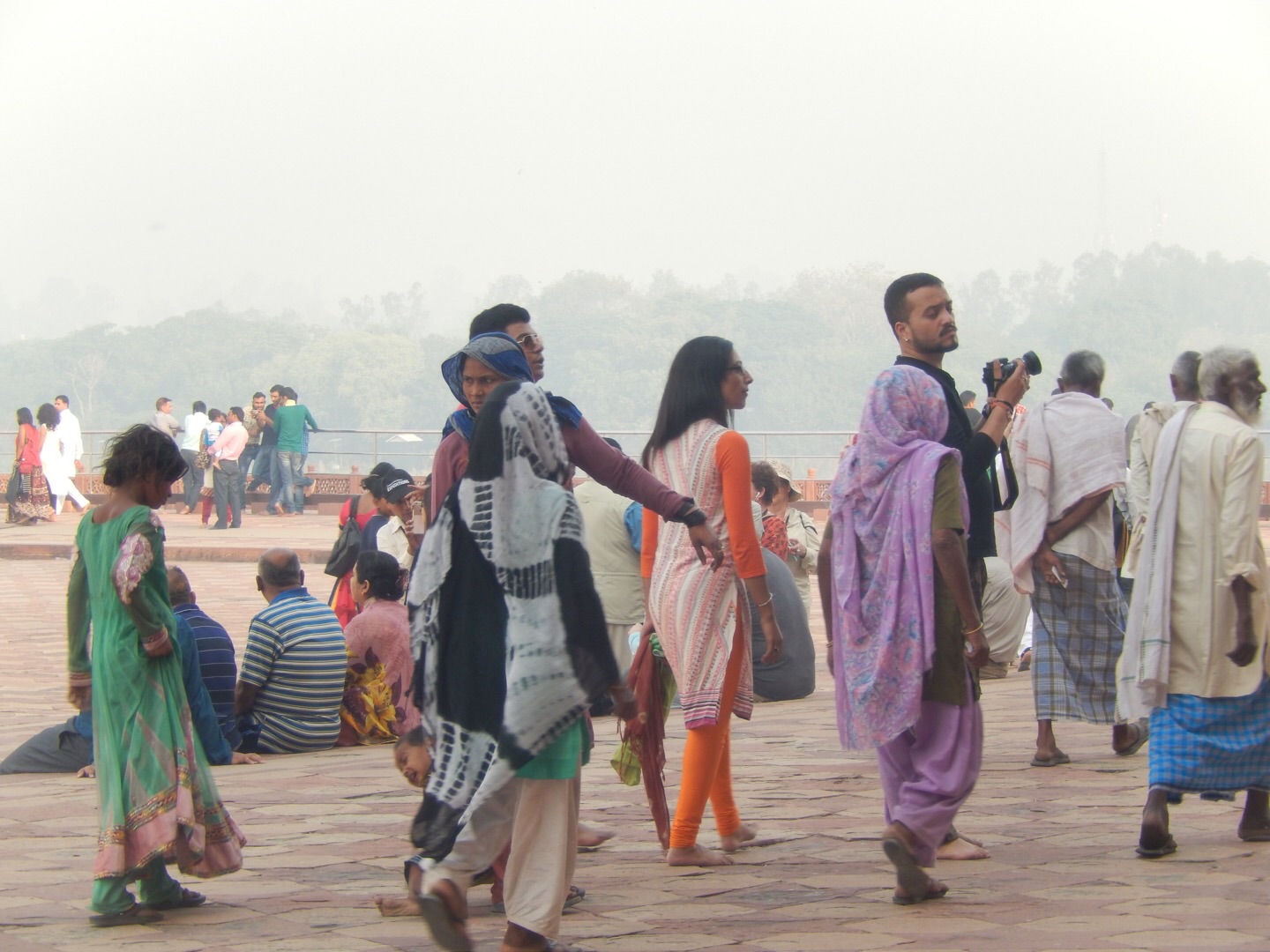

But the exterior delights and we view it from every possible angle before returning to the hotel for breakfast, followed by a yoga class taught by a twig-thin turbaned yogi all in white. It is less a vigorous flow than a breathing, chanting sort of thing. But the stretching part feels good. After that Kev and I take a swim in the glorious pool (by 9am I think it was 1000 degrees) and order some lunch in one of shady grottos.
In the afternoon we opt to visit Kachhpura village, home to the Harijans people, a caste of ‘untouchables.’ India is still strictly divided into socio-economic castes or groups from which there is no possibility of upward mobility. Marriages are arranged within the caste, so if you are born into a family of untouchables, there is no escape. You will only be offered shitty jobs (and jobs that frequently involved actual shit).
Probably the best job you can in this caste is shoemaker. Since the vast majority of Indian people are Hindu, the thought of working with cow hide is repulsive to them (although many wear leather goods). This particular village gets its water from a central village pump, and has just acquired its first few flush toilets with a septic system. But this can hardly accommodate the population as evidenced by the canal of human waste that flows beside the narrow walkways between homes.
The brief ride to the village takes us through downtown Agra, and it is utter madness, thrilling and startling with the crush of people and animals, cows and cows and cows, skinny, feral dogs, fat pigs, and tiny monkeys skittering everywhere.
  According to our guide, the monkeys are a particular pest, but they are considered a sacred animal, and cannot be exterminated or even sterilized.
The village is surrounded by farmland, with healthy, flourishing crops of eggplant, cauliflower, pumpkin and spinach that insure the people’s survival. Hundreds of patties of cow dung are dried and stacked like pies to be used as fuel.
The discomfort of being rich, white people there to observe the poor brown people takes some getting used to, but by and large the people are warm and welcoming, as fascinated by our foreignness as we are with them. The children in particular want to meet you, introduce themselves.  They understand how cameras work, they swarm around Kevin, begging for photos, which they delight in viewing.
  The village has recently become more prosperous due to a new business in which they purchase used saris from the middle class for $1 then clean and repair them, and resell them for $2. A sort of thrift shop industry.
  It is impossible not to feel humbled by the pride with which they invite you into their tiny, cramped shanties, or not to lose your heart to the shy child who positively beams when you greet her with a wave and a hello. As we board the bus, Kevin buys a Taj Mahal snow globe from a local street urchin for 2 bucks for a friend at home
  (hi Maggie) who requested one.
We then briefly visit the Itmaud-Ud-Daulah temple, also know as the “mini-Taj,” 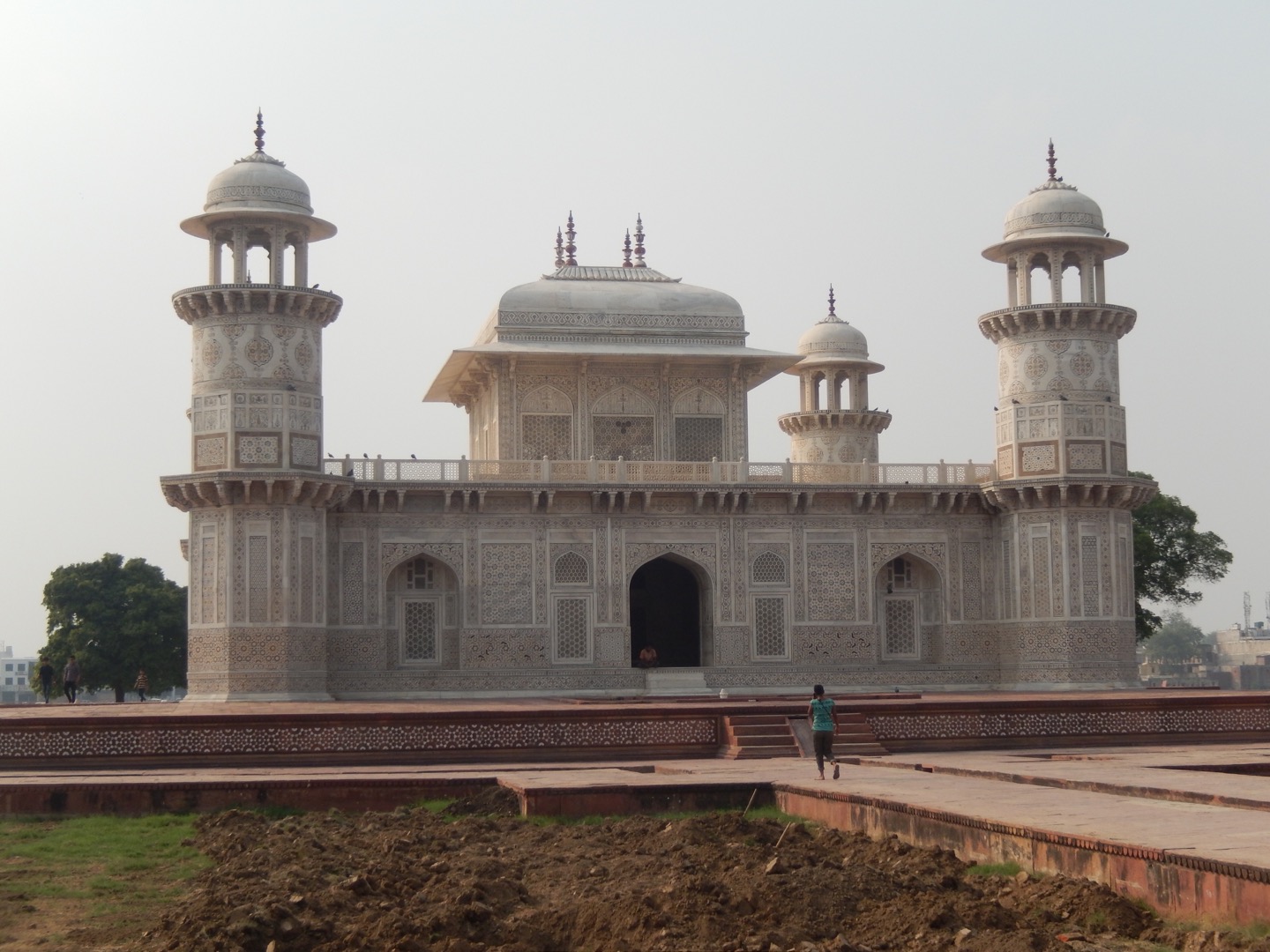 but we are pretty hot and exhausted and the place is surrounded by those little monkeys which are cute when there are 2 or 3 in the distance, but creepy when there are fearless dozens who seem to be in charge.
We return to the hotel to swim and rest up a bit. That evening we are first treated to a lecture on the future of exploration by Terry Garcia of NatGeo – in which he recounts a recent expedition to Honduras in which 8 team members contracted a flesh-rotting, potentially fatal disease called leishmaniasis from sand flies. I think of my legs, still spotty with welts from the flies at Machu Picchu, and wonder if the flies in Peru are related to the flies in Honduras. And I have another drink.
The lecture is followed by a bit of a party out on the terrace with (you guessed it) traditional dancers – although these 2 were more like a Bollywood review. 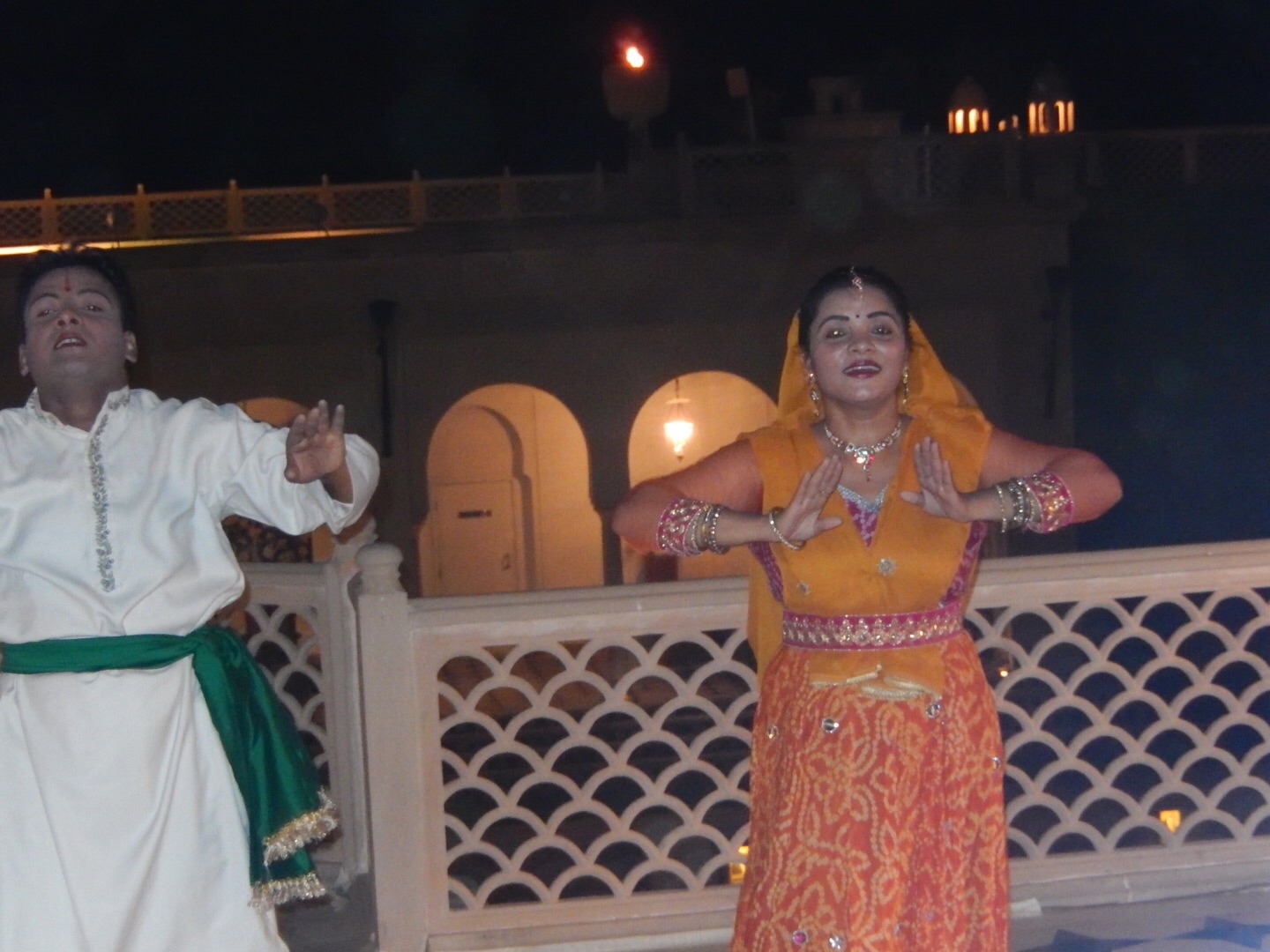 There are also henna artists, and I get painted up.
I adore Indian cuisine, and that night I gorge myself on some of the best I’ve ever had, falling asleep the sticky sweetness of saffron orange ice-cream on my lips.
 eileengoesroundtheworlddotcom