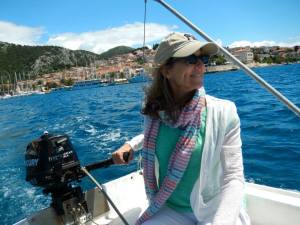
 View from our room at hotel Miraflores in Lima which we enjoyed for a matter of seconds before rushing down to the bus.
We depart for our early flight to Cusco. I’m a little nervous as everyone else has been taking altitude meds so they don’t get sick (Cusco is 11,000 feet) but I am allergic. As an alternative my doc gave me ginseng, but she’s as dubious about the herbs efficacy as I am.
After setting off every security bell in the airport with the multitude of artificial hips and knees in this troop, we board, and I am offered my first cup of coca tee, which is the local’s cure for altitude sickness. It’s made from the same plant from which cocaine is derived, pale and mild, like green tea. We fly over the snow capped Andes, and all I can think of is that movie about the Chilean soccer team that crashed there and ended up eating each other.
As soon as we land, we are whisked off to ‘Sacsayhuaman’ which when pronounced correctly sounds like ‘sexy woman.’ It is a cool archeological site with gigantic stone walls erected without mortar, the boulders painstakingly carved and smoothed to fit into each other at jigsaw angles. 
Then head to the hotel Monasterio where we are greeted with more coca tea and pisco sours. We’d also been offered pisco sours when we arrived in Lima, and at the museum. We will, in fact be offered pisco sours every place we go in Peru. They are sort of like a margarita but with the addition of egg white froth, like a Ramos fizz.

Hotel Monasterio is, as you would imagine, an old refurbished monastery…with the only unfortunate element being the tea servers are wearing tacky monks robes straight from Party City.
After a yummy buffet lunch that is both touristy (Caesar salad) and Peruvian (variations on yucca and quinoa) we strap on our cameras and head out again for Korikancha, the temple of the sun and the moon, a stunning if incredibly crowded example of Incan architecture in the middle of the city. Think Peruvian Acropolis.
Following this we go to the massive cathedral built by the Spanish, which is filled with a curious blend of Peruvian filtered through Catholic artwork; a painting of the Virgin Mary holding Jesus’s hand while hugely pregnant (because in Peru you never have just one child), a crucifix upon which Christ wears a colorful Inca warrior ‘skirt’ rather than a loincloth, and a painting of the last supper in which the platter in front of Jesus and the apostles is piled with roasted, pink Guinea pig. You will need to use your imagination, as photography is forbidden there.
We meander back to the hotel through the town square packed with street vendors and women in traditional Peruvian garb carrying baby llamas so you will take photos with them. It is a very homogeneous culture – everybody who isn’t a tourist is roughly the same size (short) and coloring (brown). I have rarely felt so tall or so white.
In the evening we head to the courtyard of the Pre-Columbian art museum to watch a demonstration of local women weavers whose indigenous textiles are supported by the National Geographic society.(where we are offered pisco sours)
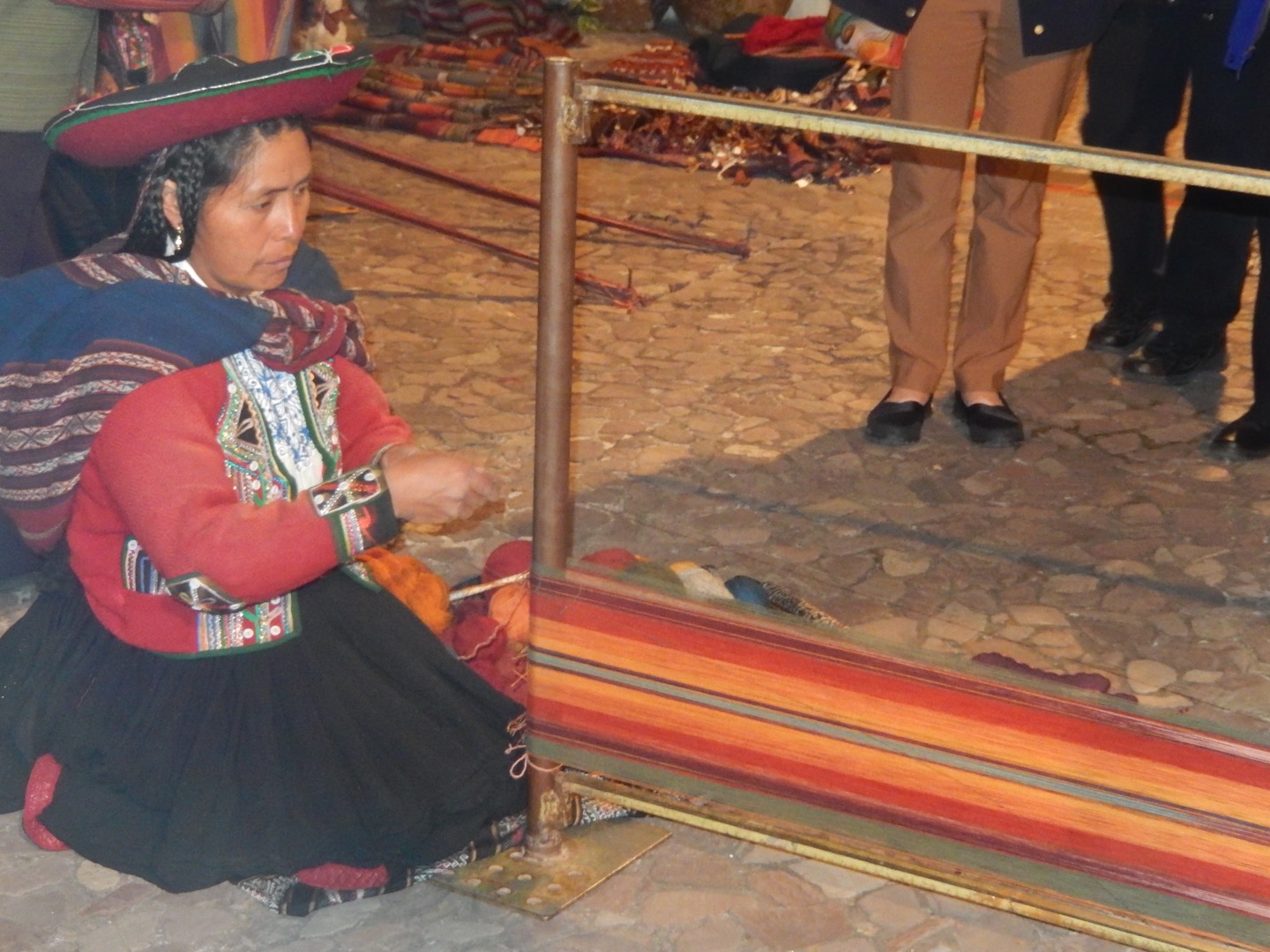 The skill and artistry is pretty astounding. I buy an alpaca blanket created by a weaver named Adela. As she walks me past her cadre to the register, I think about my own artistic labor being passed around back home – what it means to work intensively for years, only to put your novel, or your weaving, out there for strangers to judge its value, and maybe buy it, but (more often) not. Adela stands beside me, her blanket clutched to her chest, proud to have sold it, but still so protective of it.
Dinner back at the hotel is delicious; pumpkin soup, and quinoa ravioli and gooseberry ice cream. We compare stories with our fellow travelers to see whose guide spun the most entertaining tales. Since the Incans had no (surviving) written language, there is a pretty free hand when it comes to the details about hidden treasure and human sacrifices – and they know what people want to hear.
 eileengoesroundtheworlddotcom