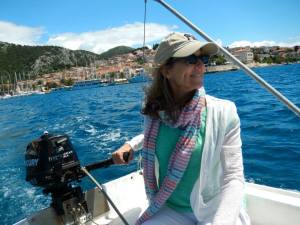
The End of the Road in Morocco

By the time we get to our final destination, I am burnt out. Toast. Both ends of my candle snuffed at the nubby wick.

Happily, I’ve been to Marrakech before. I’ve even been to our hotel, an over the top posh palace called la Mamounia where I dined one evening on my previous trip in their fancy restaurant.
So I have no guilt or regret about skipping the morning tour of mosques and monuments, certain that if one more well-meaning guide explains when or why or how or by whom an edifice was built, I will jump from the ledge of said edifice. It is enough. So many dates and places and extinct civilizations jumbled in my brain with Moai and Masai and Moghuls.
The evening we arrive, we have a quick dinner in the hotel’s Italian restaurant (knowing we will have 2 large Moroccan meals the following day). Aside from the breakfast pastries, which are a marvel, most of the food we eat at la Mamounia is fancy but tourist bland, which is fine since my tummy is STILL a bit delicate, and I am actually quite fond of the sweet, smoky flavors of a good Moroccan tagine. If the hotel food were better, I might get myself into trouble again.
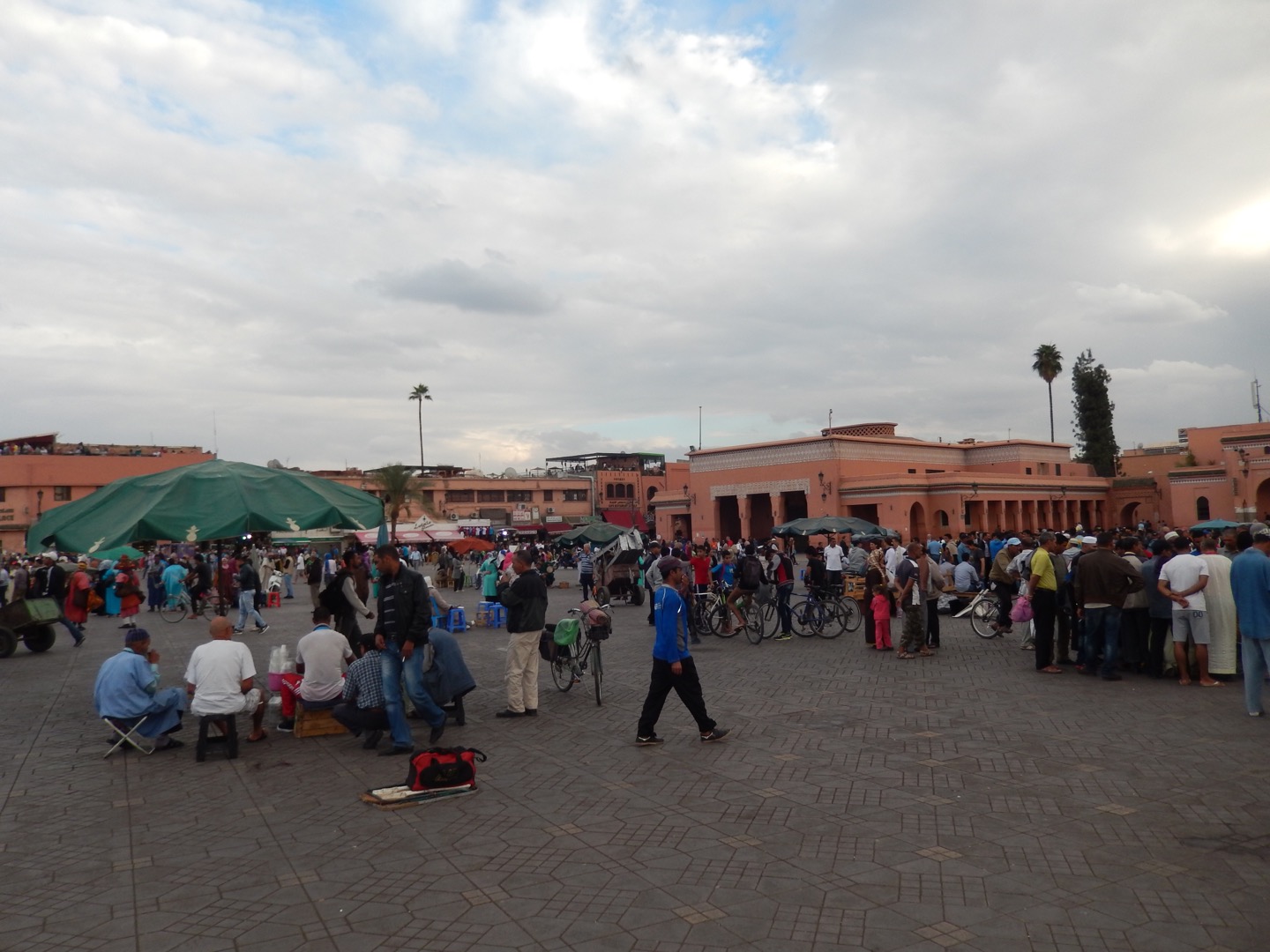
Then we decide to go rogue. A guide has been arranged to take us to the Djemaa el-Fna square, and feeling confident we can navigate our own way, we break away from the pack and are soon AWOL. It sounds ridiculous, but after days of rigorous structure, I just want to get a little bit lost. Also, you cannot actually get lost going from the hotel to the square, as the beautiful well-lit tower of the central mosque operates as an easy landmark. imageIn fact the only hazard we face is crossing the street; traffic is madness and there are no stop lights. You just wait on a corner until joined by enough people that the cars and scooters and buses and horse carriages will be forced to go around you. Safety in numbers.
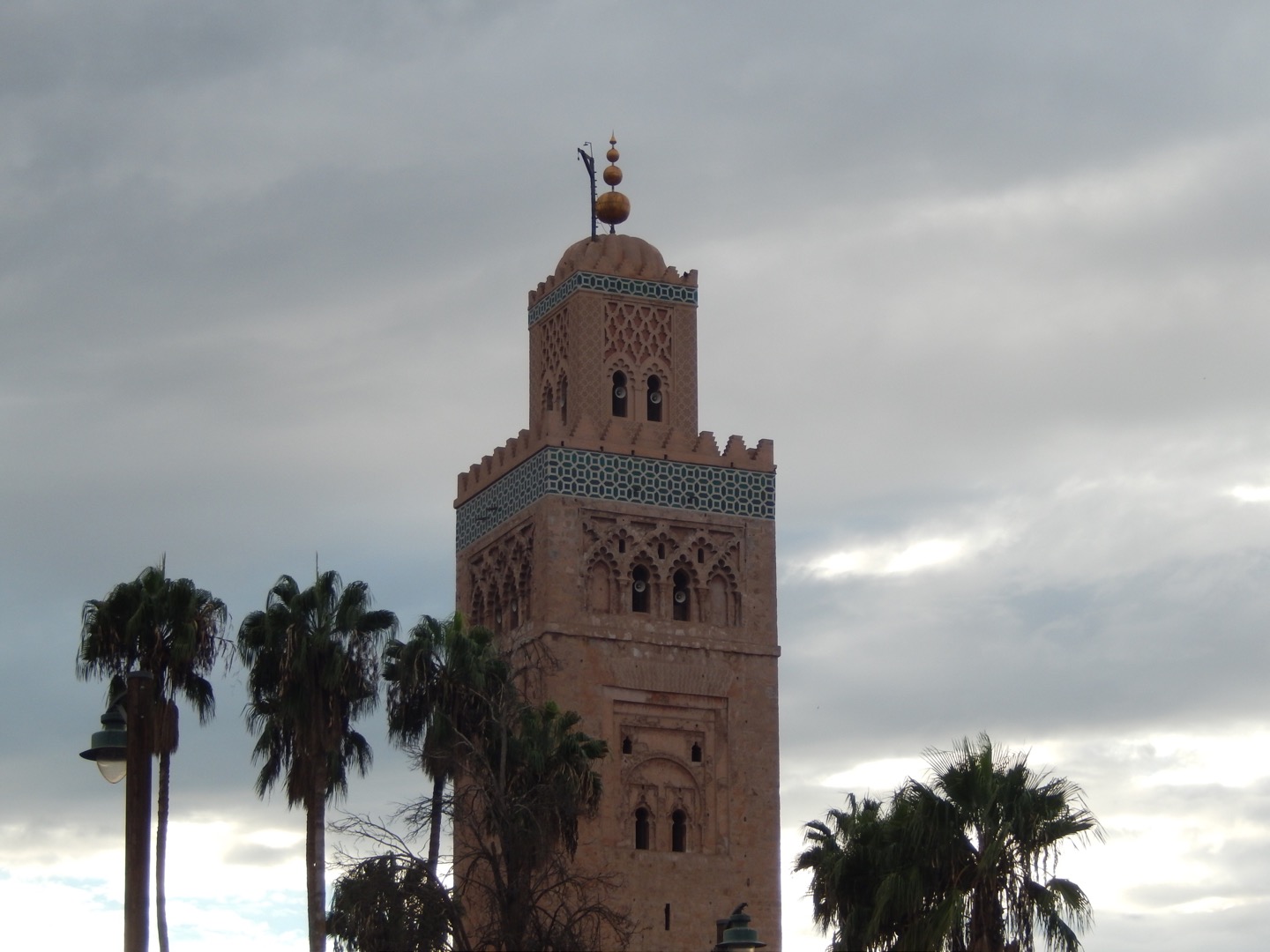
It’s a warm, drizzly night, the recent rain raising an eye-watering stench from the horse carts as we pass them on the way in, but despite the dampness, the square is packed with dancers and musicians and vendors and food carts and fortune tellers and artists. We’ve each been given a small bag of coins by our NatGeo handlers, because if you so much as pause to listen or watch a performance, or snap a photo of local character, someone will appear at your elbow and aggressively pass the hat.
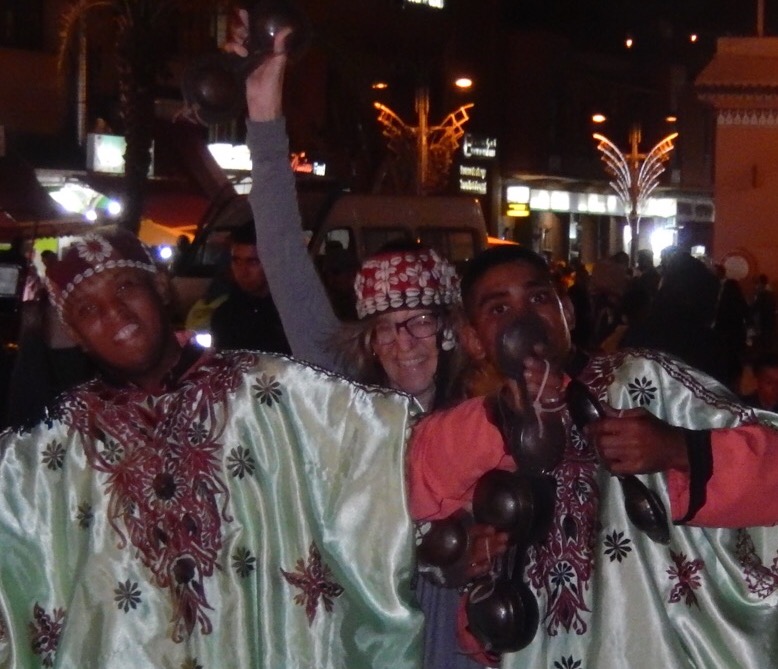
I am pulled into a dance with these guys. image
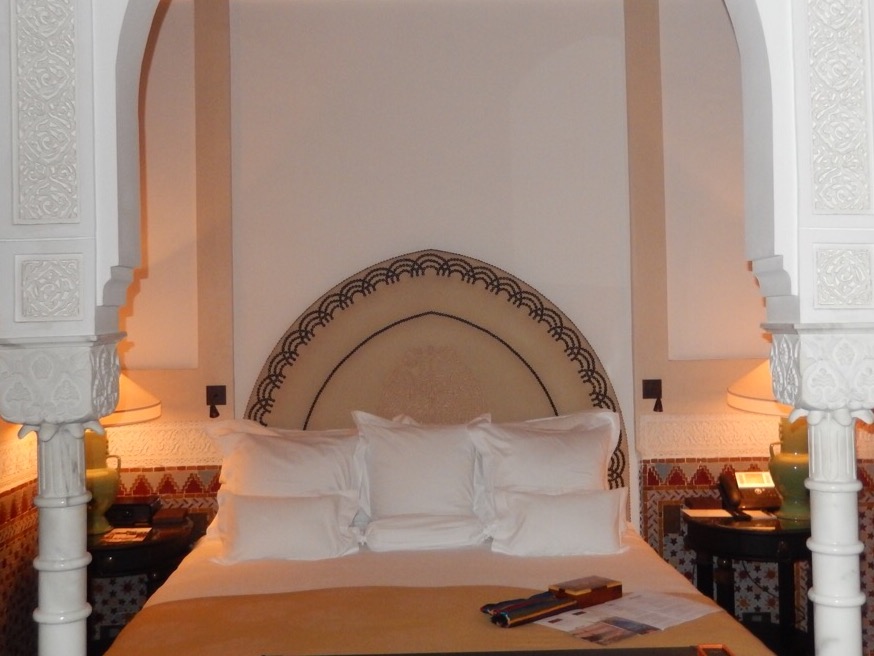
Soon we drift back to the hotel, and our cozy room, and a long night’s sleep on excellent sheets. imageWe awaken to the sound of birdsong, as opposed to an alarm, and sloth about, ordering room service coffee and pastries. Kevin’s back has been troubling him, so we venture out to the nearest pharmacy, where after some broken French (mine) and broken English (pharmacists) we purchase some Moroccan-style ibuprofen.
Then we make a long, lazy tour of the hotel property, which has an art exhibit going on of whimsical animal statues image(incl a lot of French Bulldogs) an opulent spa and hamman, and extensive gardens, before parking ourselves at one of the pools.image
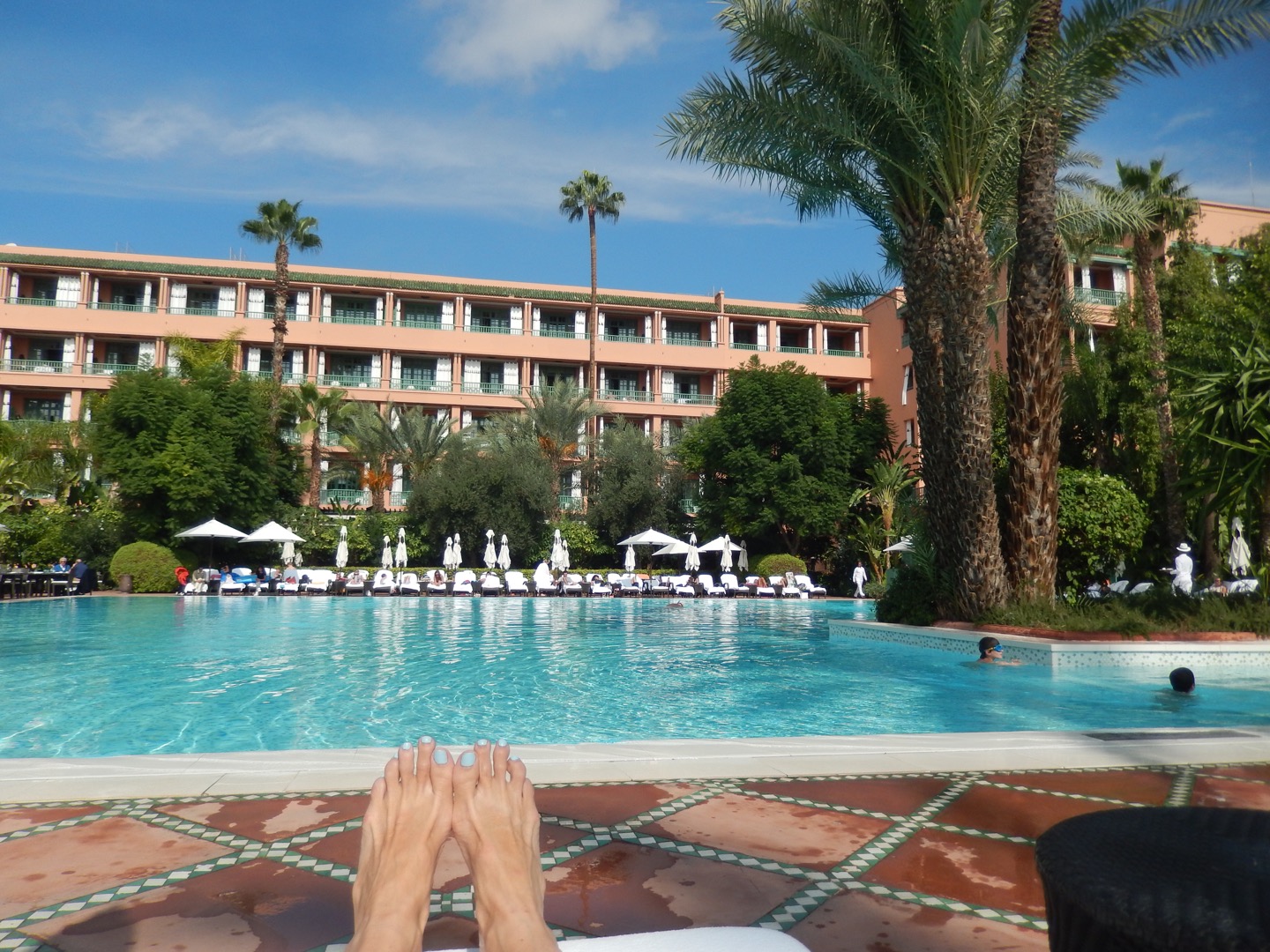
After our (Big Moroccan Buffet!) lunch, Kev decides to skip the afternoon tour options in favor of a trip back to the spa for a long massage.
But I join some tour friends in a horse drawn caleche to the Majorelle gardens, a twenty minute ride located in Gueliz, The modern part of Marrakech. Here you see more people in western dress, and fewer women wearing the hijab. The gardens were famously first created by the artist Jacque Majorelle in the 1920’s. imageAfter his passing they fell into disrepair, but were later purchased and restored to their current glory by Yve St Laurent in the 80’s, who maintained a home on the grounds with his partner until his death (and has his ashes scattered here). Now they are open to the public, alongside a small Berber museum featuring elaborate jewelry and handicrafts and also creepy cloaks and headdresses and daggers which you are not allowed to photograph (just as well).
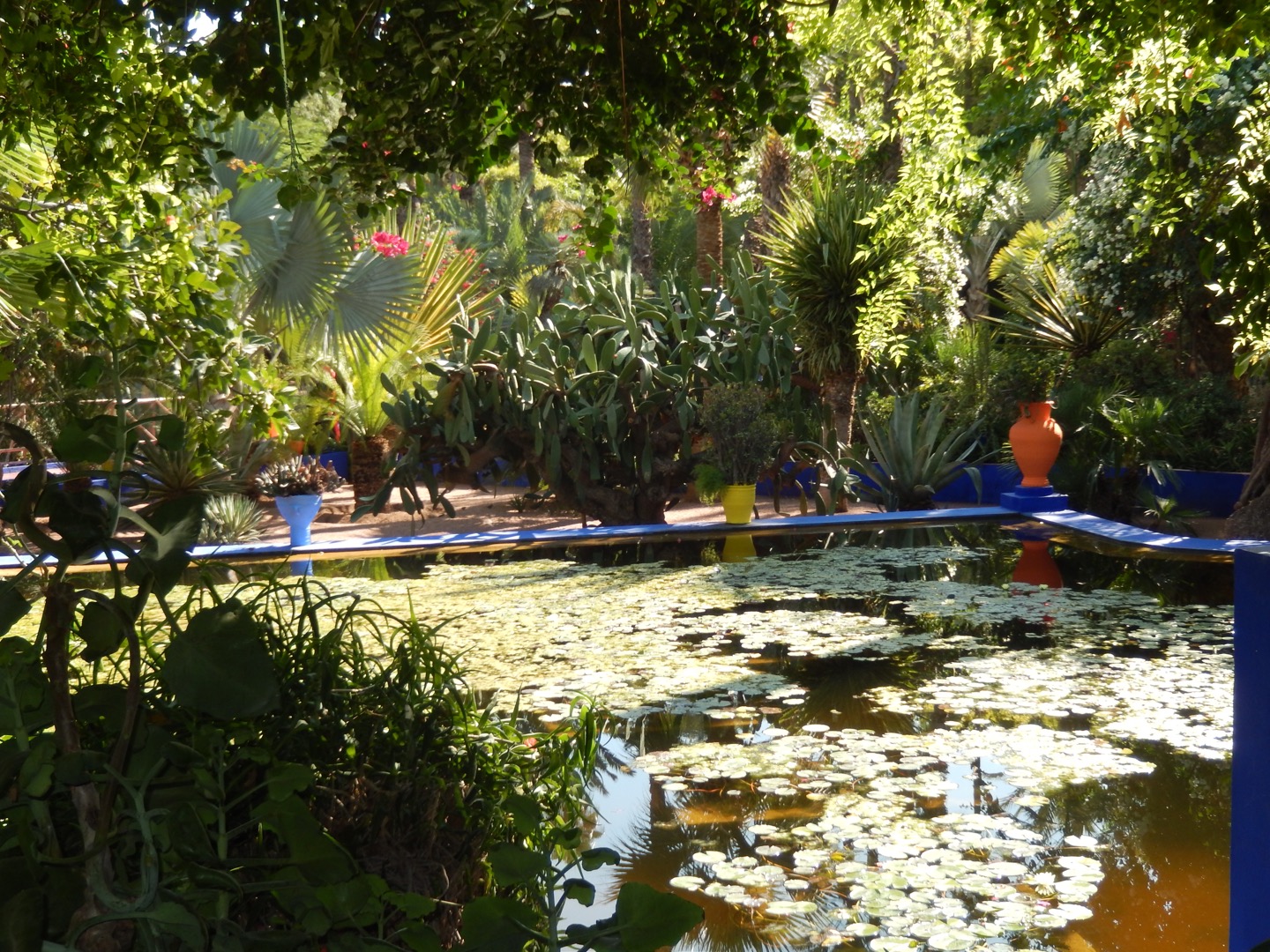
When I return, Kevin is happily splashing about in the pool, but realizing we have just over an hour left before the evening farewell festivities begin, and we have not yet even entered the souk (which would be a crime, as it is the coolest thing in this city) we make a quick turnaround and head out.image
In front of the hotel we are greeted by a tall, gangly kid who says he remembers us from the hotel, as he works there, but his shift just ended and he is on his way to the souk to buy some argan oil for his mother. Neither of us remember this kid from the hotel, and his story smells like bullshit, but we are in a hurry are pretty sure his entire scam amounts to nothing more than picking up tourists from the nice hotel and leading them to shops in the souk from which he receives a cut of what they purchase. image
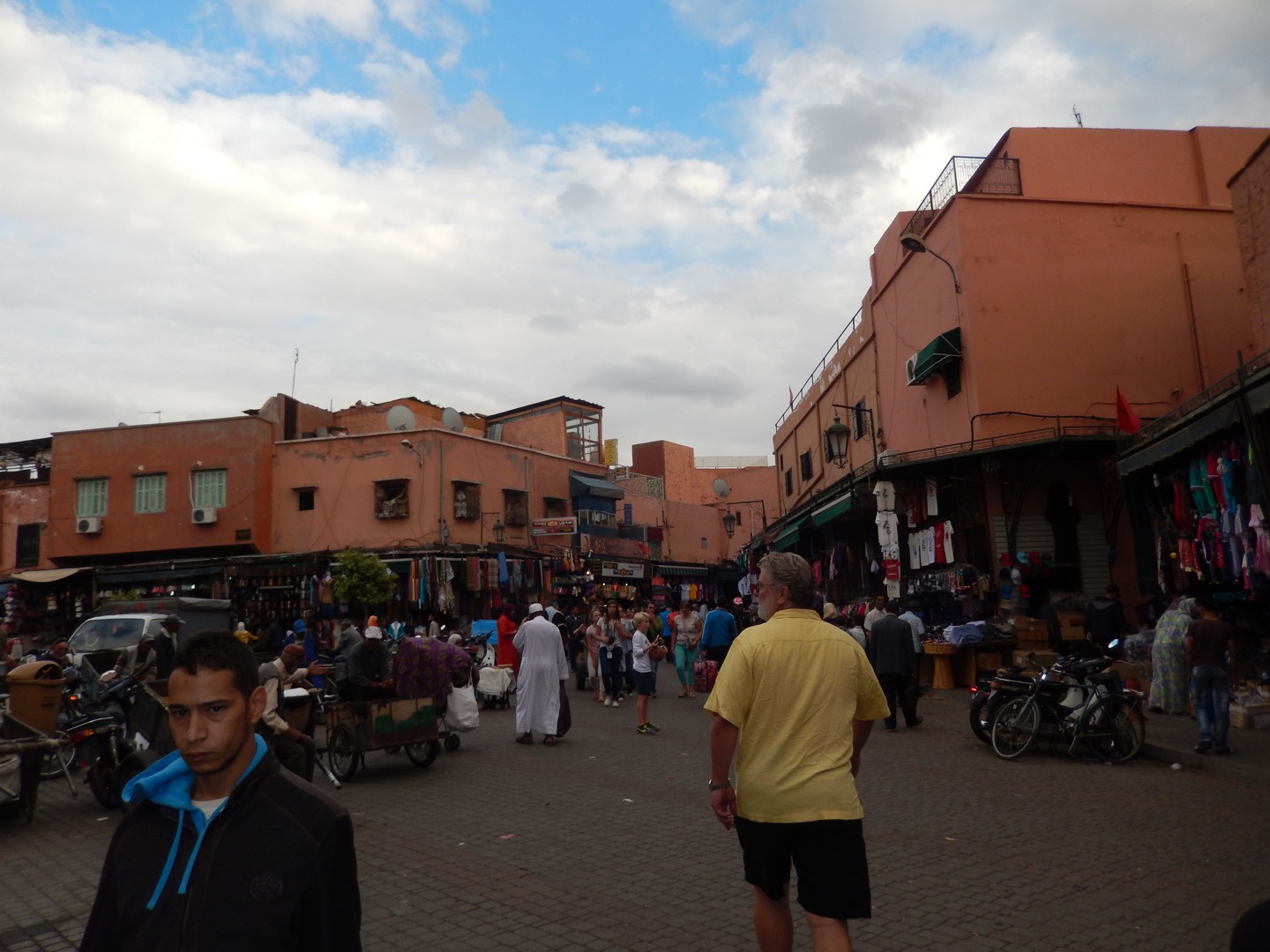
This actually completely works for us, as the souk is a labyrinth of crooked, narrow nameless alleyways, branching into even narrower corridors, with literally hundreds of stalls, some of which are identical to other stalls, the path between them teaming with chaotic humanity.image
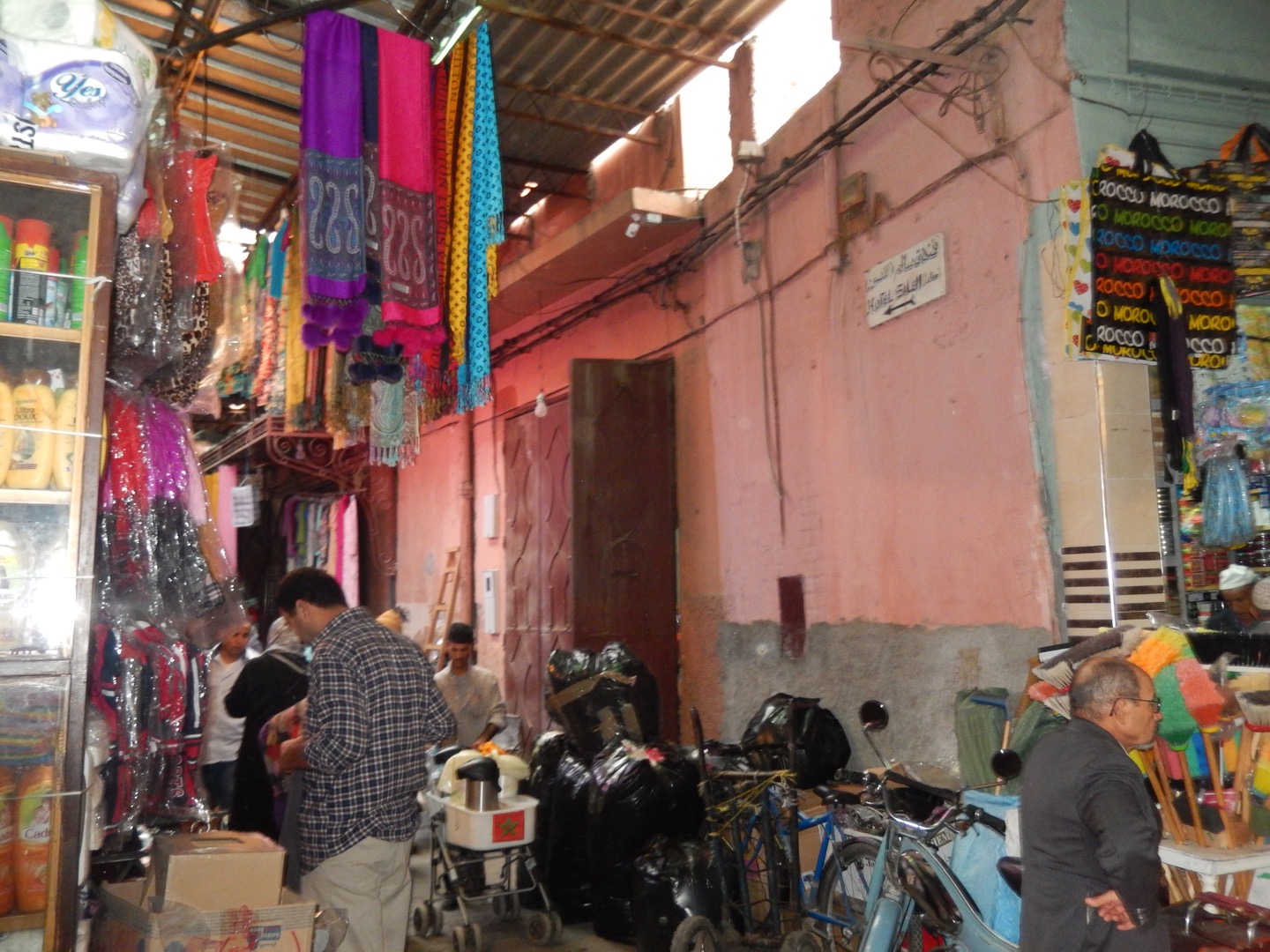
It is nearly impossible to keep your bearings and we don’t have time to wander about for hours until we find our way out. So we go along with his story, willing pigeons, and we are rewarded with being led beyond the junkier souvenir stalls near the entrance to a tiny four story house in a tucked away corner that functions as an antique shop dealing in Berber furniture and jewelry and crafts. It is a charming jewel box of a store, and we’d never have stumbled upon it on our own. We buy a few small things imageand our young guide then escorts us back to a point from which we can find our own way (guided by the mosque tower) before he heads back in to buy his mother that argan oil, which maybe he wasn’t bullshitting about after all.
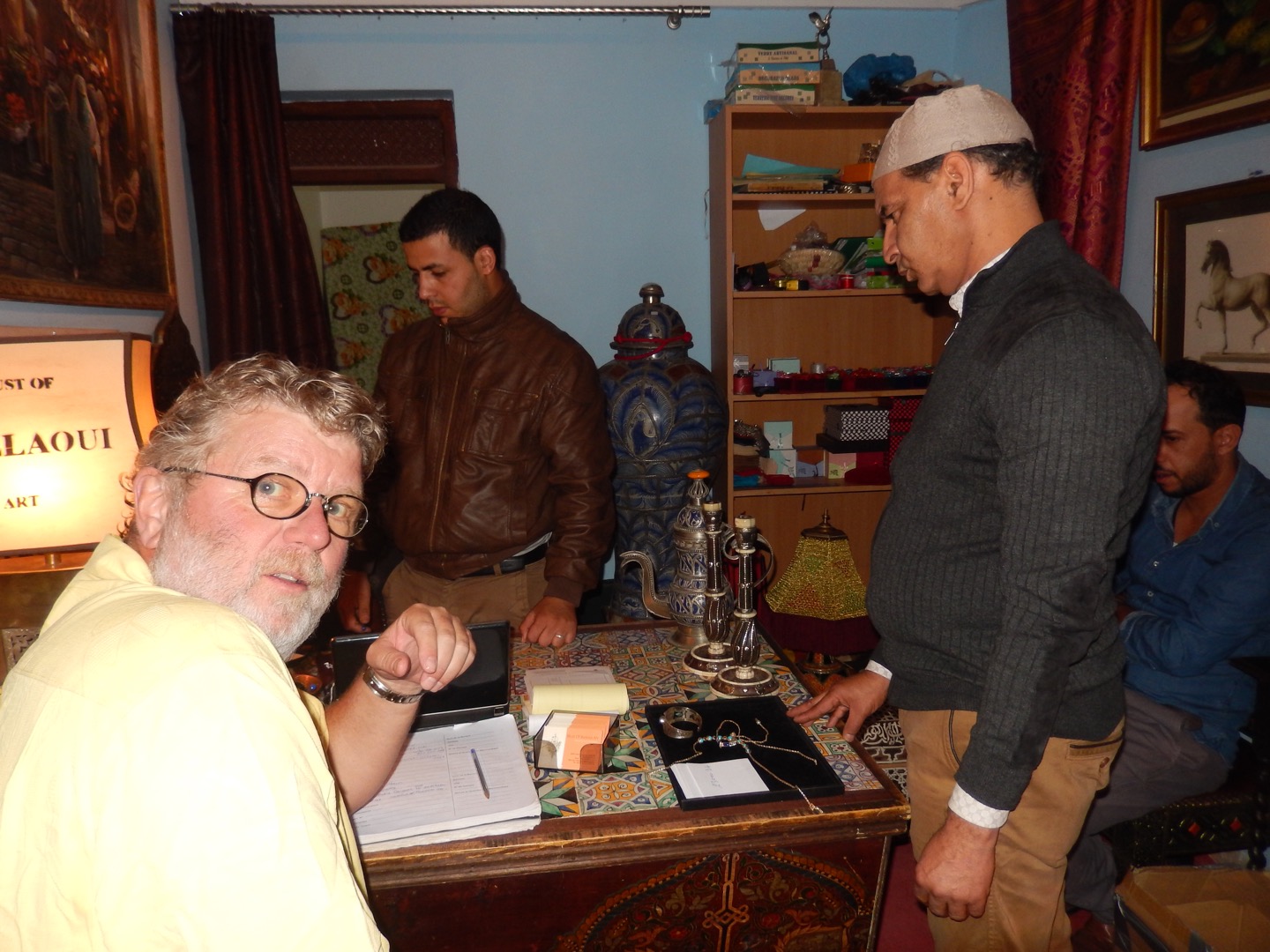
That evening we gather for our farewell dinner. Everyone has been told to wear something they picked up during our travels, and I have on the pretty lapis and silver necklace and turquoise and coral bracelet that we purchased moments earlier in the souk. We are entertained with a slide show (put together by the staff photographer) of the places we’ve been and things we have done, followed by a lavish feast of good (but not great) Moroccan fare. Then some not entirely convincing belly dancers (dead-eyed, bleached, hipless) perform, after which we call it a night. It is time to pack for our final flight. It is time to go home.
That night I dream I am walking through my door. My sweet, old dog is there to greet me, wagging his tail so hard–the way he does when he is excited–that he can’t walk straight. And I am overjoyed.
Petra-fied

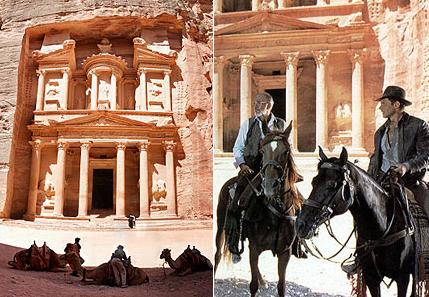
When most Americans think of Petra, if they think of it at all, it’s probably because of this scene from Indiana Jones and the Last Crusade. image
But Petra is one of the seven wonders of the modern world, alongside the Taj Mahal and Great Wall of China, it just doesn’t get as much press.
Petra lies in Jordan, a small middle-eastern country that neighbors Saudi Arabia, Egypt, and Syria. As you might guess, the current political climate has taken a toll on tourism here. On one level, this was our gain, as the Petra site, usually overrun by tourists, was not crowded at all. On the other hand, about half of the high-end hotels have had to shut their doors for lack of business, and the souvenir vendors have become exceedingly aggressive.
Oh yes, and the tourist buses each have a cop….with a gun.
We are booked into the Movenpick hotel, a Swiss chain, nice but not fancy, chosen for its prime location just steps from the entrance to the site. We arrive late and get a quick bite in the bar before turning in, a little mezze plate with hummus and toubouli and pita. I’ve been experiencing some tummy trouble since India, and had attempted to mind-over-matter this by eating the American style food that I craved while in Tanzania. But in Africa, not even the Four Seasons can make a cheeseburger that tastes anything like home, and don’t even get me started on the room service pizza with oddly cardboard crust and ketchupy sauce. My tummy did not improve, it continues to be unhappy and occasionally stabby, so I may as well eat the local fare (heavy on the rice) while popping Pepto Bismol tablets.
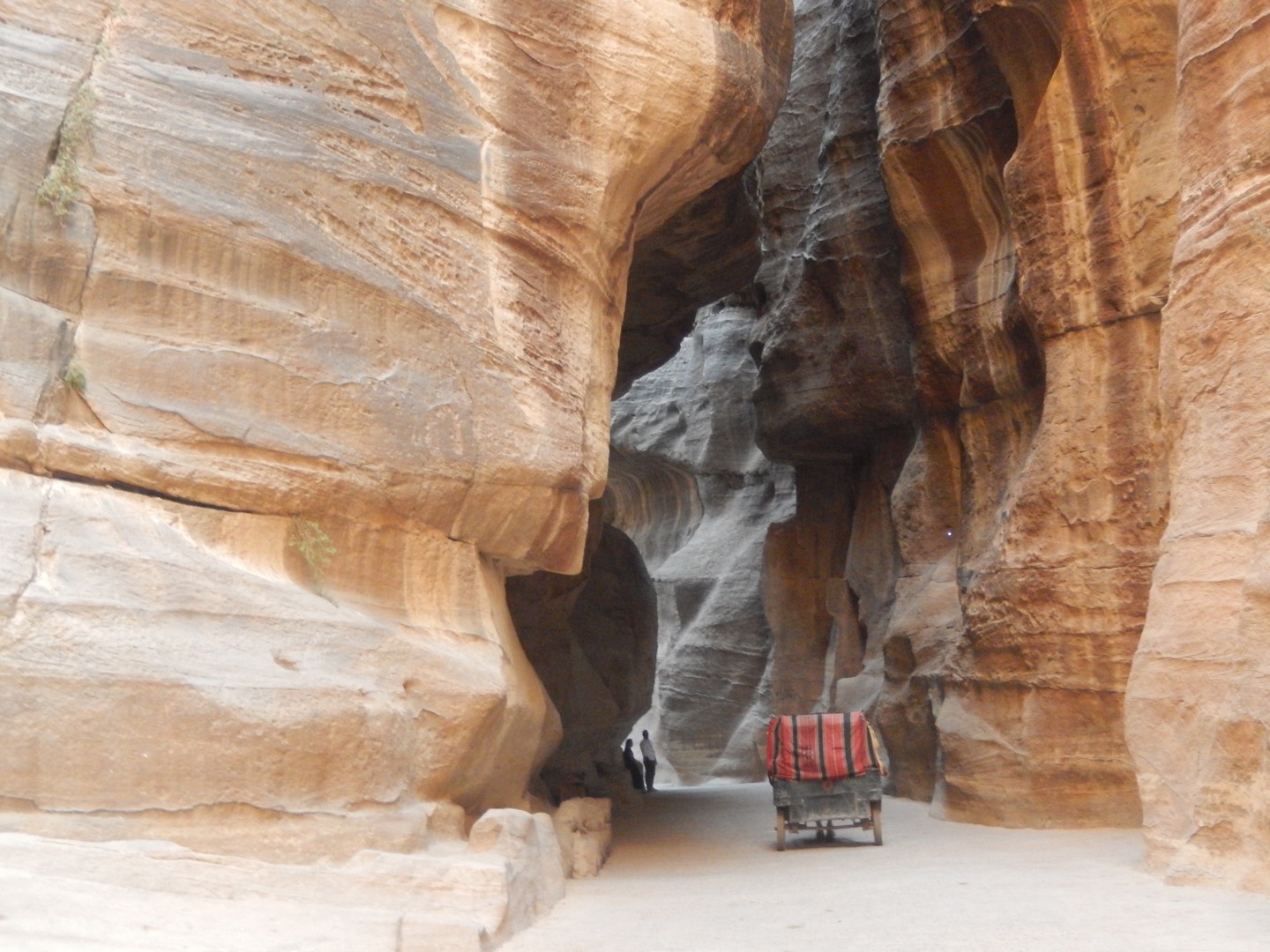
We opt for the early hike to Petra, before the sun really starts blazing. The town, like all the towns we visit or drive through in Jordan, is not pretty. The landscape is dry and dusty and rocky – the homes boxy, the vegetation spindly. But even the approach to Petra is pretty magnificent. image  The red rock mountain, upon closer inspection, are a million colors, the swirling patterns of which look like a melting chocolate Sacher torte. image
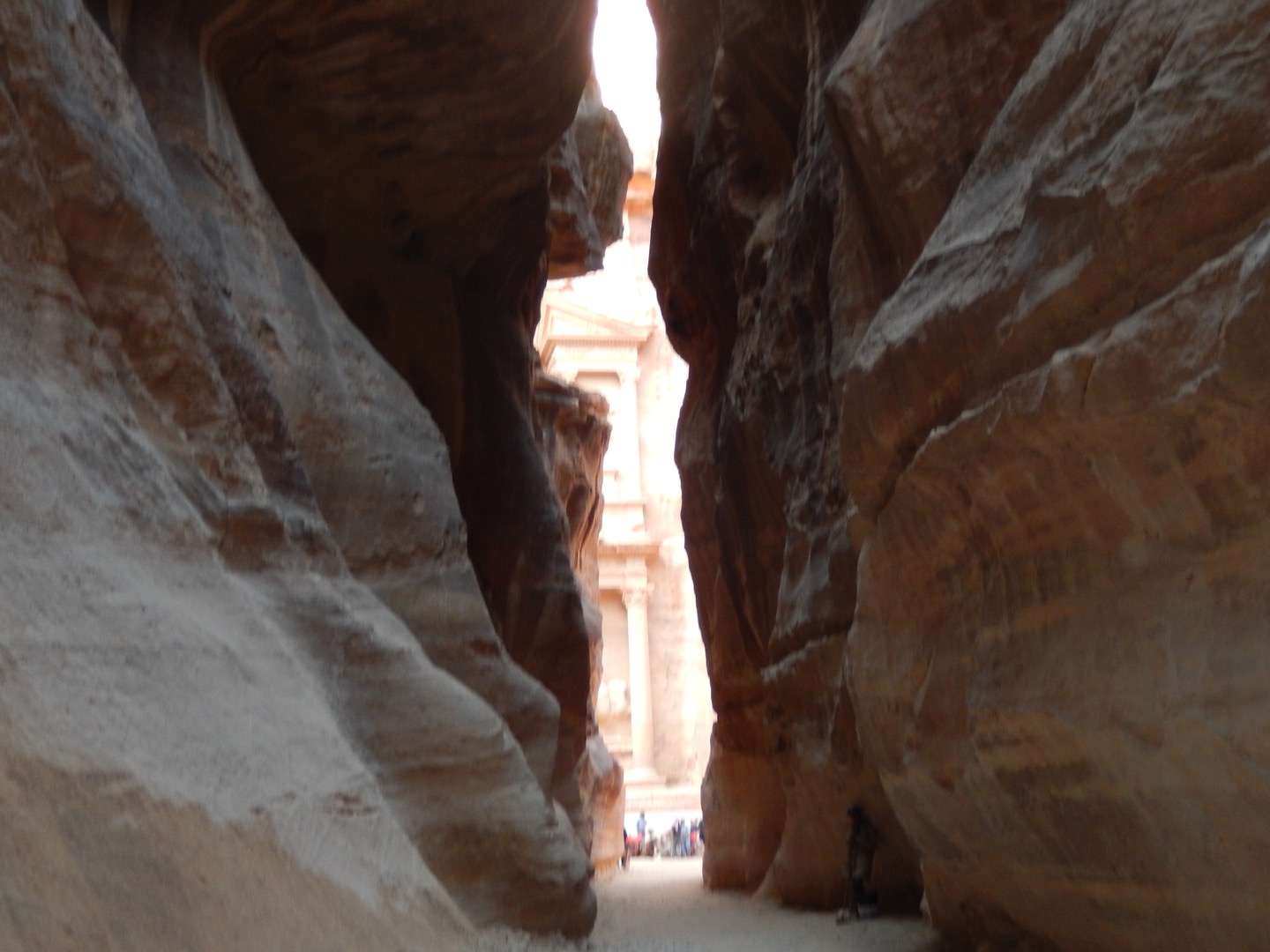
Things really get cool when you enter the Siq, a long (nearly a mile) tall (nearly 500 feet in places) imagenarrow gorge where you are cautioned to dodge the occasional horse carts that have no rules regarding pedestrians.image

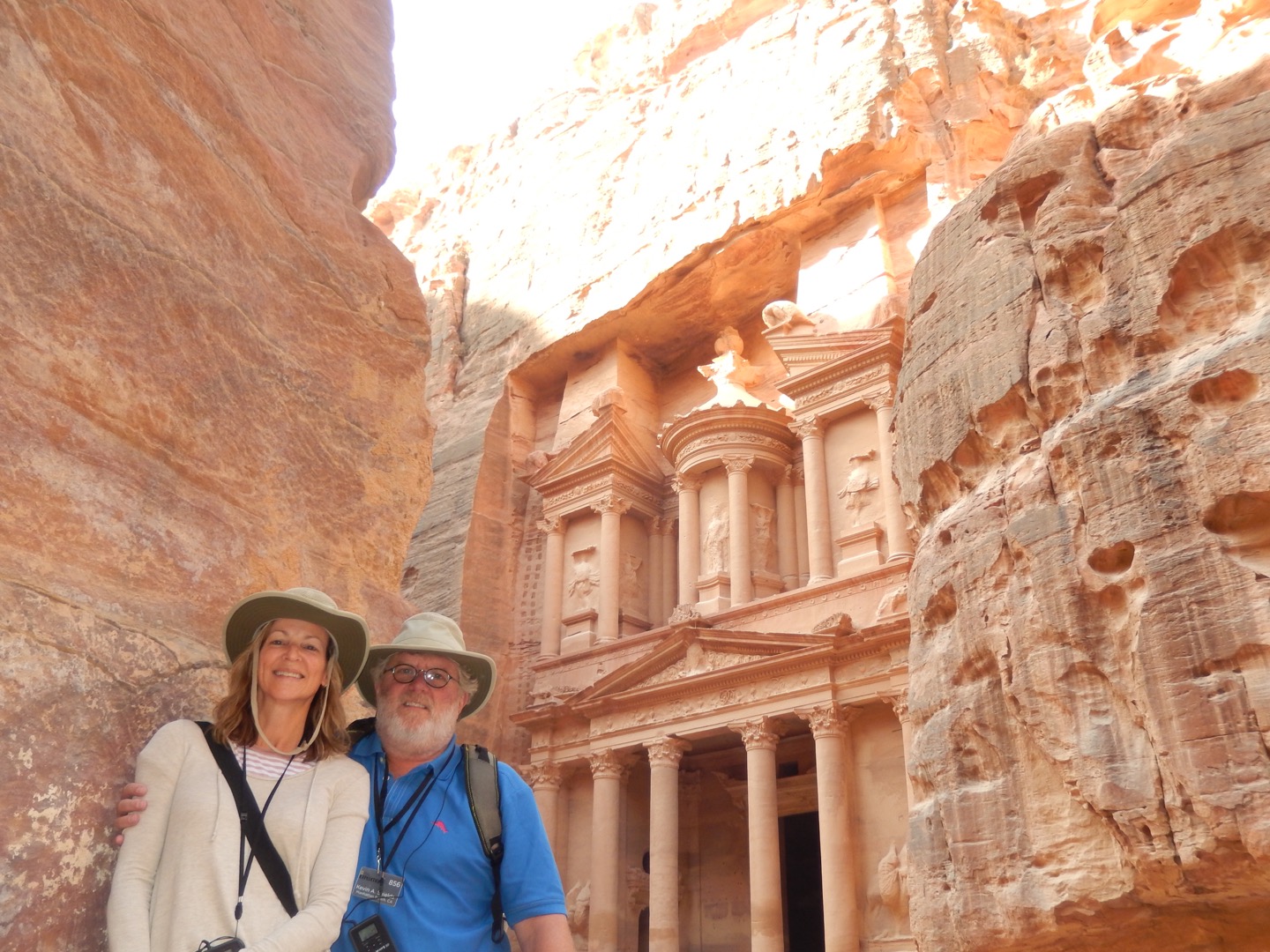
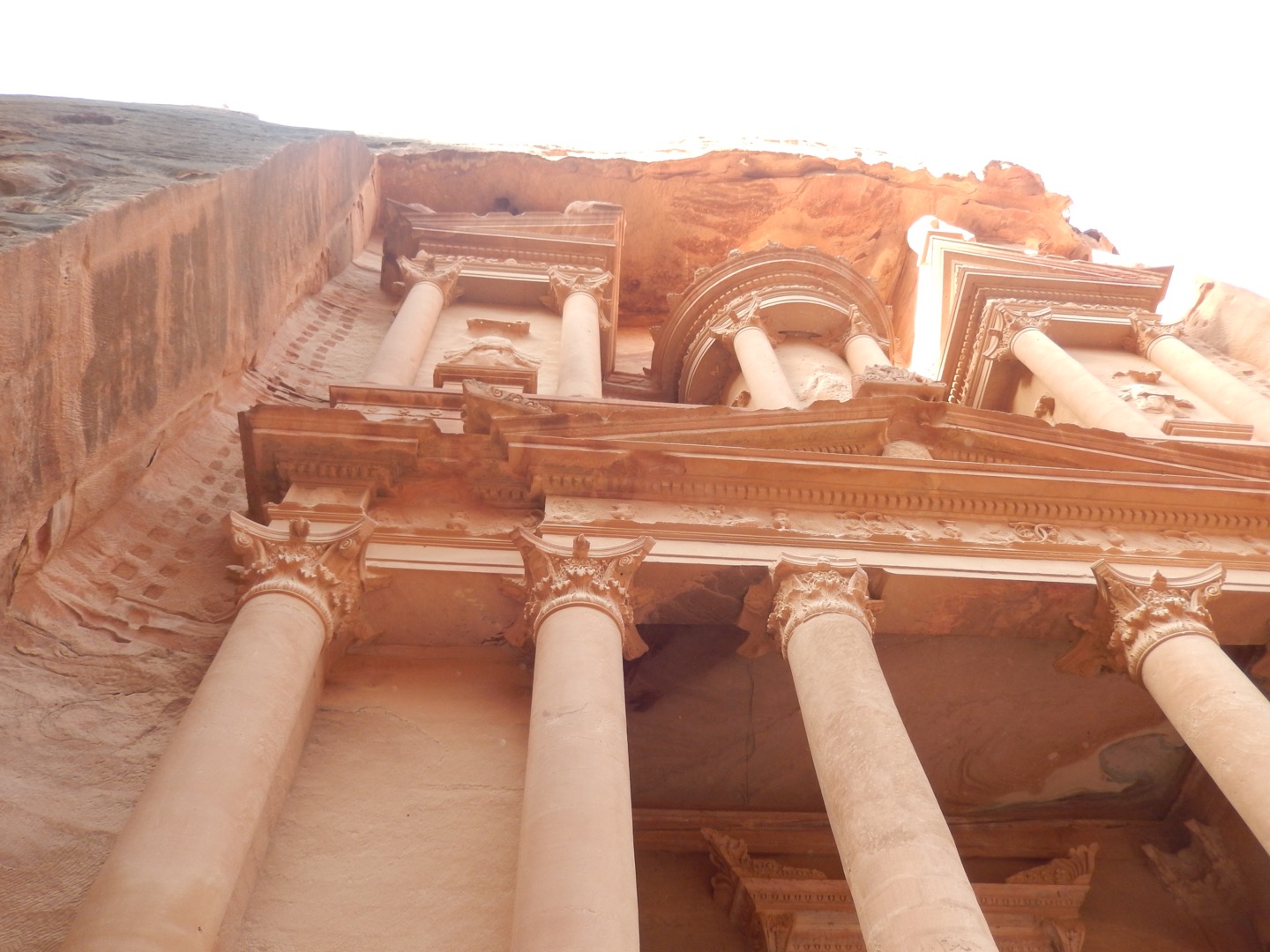
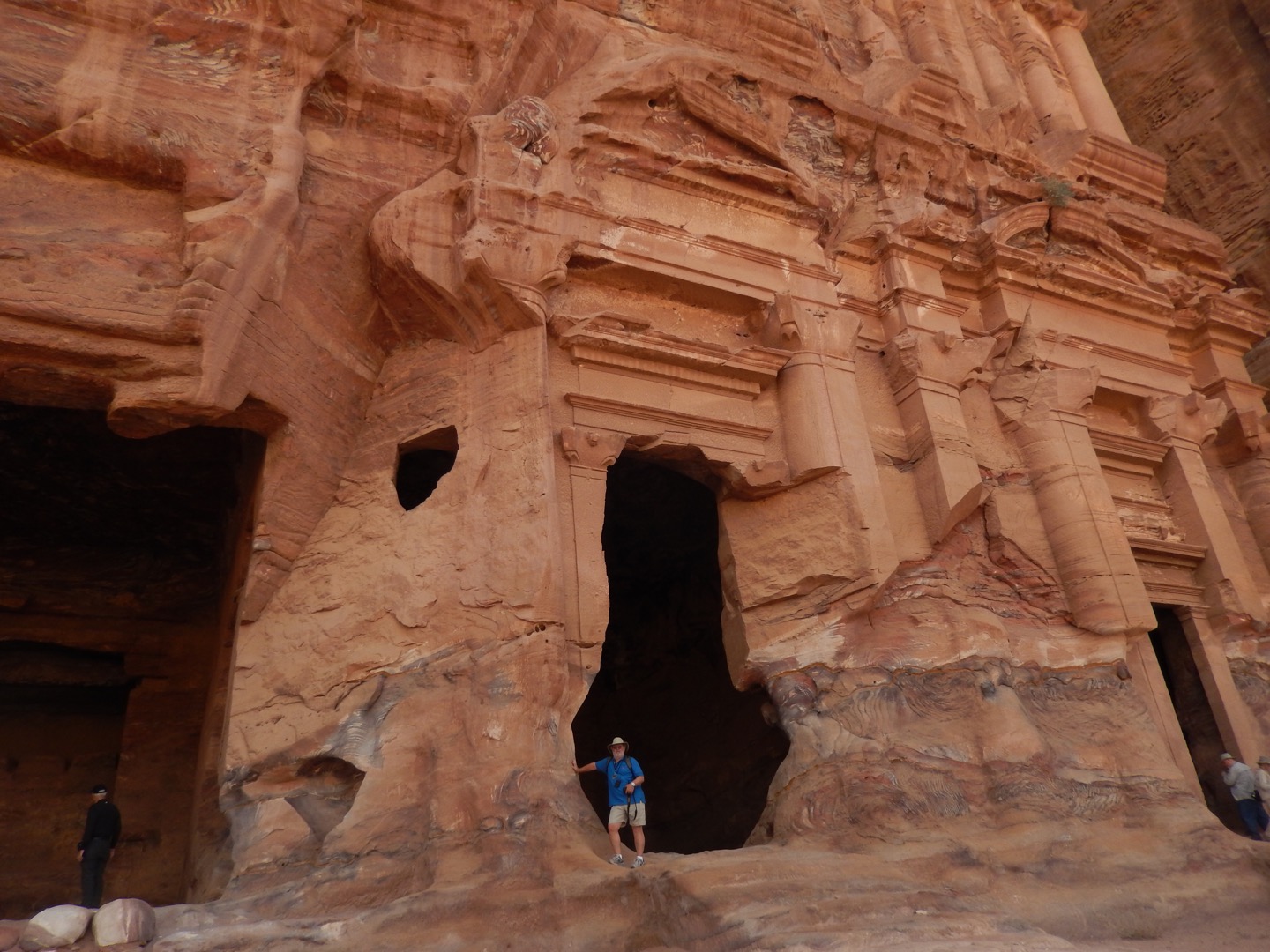
At the far end the Siq opens to reveal the Treasury. imageThis is the iconic structure of Petra from Indiana Jones. It looks like the exterior of a bank, more or less, except that it is a couple thousand years old and carved into the Rock. All of the ancient structures (BC) we will see in Petra are carved into the Rock like a cave as opposed to the newer structures (AD) which may be built of quarried brick or rock. image image
From there our guide, Muhanned (yes, he spelled in with a n) took us through the major sites of Petra. He is young and funny and likable. He pokes fun at the Saudis and at fundamentalists. His brother moved to America and married an American. Jordanians in general are liberal, not a surprise given that of the previous King’s 4 wives (in succession not simultaneous) one was American, and one, the mother of the current King, whose portrait, Kevin points out, looks a lot like John Elway, was a Brit.
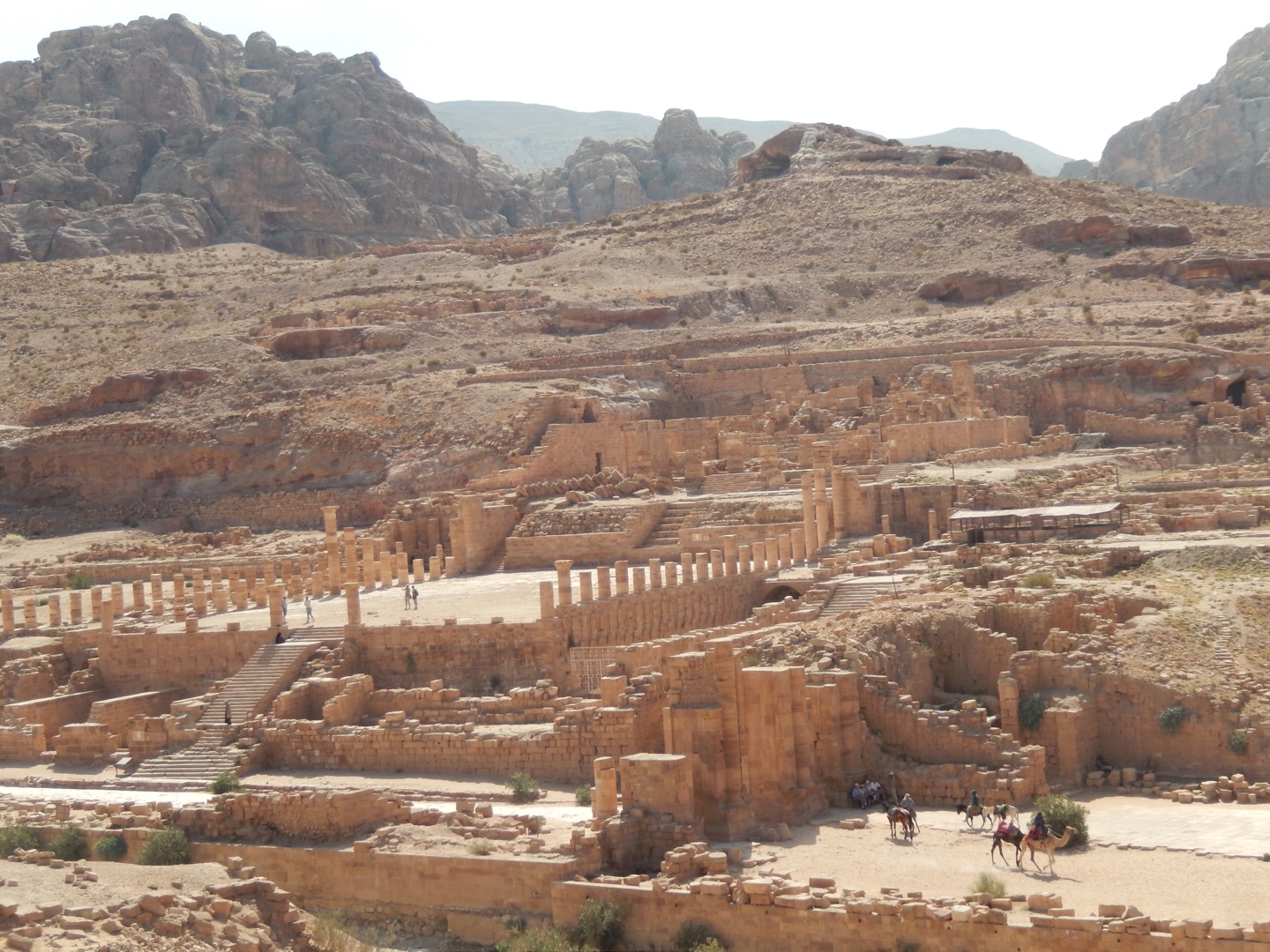
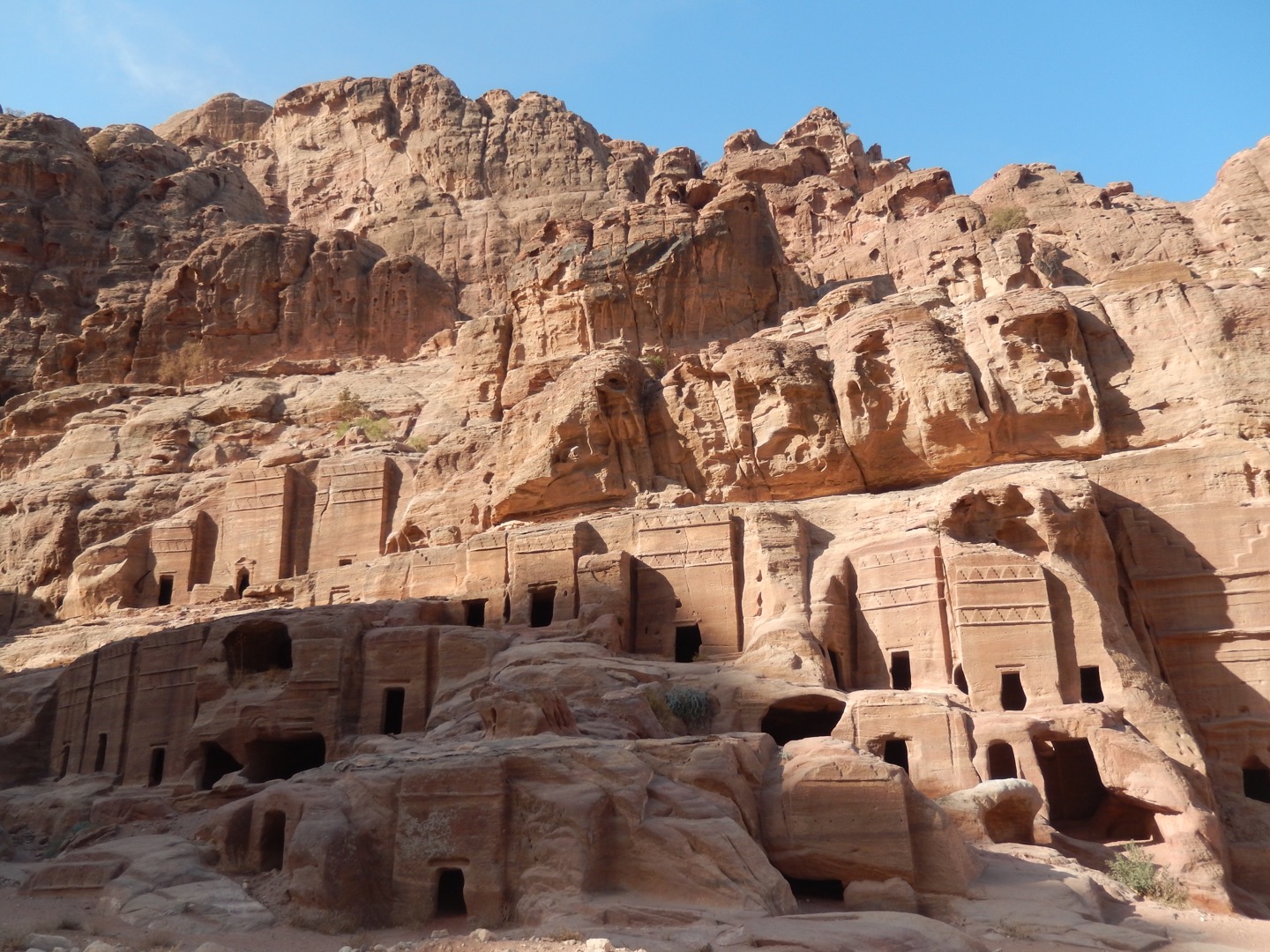
There are ruins of a couple of civilizations inside the mountain walls. Temples of the Nabatean people,image  imageand churches built by the Romans who conquered them (by cutting off their water supply).imageThe ancient city has a series of fairly sophisticated aqueducts. If these ran dry, you can see how the Nabateans would be forced out pretty quick (sneaky Romans).image
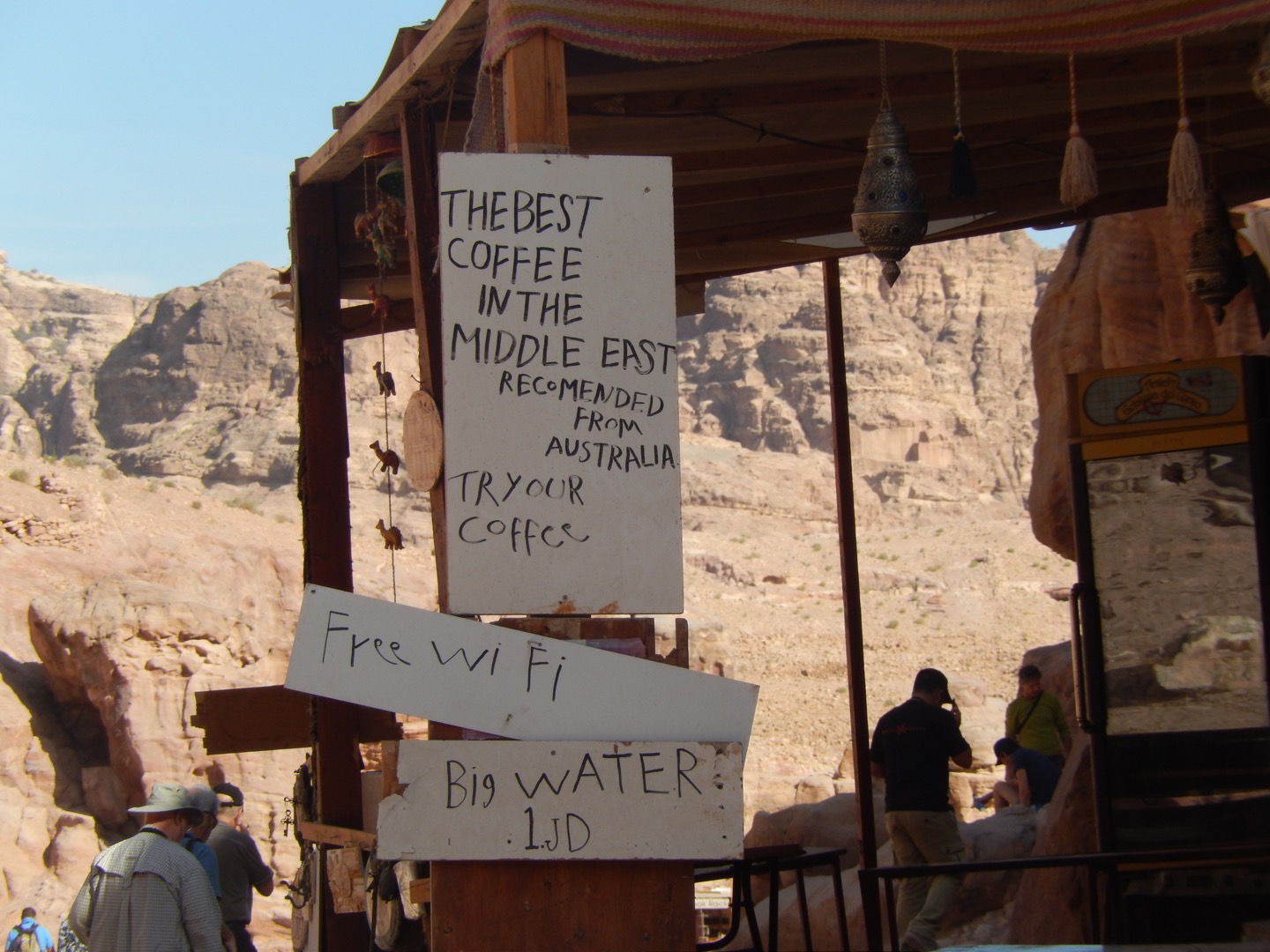
There are hundreds of vendors, though Muhanned does a decent job keeping them at bay. One little kiosk is operated by the son of the Western woman who married a Bedouin and lived with him in a cave for years. He sells signed copies of her memoir and a pretty collection of jewelry she designed based on Nabatean motifs. imageWe buy both.
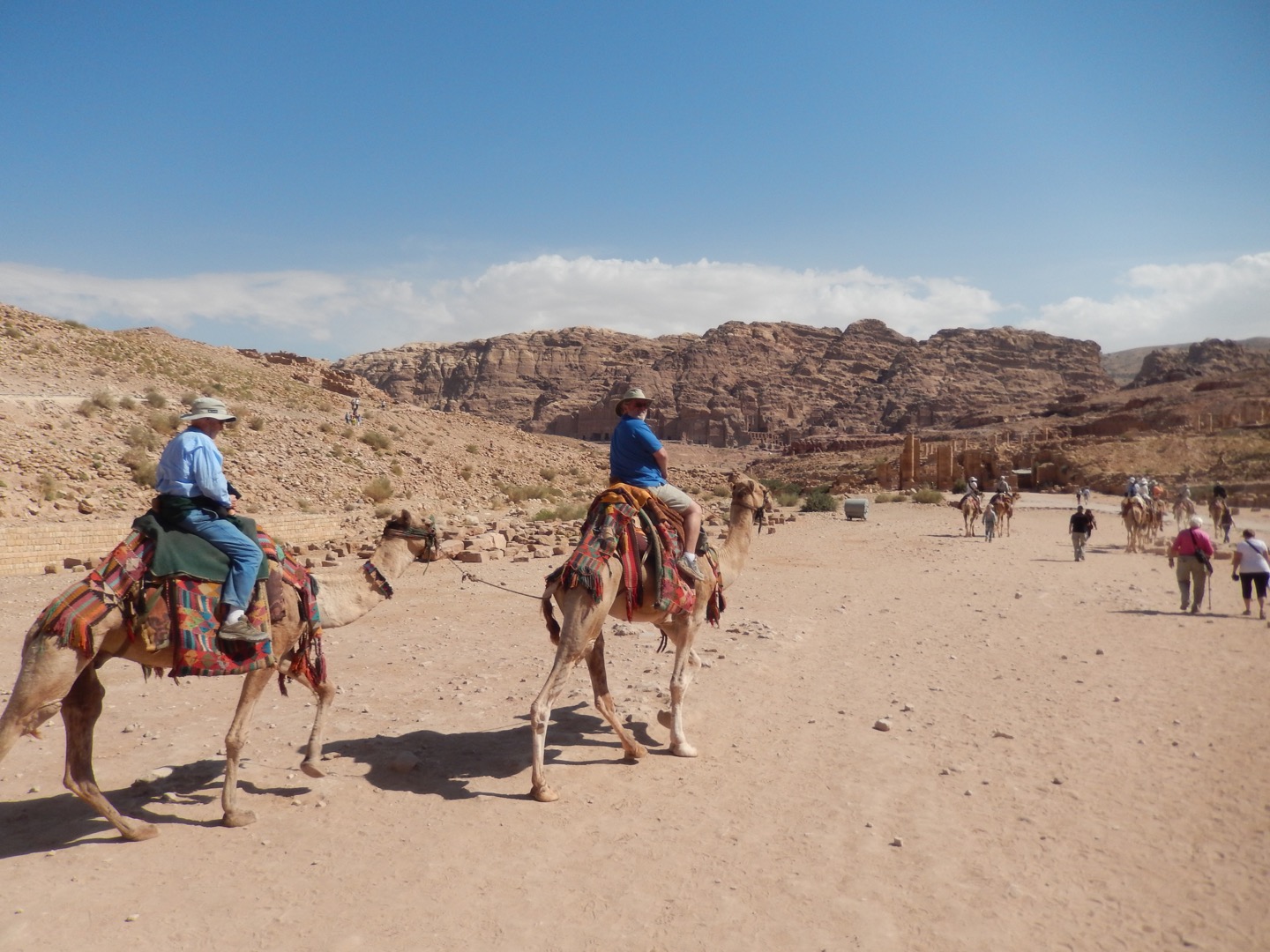
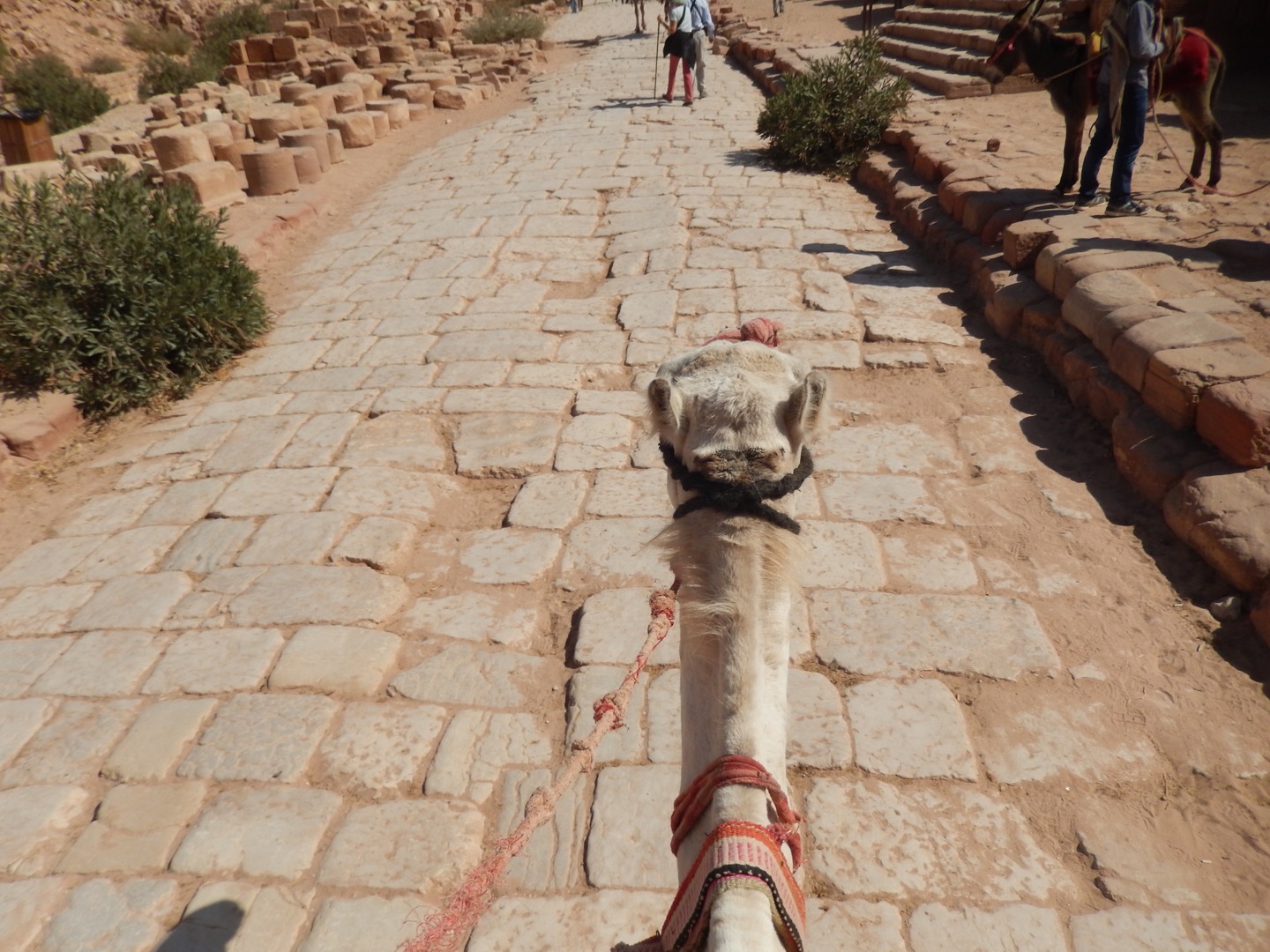
The tour ends at a restaurant which serves a big, middle eastern buffet (I eat rice, and rice and a couple samosas that I couldn’t resist). The walk in was nearly 3 miles, and after lunch the sun is blistering, so we opt to ride camels imageback as far as the Treasury, and walk that last mile through the shady Siq to the hotel, imagerewarding ourselves at the fabulous ice cream shop on the ground floor.
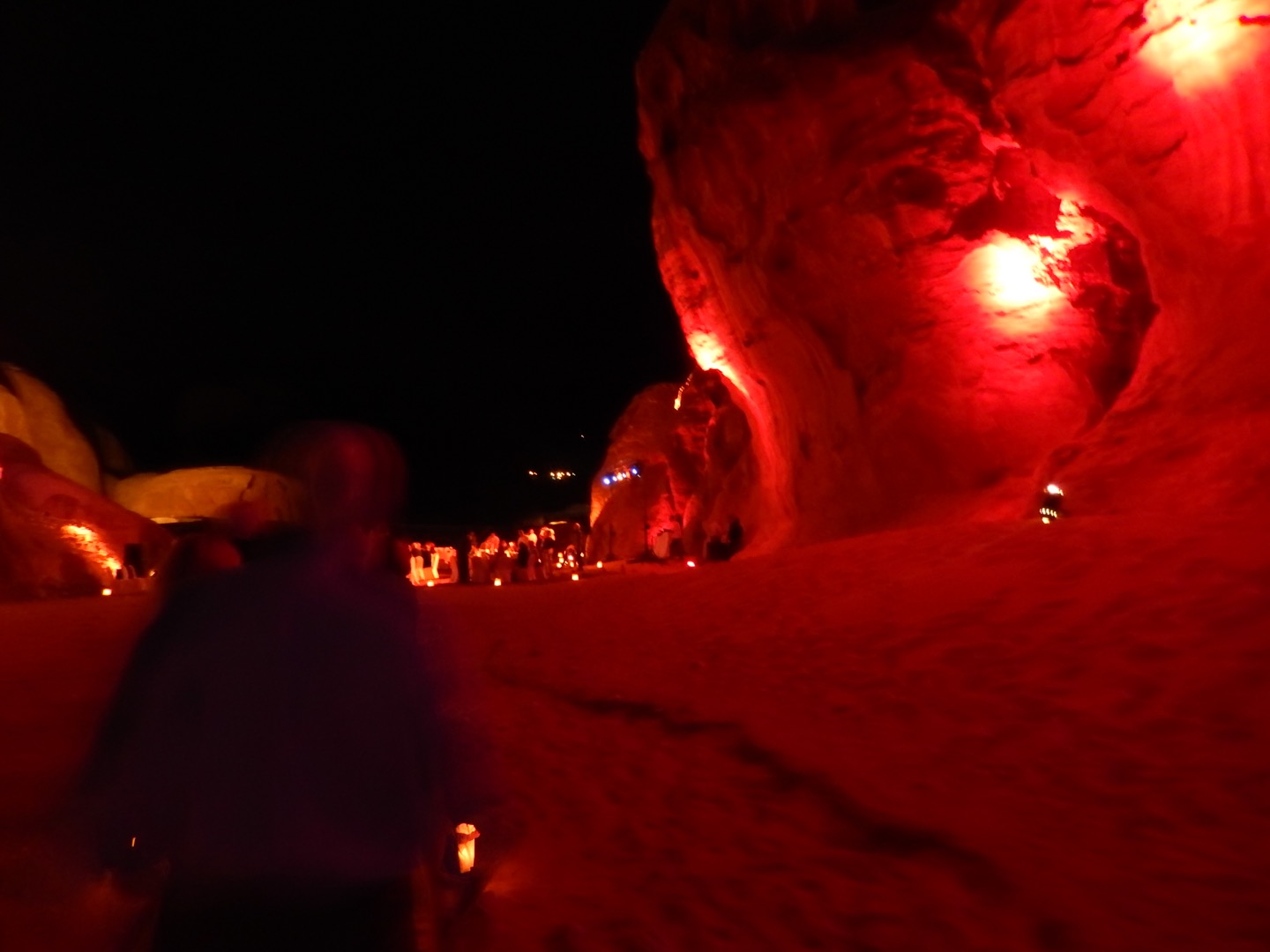
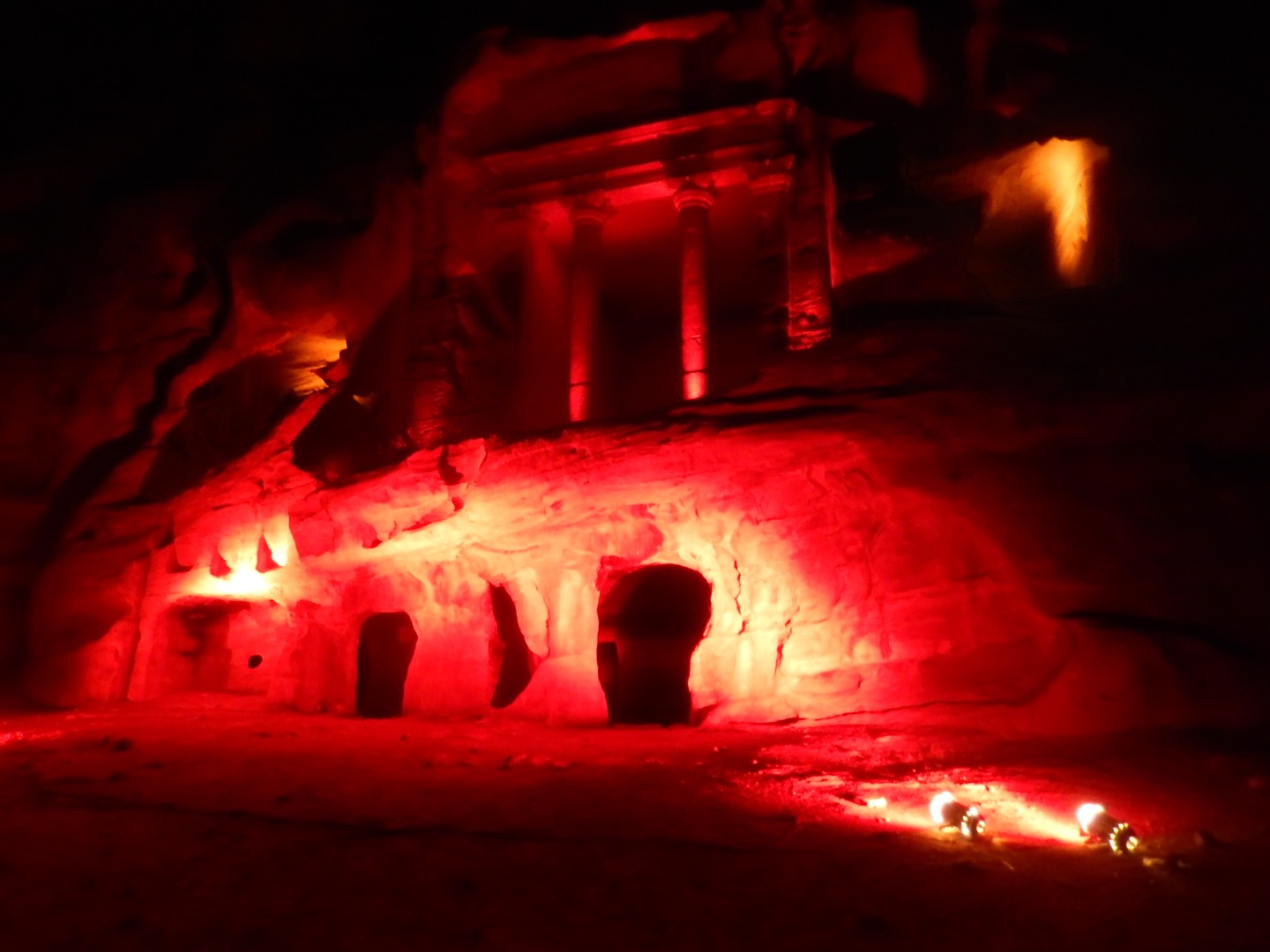
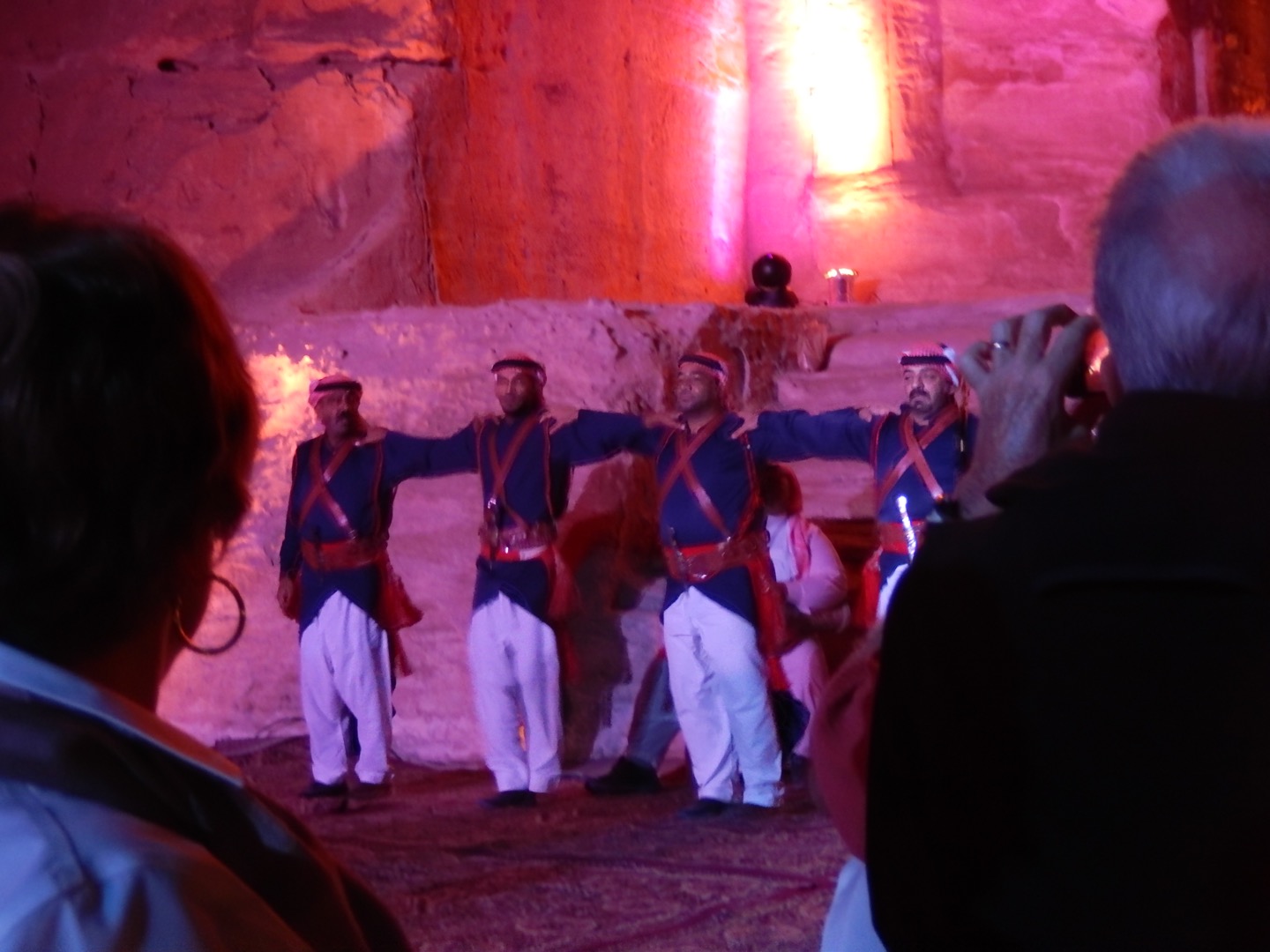
That evening we are bussed to little Petra. The Siq there, barely visible in the dark, has been laid with carpet runners and lit with thousands of candles set in paper bags full of sand. We walk it, single file. The sky so full of stars you can see the smear of the Milky Way. imageThe path ends at a clearing where cocktail tables have been set up, and then this crazy booming spooky Gregorian chant style music, like something from the exorcist or the omen starts and this wild light show from inside the little Petra stone monument. imageWhen we are led back out the entrance, invisible in the dark when we’d arrived, it has magically been lit up,image and filled with tables, where we are served a Bedouin feast with music and dance.image

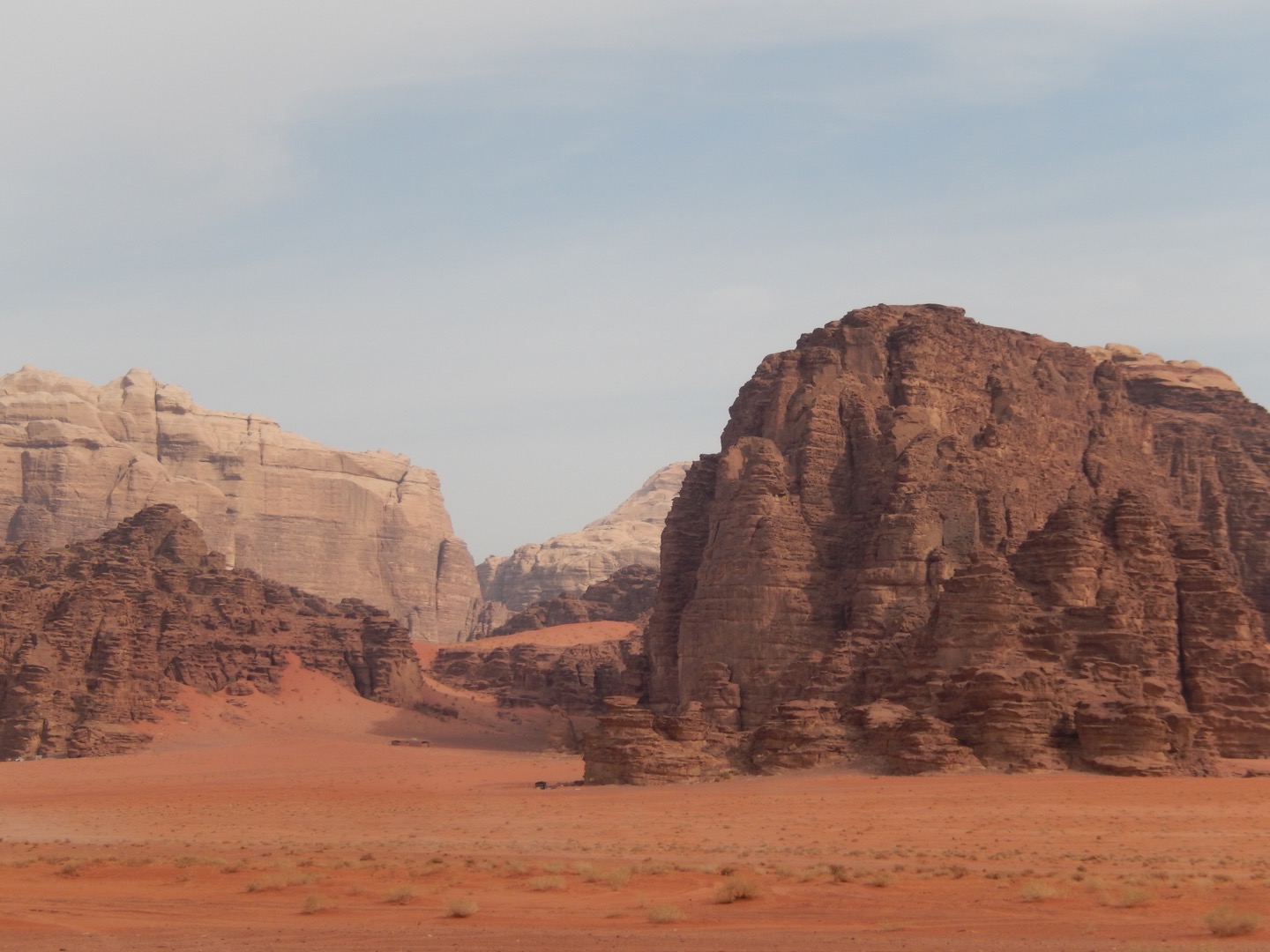
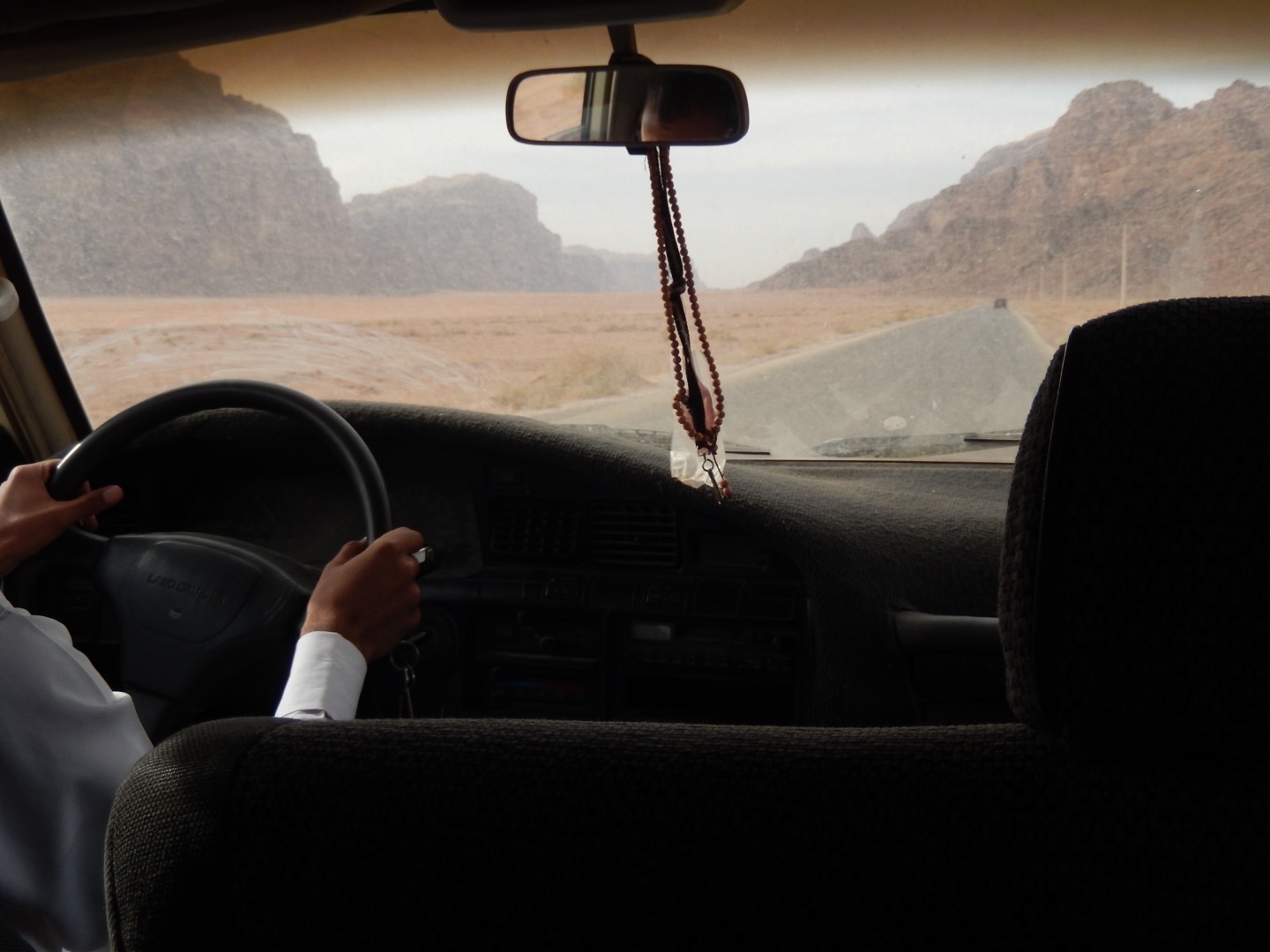
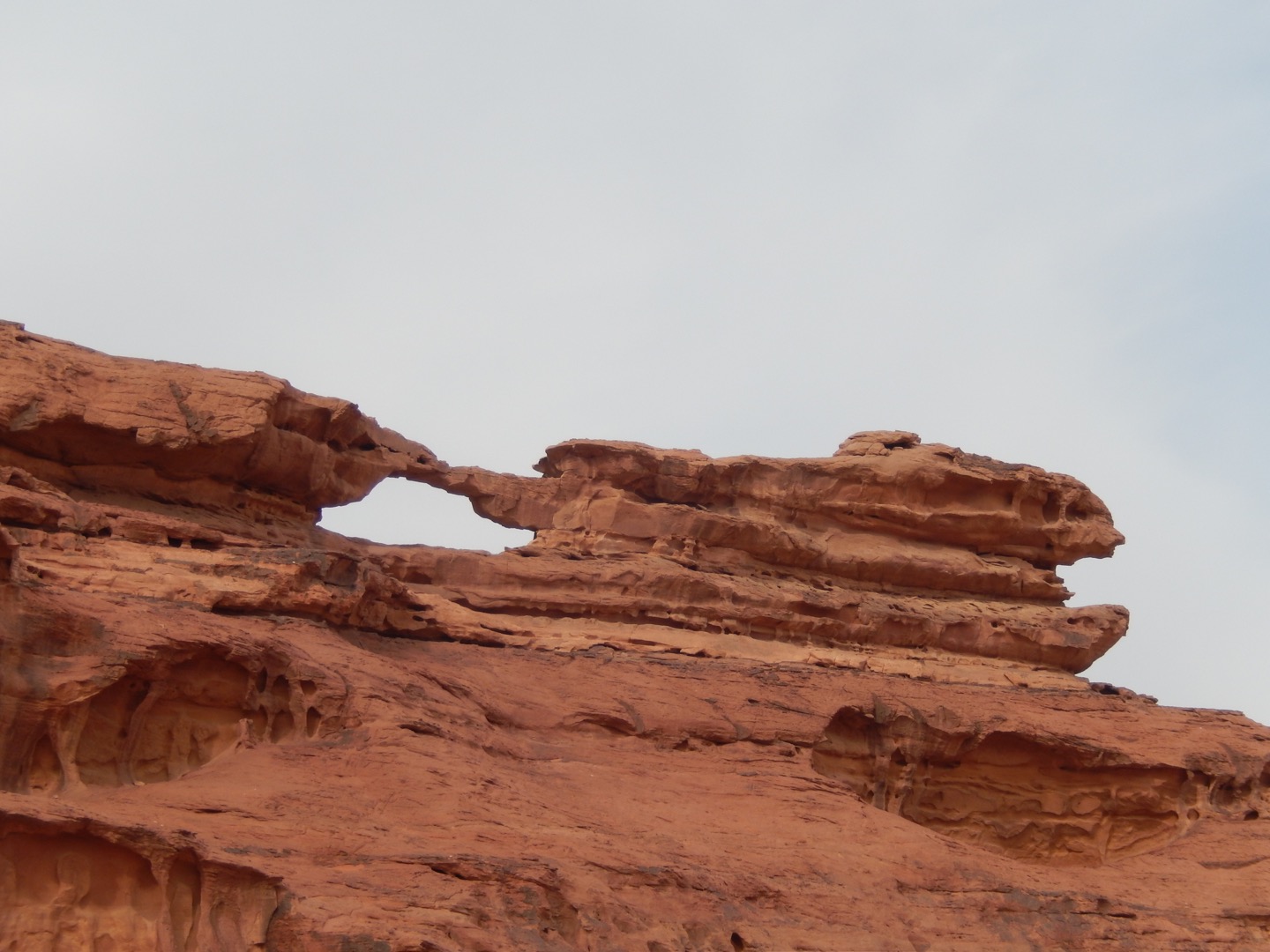
The next morning we visit Wadi Rum on our way back to the airport. Wadi Rum means ‘valley of the moon,’ and is reminiscent of monument valley in Utah.image Like a national park, there are just a few homes near the entrance where park workers live, and the rest in protected land for camping and recreation…like 4 wheeling. We are piled in pairs into 4×4 jeeps. Our driver is a kid, and it doesn’t take much encouragement from me to get him to really open that baby up imageand we blow by our more tentative companions, fish tailing and spitting sand. This land is where Lawrence of Arabia was famously shot, and also where the actual Lawrence past many times during the Arab revolt. He called this place the seven pillars of wisdom, and wrote a book about it. It is also where the current blockbuster ‘The Martian’ was filmed, as it is red and rocky and a great stand in for that rocky, dusty, red planet.image
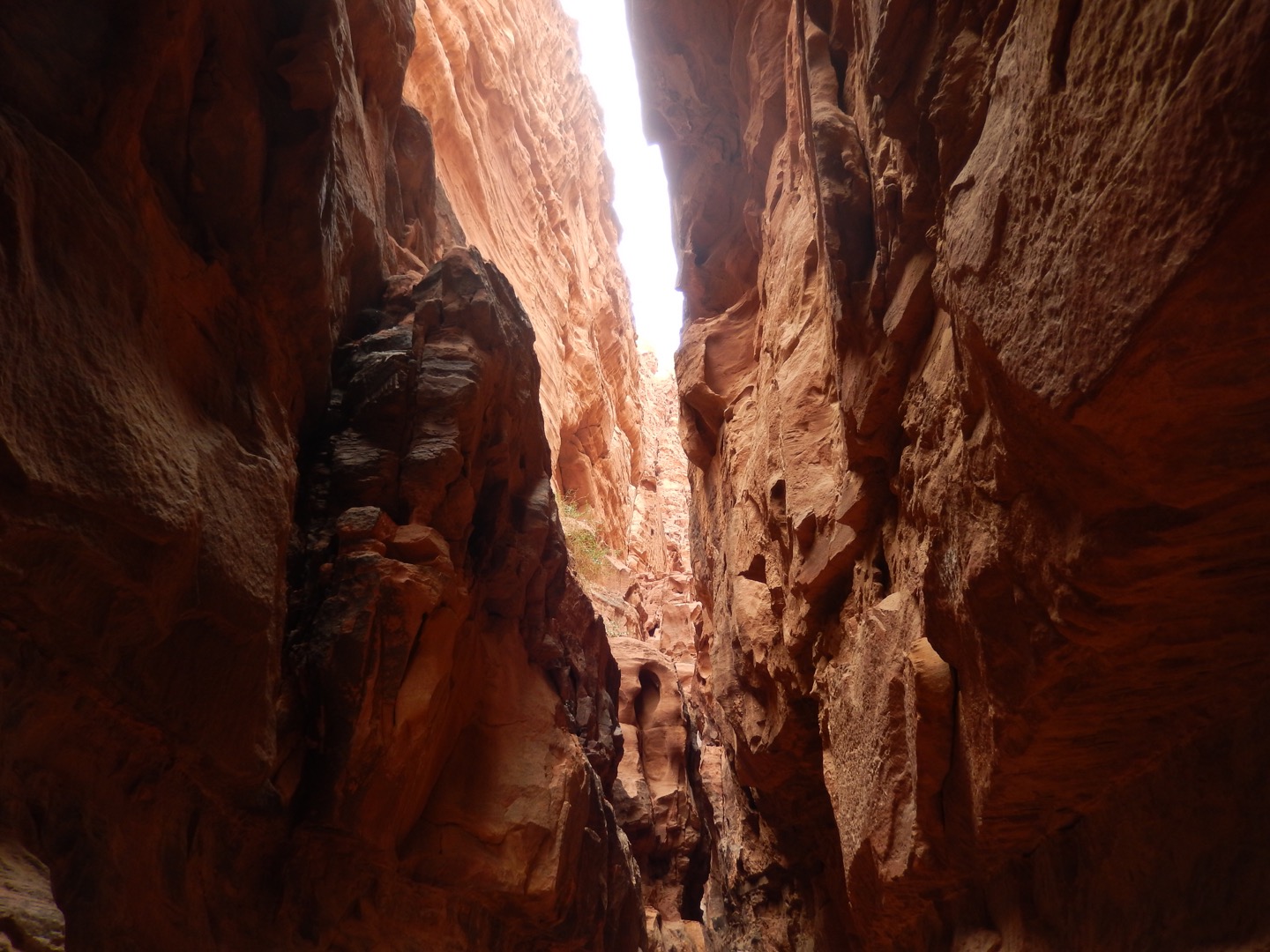
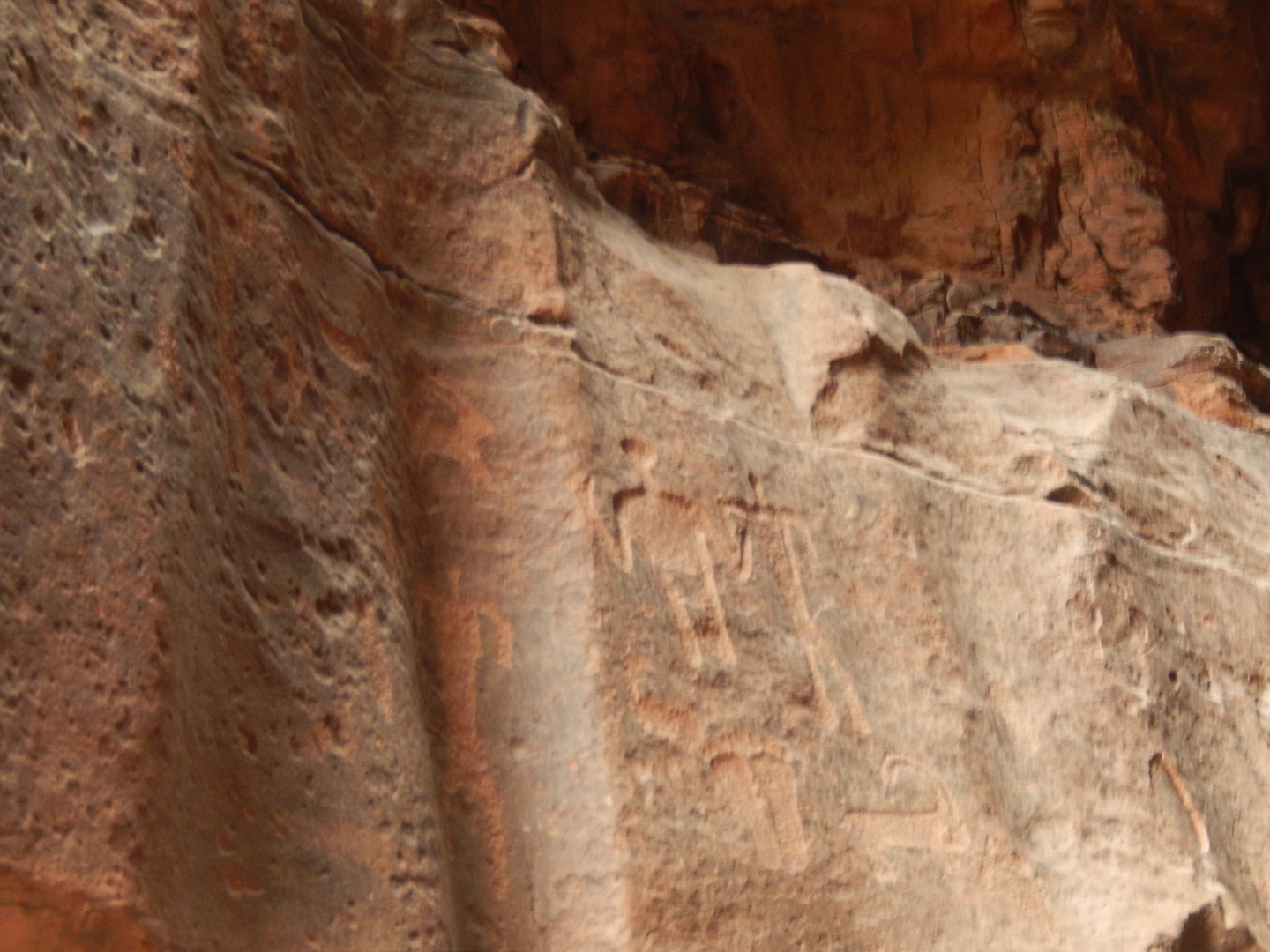
There are more remains of the Nabateans here, we enter Khazali canyon imageand admire their wall art.image (Which I must admit, I thought looked suspiciously ginned up for tourists).
After visiting a Bedouin tent for tea and biscuits, we head back to Aqaba airport and onward to our final destination-Morocco.

Nostalgia on the Serengeti

Three years ago our family safaried in Tanzania on what was probably the last vacation the six of us will ever take as a unit. My twins were two years out of college, busy with jobs and grad school, and Kev’s girls were in college. Trying to negotiate 2 weeks that each of them could squeeze into their individual schedules was painful. Also, I should be clear that Africa was my dream, but it wasn’t anyone else’s. The girls, burnt out from their studies, would’ve been happier visiting a lavish resort, and my son would’ve preferred an adventure more rigorous. But I got them there, and got my wish. Each morning we’d head out on a game drive, just the six of us inside a land cruiser. I’d take the bumpy seat in the rear no one else wanted, but from that vantage I could watch both the beautiful wild animals, and watch each of them, their faces turned out toward the wide grassy plain, thinking their private thoughts, knowing in my heart I would probably never again be able to corral them all together this way.

So this, my return to the Serengeti, is tinged with the melancholy of nostalgia everywhere I turn. Although, this view of the top of Kilimanjaro out my airplane window  (yes, that’s the wing) was cool.

image

From the airport in Kilimanjaro we take a small bush plane that lands on a grassy runway. From there we board land cruisers for the bumpy ride to the Four Seasons Serengeti. It is a lovely hotel, bordered on one side by a watering hole, so it is possible to just sit around and wait for animals to show up. (Which after 5 hours tracking game down rutted, teeth rattling roads, is nice.) In one afternoon we saw herds of zebra, elephants, and Cape buffalo in succession.

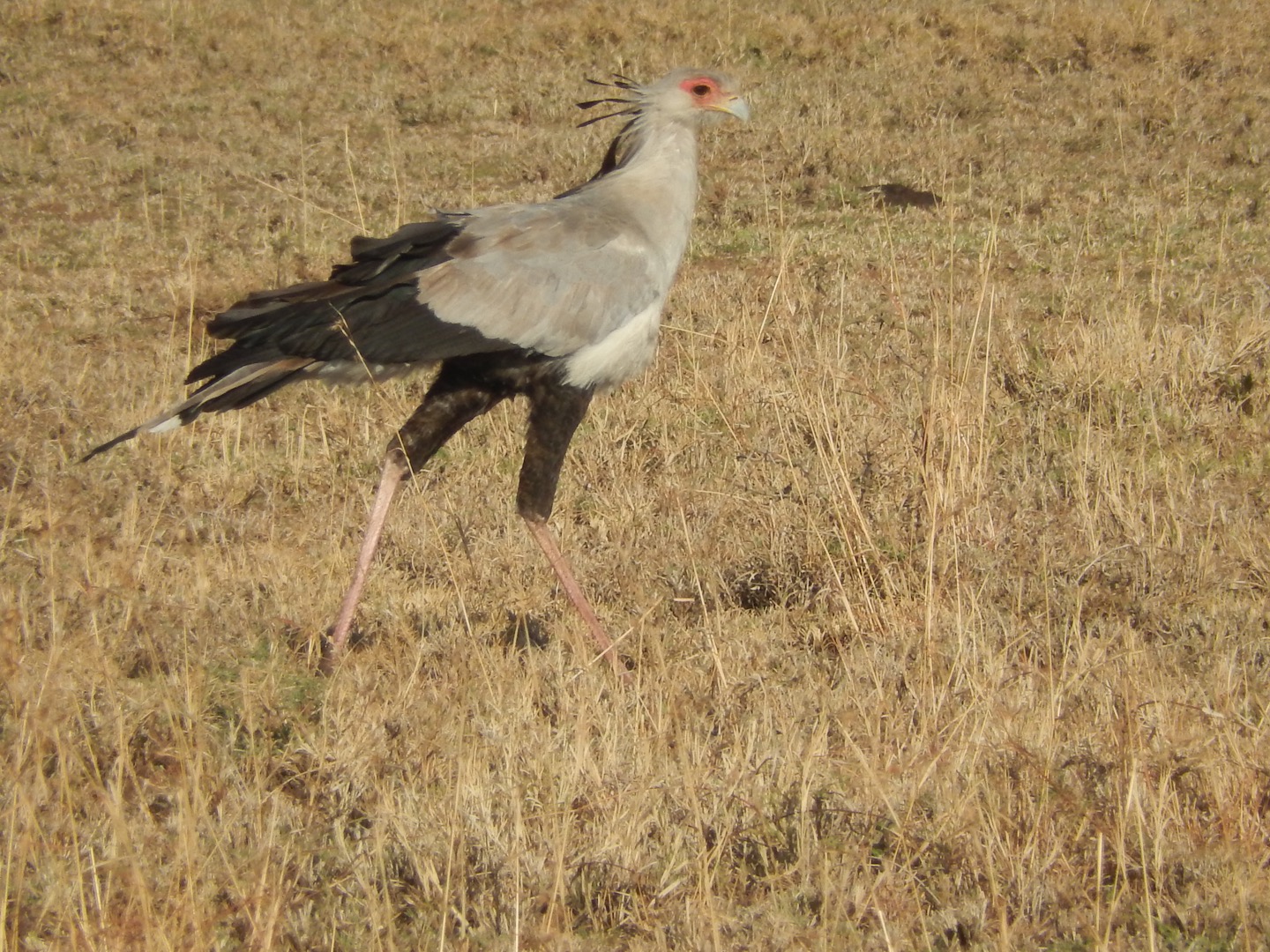
Africa is a beautiful and savage place, and on our game drive, we see a ton of amazing things, like this guy,    image

and this guyimage

and this guyimage

well, hello      image

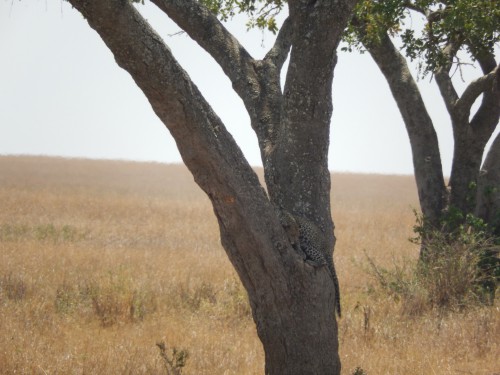
And this baby leopard is hard to see, but he is in the crook of the tree

image

Just above him were the hind legs of a baby gazelle, but I had never met the gazelle, and that leopard was damn cute…so whatever…circle of life, right?

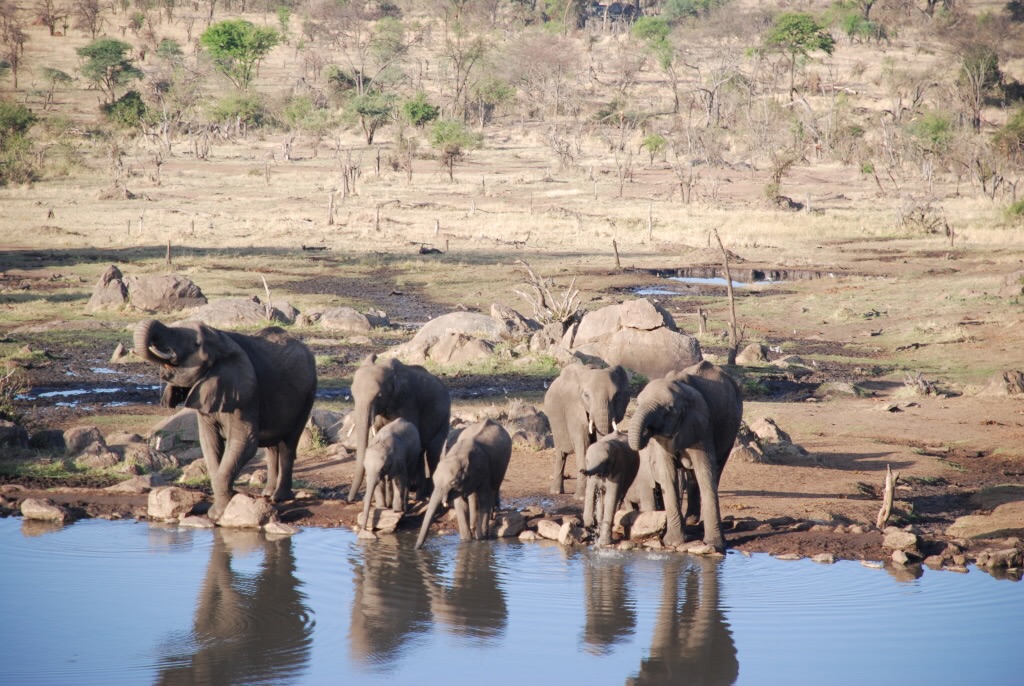
Our stay is brief, but as we are enjoying our pre departure breakfast, commiserating about our previous stay in the Serengatti, thinking about the kids…the older 2 are planning weddings, the younger 2 beginning their careers on the east coast. Then these guys show up at the watering hole…

image

Reminding us that families will grow and shrink and change and evolve, but if you want them to show up, it doesn’t hurt to offer them a drink.

The Taj

image

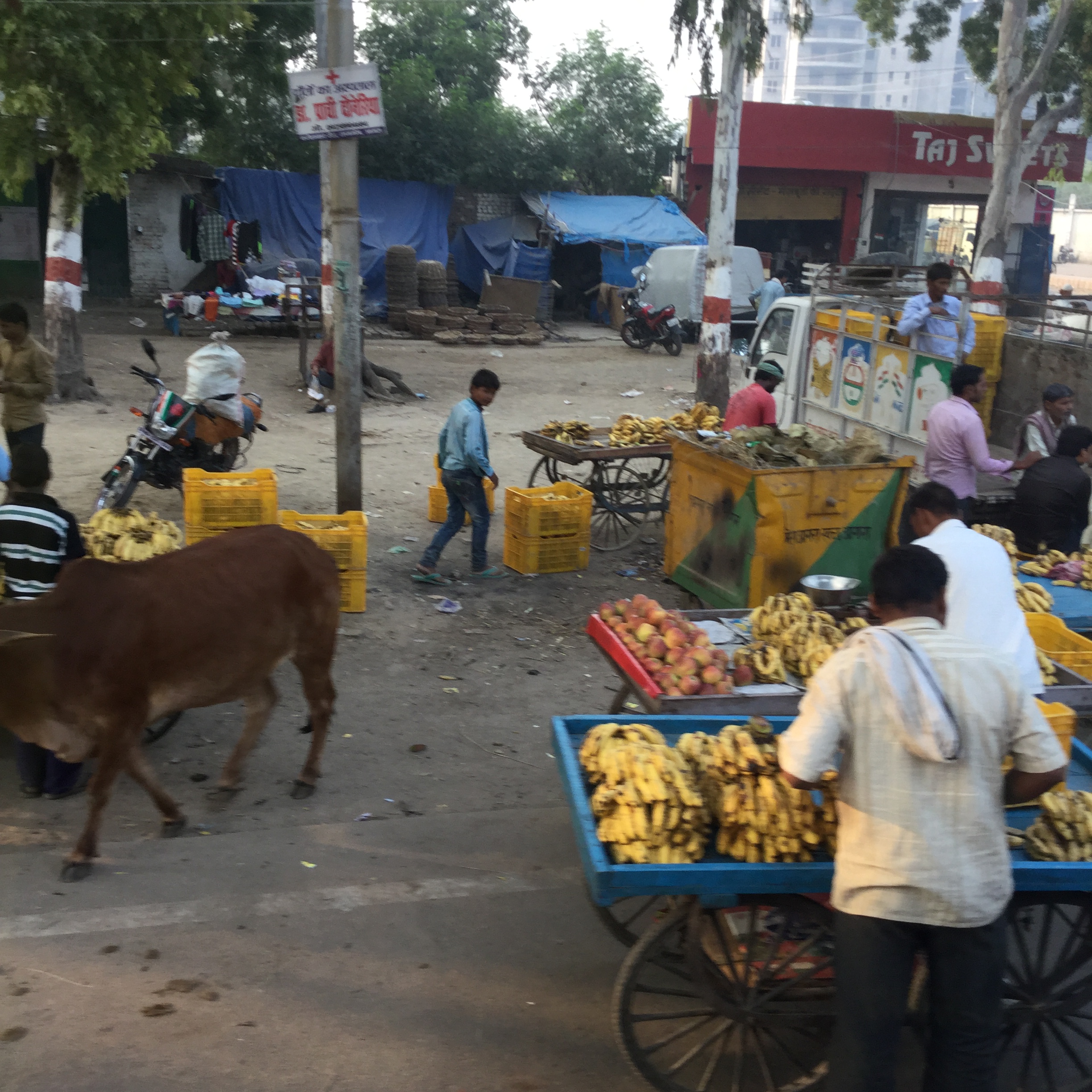
Agra, India is in the northern part of the country. It is a mid size Indian city of about 2 million people, its streets gritty and steamy and teaming with life. imageDespite all the stories you may hear and all the travel stories you may read (including this one) nothing can prepare you for India. It is simply overwhelming. The streets are a riot of colors and smell and animals and vendors and every imaginable transport.      image

imageIt seems impossible that it functions, that it doesn’t simply collapse into dystopian chaos. I am a traveler who enjoys ‘getting into the mix,’ but here I am grateful for our large, graceful, elegant hotel, the Oberoi Amarvilas, spacious and sparkling and scented with frangipani.                    imageIt’s gracious staff, and beckoning pool, and rooms that, through some wonder of architecture, each have a view of the reason we are here, the Taj Majal…although our view is often obscured by a very aggressive parrot.image

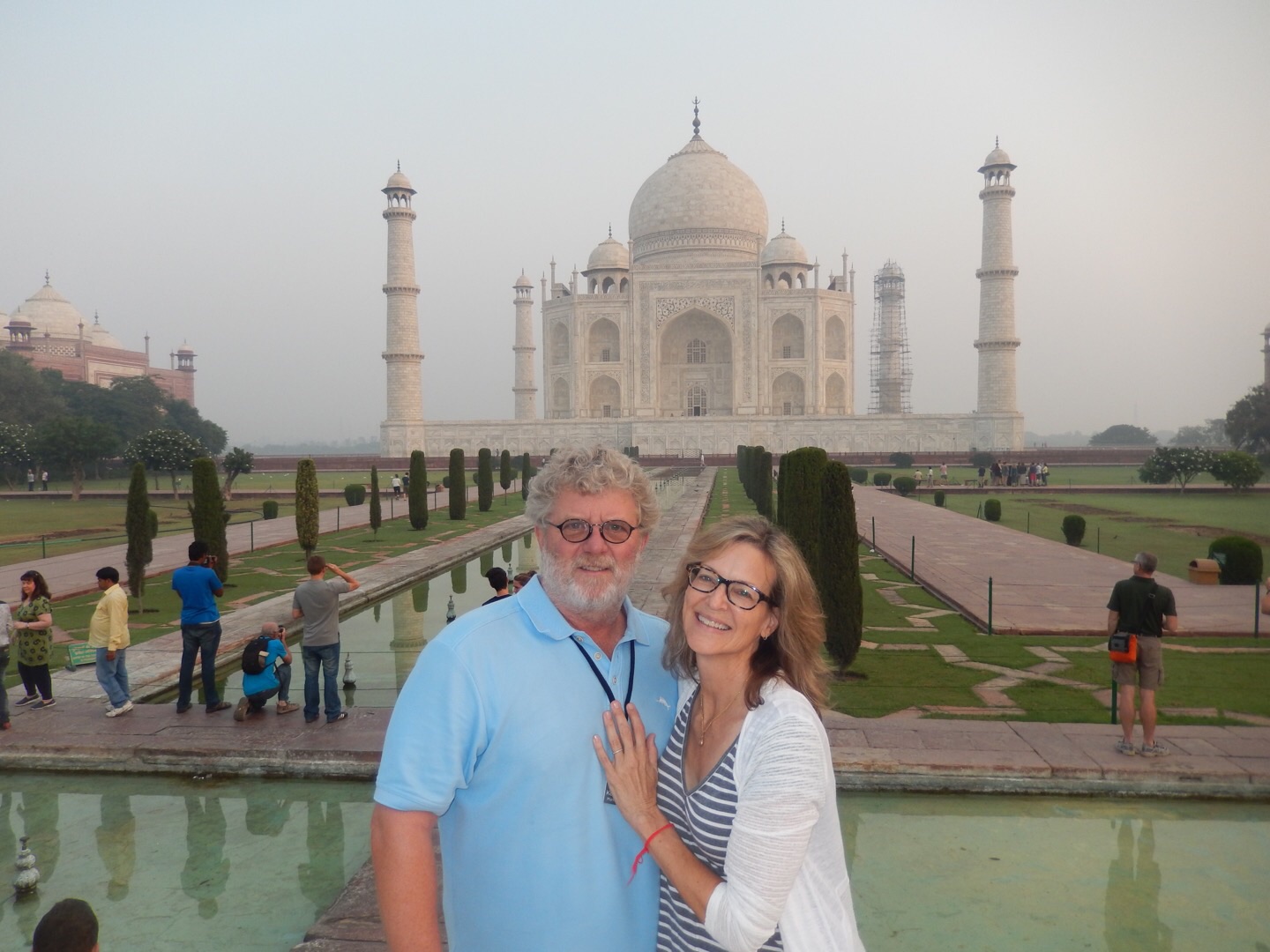
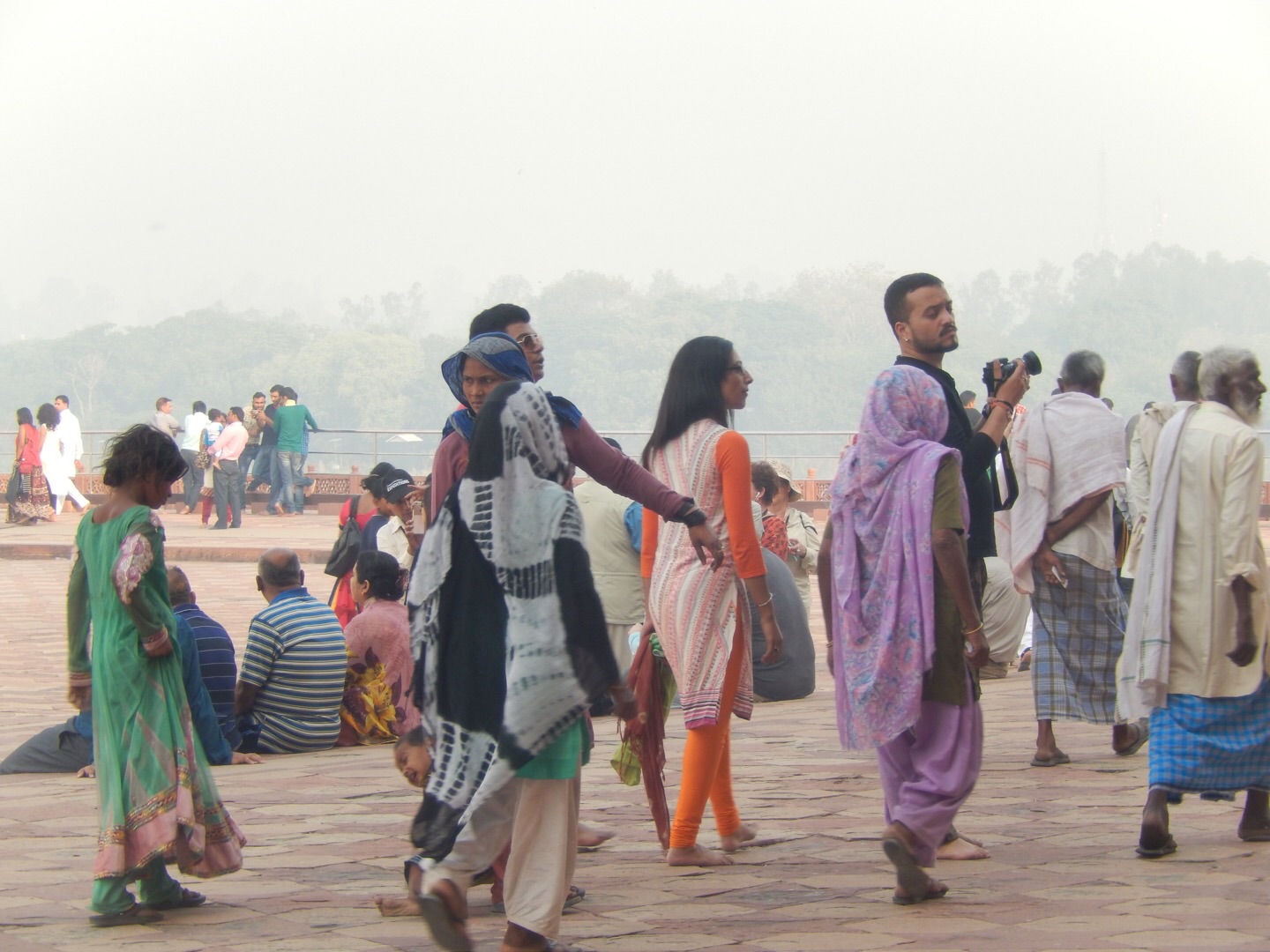
We opt to visit the Taj at dawn, before the heat of the day becomes too oppressive. An electric shuttle transports us the half mile through the still dark streets, and we queue up like at Disneyland and wait for the gates to open. The world around us awakens with the morning light, imageshops open, a trickle of people turns into a river of saris and carts and tuk-tuks and cows. imageAfter a fairly rigorous security check, we join our guide Sanjay inside the gates.  As we approach the pink stone gateway, which is also pretty cool, he tries to apply the brakes and offer some context, imagebut the eagerness of the group to JUST GET ON WITH IT SO WE CAN SEE THE THING is palpable. We nearly charge through the entrance.
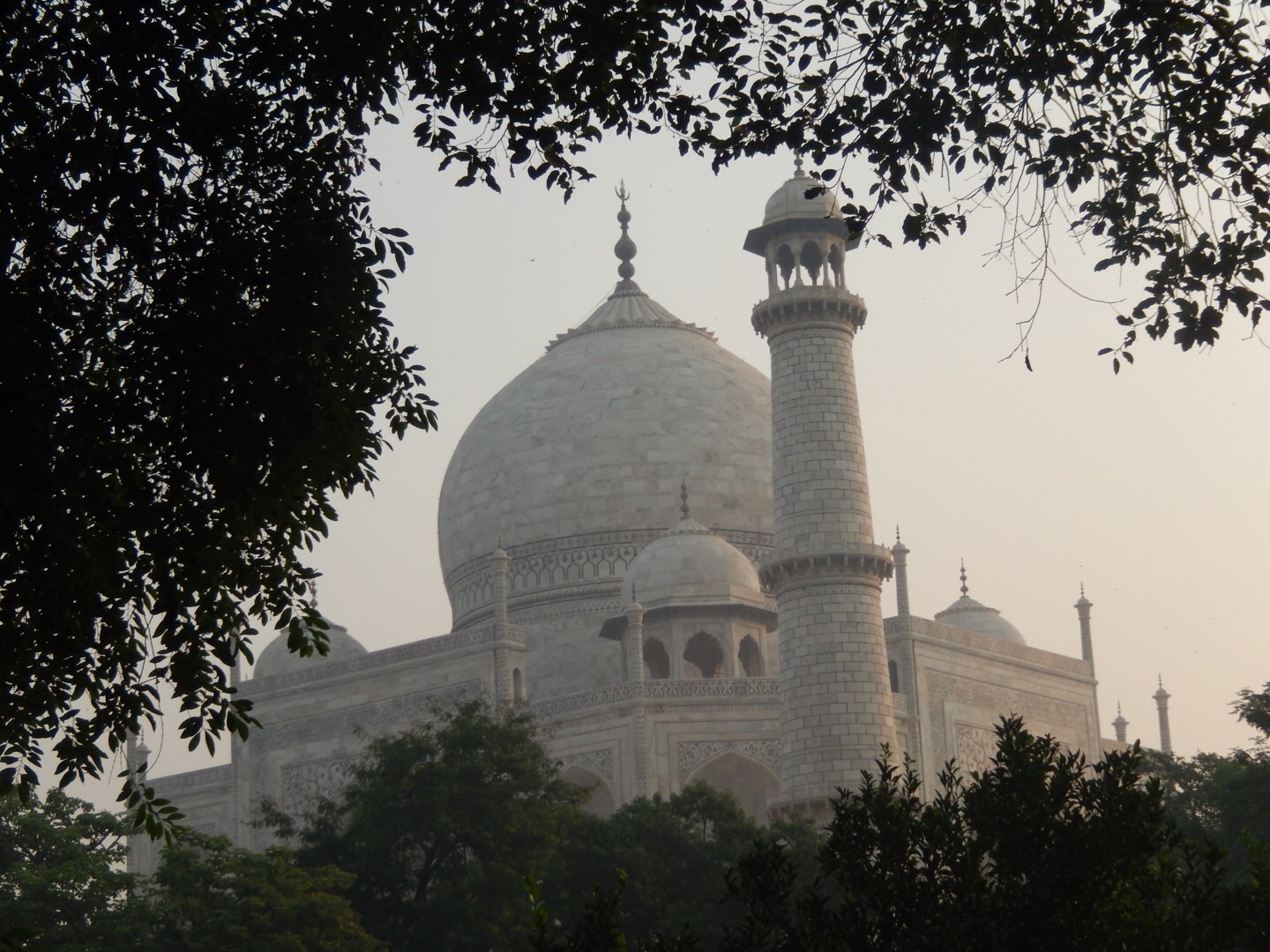
There it is, all misty and magical in the thin morning sunlight.image
There’s no point in describing the Taj Majal. If you are a human being with eyes, you have seen countless photos. Perhaps it is just that, the ubiquity of the image that makes seeing it even more unreal. Like finding a unicorn.
I’d expected a crush of tourists, but whether it’s the early morning hour, or the expansiveness of the property; the series of tiered gardens and reflecting pools and surrounding structures,image or the shocking crush of humanity we left just outside the gate, it doesn’t feel that crowded. There are places to sit on a pretty bench in the shade of a tree and just admire. image
We also tour the interior, which takes about 5 minutes. The Taj is a mausoleum, built by a Mughal emperor, Shah Jahan, to house the body of his beloved wife after she died giving birth to his 14th child. Since he was a Muslim, there aren’t any statues or representations of gods or animals (Islam frowns on idolatry. In fact, ironically, strict Muslims don’t believe in any sort of death monuments) Inside it is unimpressive, just a round crypt with 2 raised tombs, one for the wife, and one for the emperor. He died after being imprisoned many years by one of his own sons (who also murdered all of his siblings) in a ‘Game of Thrones’ style coup.imageimage
But the exterior delights and we view it from every possible angle before returning to the hotel for breakfast, followed by a yoga class taught by a twig-thin turbaned yogi all in white. It is less a vigorous flow than a breathing, chanting sort of thing. But the stretching part feels good. After that Kev and I take a swim in the glorious pool (by 9am I think it was 1000 degrees) and order some lunch in one of shady grottos.
In the afternoon we opt to visit Kachhpura village, home to the Harijans people, a caste of ‘untouchables.’ India is still strictly divided into socio-economic castes or groups from which there is no possibility of upward mobility. Marriages are arranged within the caste, so if you are born into a family of untouchables, there is no escape. You will only be offered shitty jobs (and jobs that frequently involved actual shit).
Probably the best job you can in this caste is shoemaker. Since the vast majority of Indian people are Hindu, the thought of working with cow hide is repulsive to them (although many wear leather goods). This particular village gets its water from a central village pump, and has just acquired its first few flush toilets with a septic system. But this can hardly accommodate the population as evidenced by the canal of human waste that flows beside the narrow walkways between homes.
The brief ride to the village takes us through downtown Agra, and it is utter madness, thrilling and startling with the crush of people and animals, cows and cows and cows,image skinny, feral dogs, fat pigs, and tiny monkeys skittering everywhere. imageAccording to our guide, the monkeys are a particular pest, but they are considered a sacred animal, and cannot be exterminated or even sterilized.
The village is surrounded by farmland, with healthy, flourishing crops of eggplant, cauliflower, pumpkin and spinach that insure the people’s survival. Hundreds of patties of cow dung are dried and stacked like pies to be used as fuel.
The discomfort of being rich, white people there to observe the poor brown people takes some getting used to, but by and large the people are warm and welcoming, as fascinated by our foreignness as we are with them. The children in particular want to meet you, introduce themselves. imageThey understand how cameras work, they swarm around Kevin, begging for photos, which they delight in viewing. imageThe village has recently become more prosperous due to a new business in which they purchase used saris from the middle class for $1 then clean and repair them, and resell them for $2. A sort of thrift shop industry. imageIt is impossible not to feel humbled by the pride with which they invite you into their tiny, cramped shanties, or not to lose your heart to the shy child who positively beams when you greet her with a wave and a hello. As we board the bus, Kevin buys a Taj Mahal snow globe from a local street urchin for 2 bucks for a friend at home image(hi Maggie) who requested one.
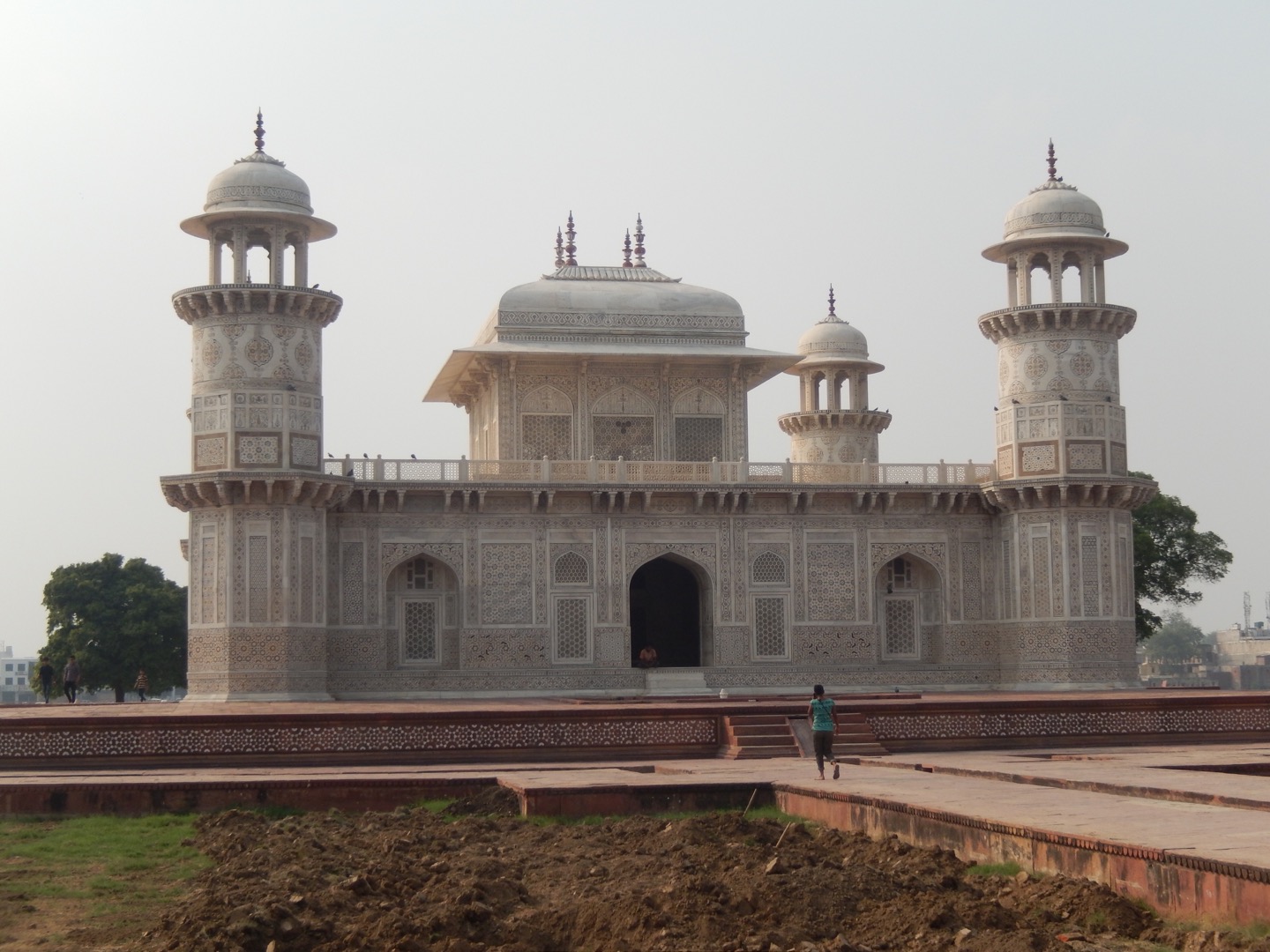
We then briefly visit the Itmaud-Ud-Daulah temple, also know as the “mini-Taj,” imagebut we are pretty hot and exhausted and the place is surrounded by those little monkeys which are cute when there are 2 or 3 in the distance, but creepy when there are fearless dozens who seem to be in charge.image
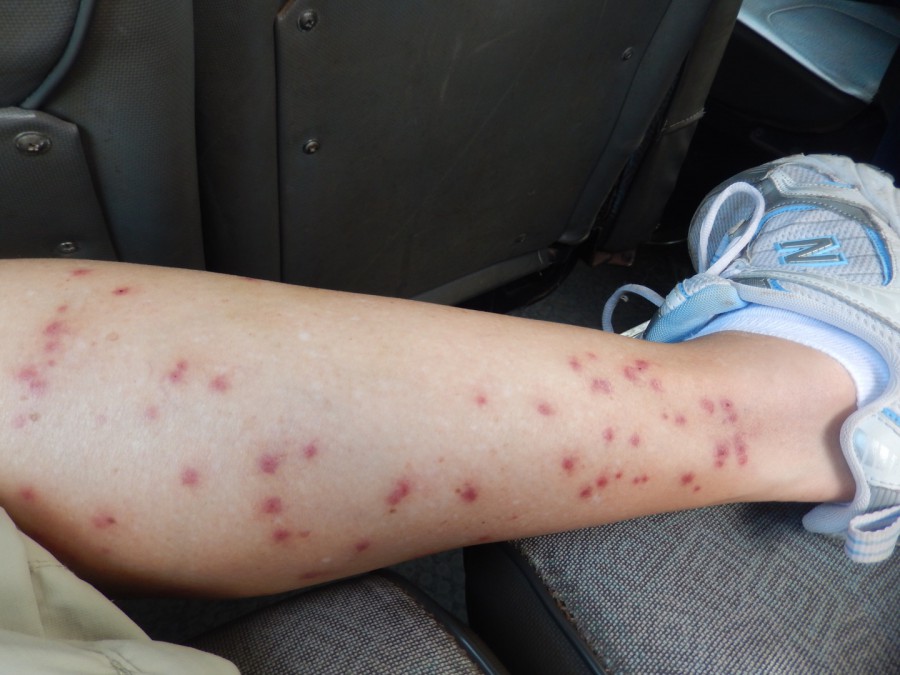
We return to the hotel to swim and rest up a bit. That evening we are first treated to a lecture on the future of exploration by Terry Garcia of NatGeo – in which he recounts a recent expedition to Honduras in which 8 team members contracted a flesh-rotting, potentially fatal disease called leishmaniasis from sand flies. I think of my legs, still spotty with welts from the flies at Machu Picchu, and wonder if the flies in Peru are related to the flies in Honduras. And I have another drink.
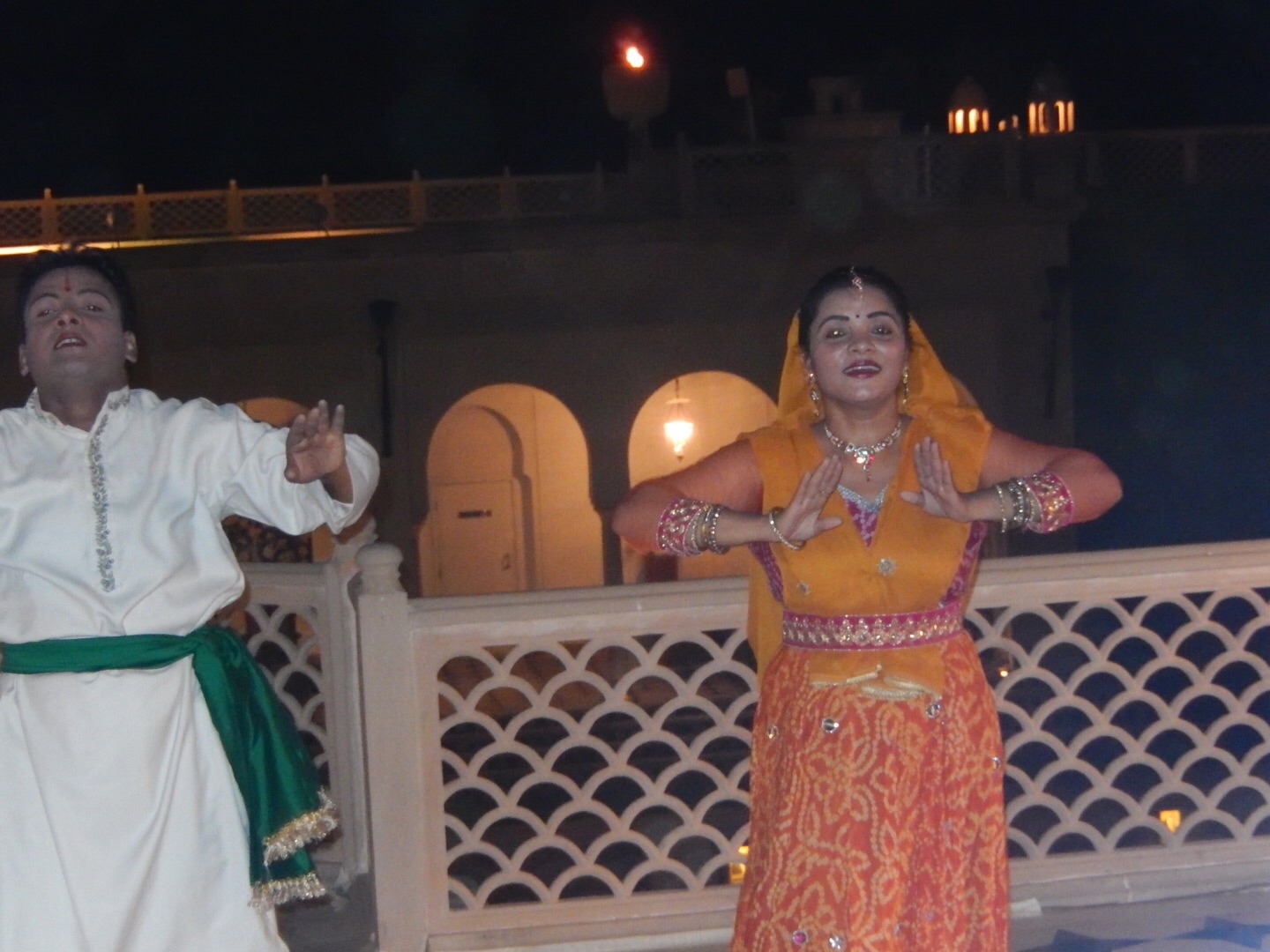
The lecture is followed by a bit of a party out on the terrace with (you guessed it) traditional dancers – although these 2 were more like a Bollywood review. imageThere are also henna artists, and I get painted up.image
I adore Indian cuisine, and that night I gorge myself on some of the best I’ve ever had, falling asleep the sticky sweetness of saffron orange ice-cream on my lips.image

Bhutan is made for walkin…

imageBhutan is a small mountainous country of fewer than 1 million dwarfed by its powerful neighbors, China and India, two aggressive suitors the Bhutan government simultaneously encourages and rebuffs in a delicate dance.
It has been called the last Shangri-la and is famous for something called ‘gross national happiness,’ which is the index used by the king to measure the success of his nation.
It is not simple to travel to Bhutan. The flight itself is a white knuckler for a nervous flyer like myself, a tiny airport nestled in a narrow valley that only a handful of pilots are qualified to fly into. Coming in, I swear I could see the birds in the trees.
Additionally, Bhutan does not allow you to backpack through. There are no hostels. They frown on ‘hippies’ (seriously, my guide used the word hippies). All travel must be negotiated through a certified agent and involve the expenditure of an average of $250. per day. They know they have something the public wants, and they are not going to let it go cheaply. The upside to this is the country is not overrun with tourists. I barely saw any.
The bus ride from the airport in Paro to the capital city of Thimphu takes about 90 minutes. There is only one road, 2 narrow lanes that wind around the mountain. We pass a lot of dump trucks (as construction is a constant – homes, roads, etc) each one decorated more spectacularly than the last. imageThe road is punctuated with silly signs about speeding and littering. These were erected by the Indian company who builds all the roads. imageIndians also do the construction of the homes. They are the cheap immigrant labor of Bhutan.

All of the Bhutanese people wear traditional dress during the daytime, the men’s looks like a plaid bathrobe and is called a gho, the women’s a long slim skirt called a kiroimage
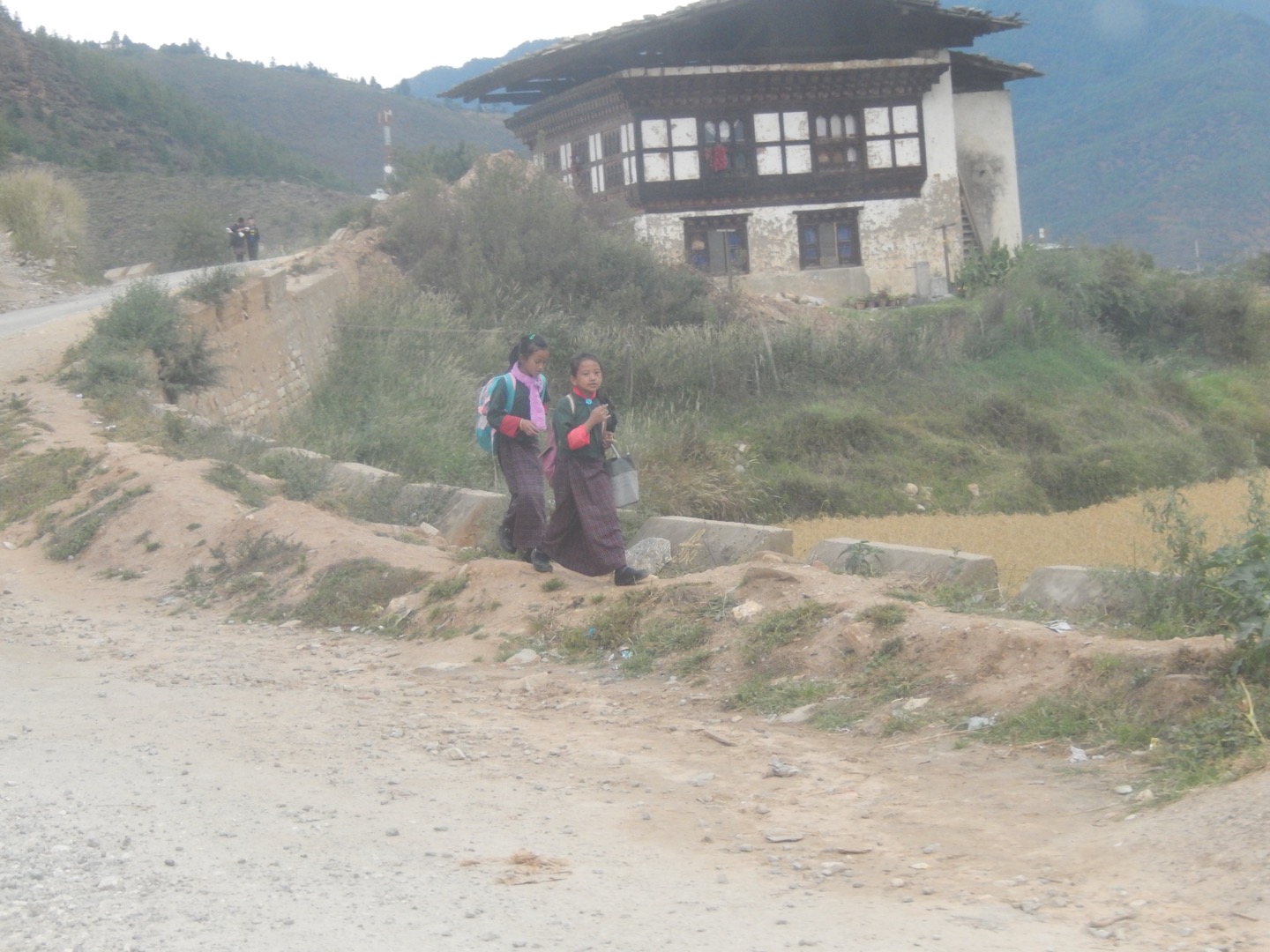
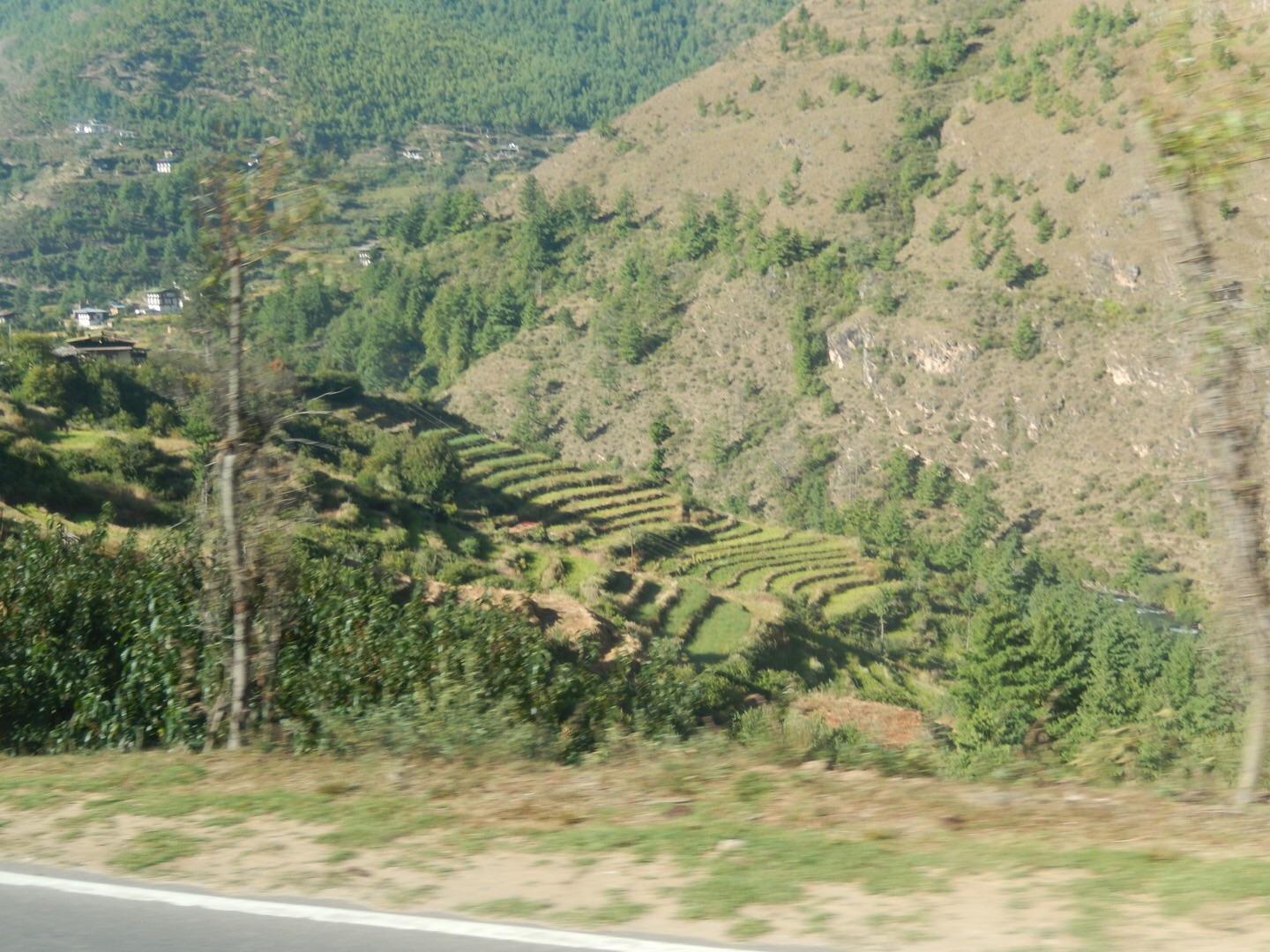
The people of Bhutan are all dark, small, and slender. Few of them own cars, and there are no motor scooters at all. These people walk everywhere in this mountainous region.image Farming is the major industry, but the farms are tiered as there isn’t any level ground.image
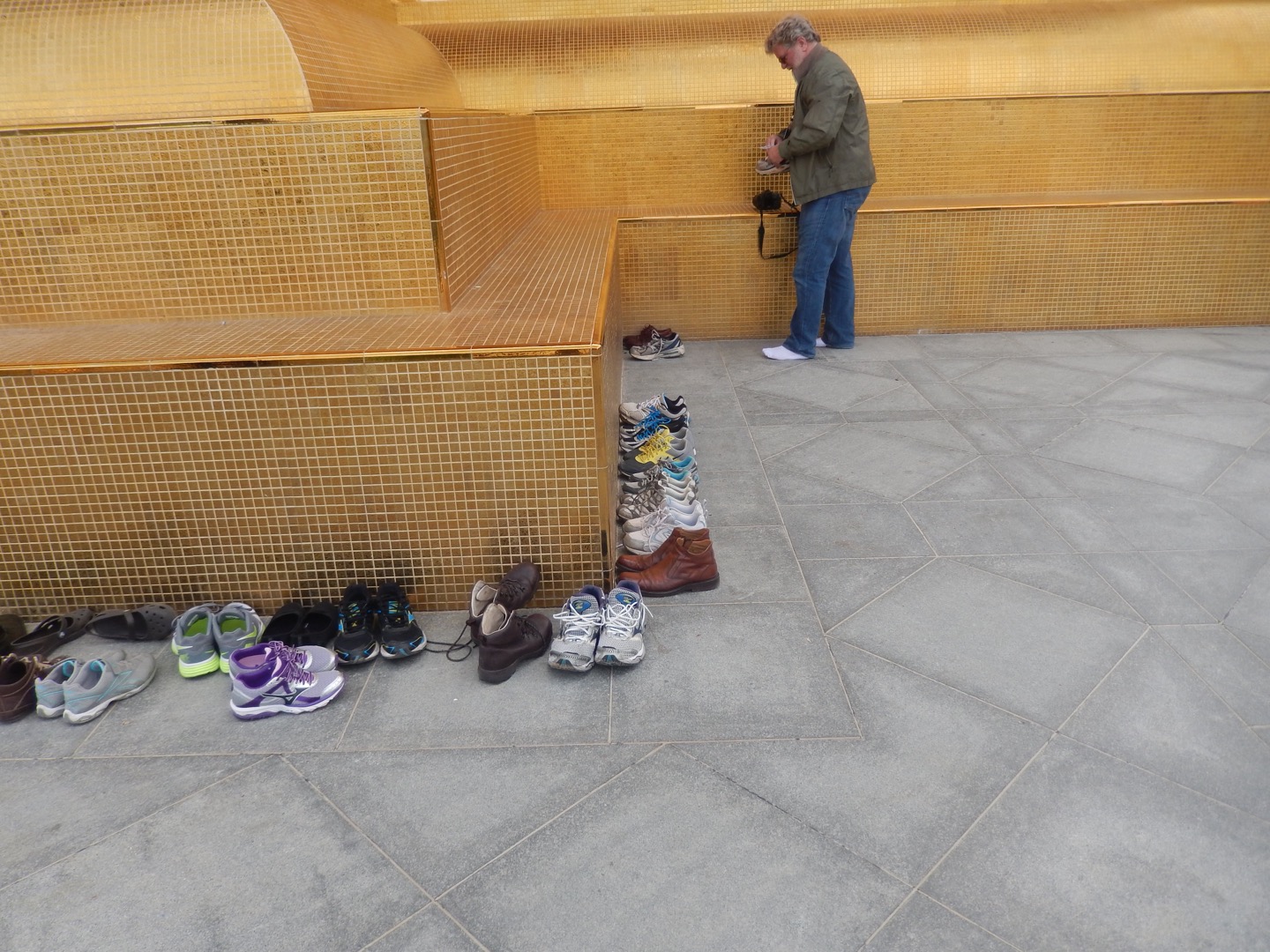
We stop at the Paro Ta Dzong on the way to the hotels. It’s a sort of medieval fortress perched on a hillside which operates as a Buddhist temple. After passing inspection (Kevin is wearing shorts, and is asked to cover his knees) and removing our shoes, we are ushered inside (no photos allowed inside the temples) where we witness three lines of ten monks each, kneeling and chanting and banging on these oddly suspended green drums in a room draped with mad, multi-colored fabrics, fuchsia and turquoise and orange and gold and thick with incense, it overwhelms the senses.
Because our trip was put together so quickly (in response to China pulling our landing permit) our group is split into 2 hotels. We are put with a small group at the Amankora, which is a gorgeous, spacious, zen like lodge in the mountains- not far from the homes of the royal family. The rooms are huge with the bed at one end and the shower and sinks at the other…imagein between is a bathtub, with a chair perched at one end, I suppose to better view the bather? The hotel restaurant is spectacular, particularly the pastries at breakfast. I ordered a Dutch baby one morning, ( a sort of fluffy but crispy pancake) and I am still thinking about it.DSCN2132
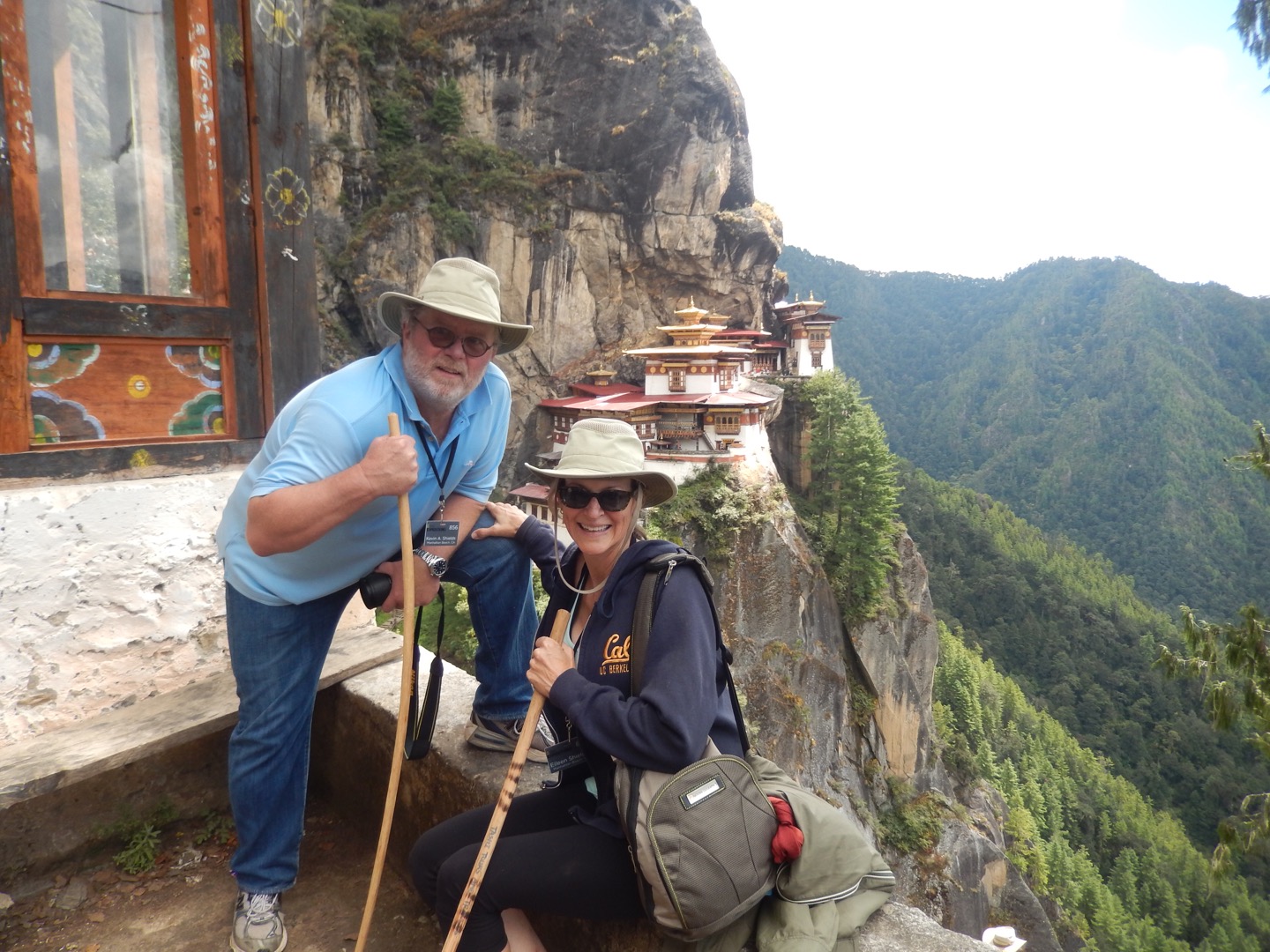
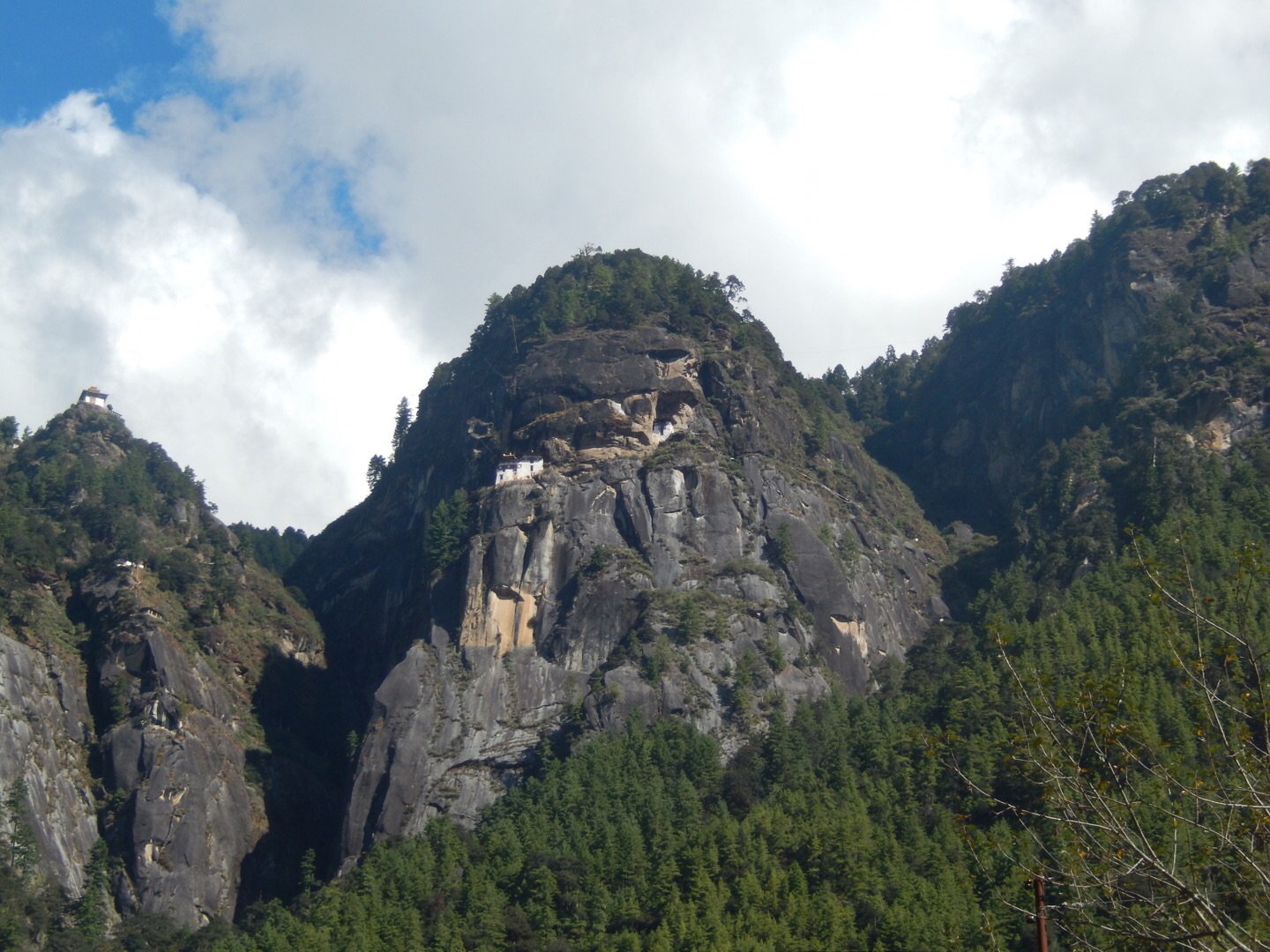
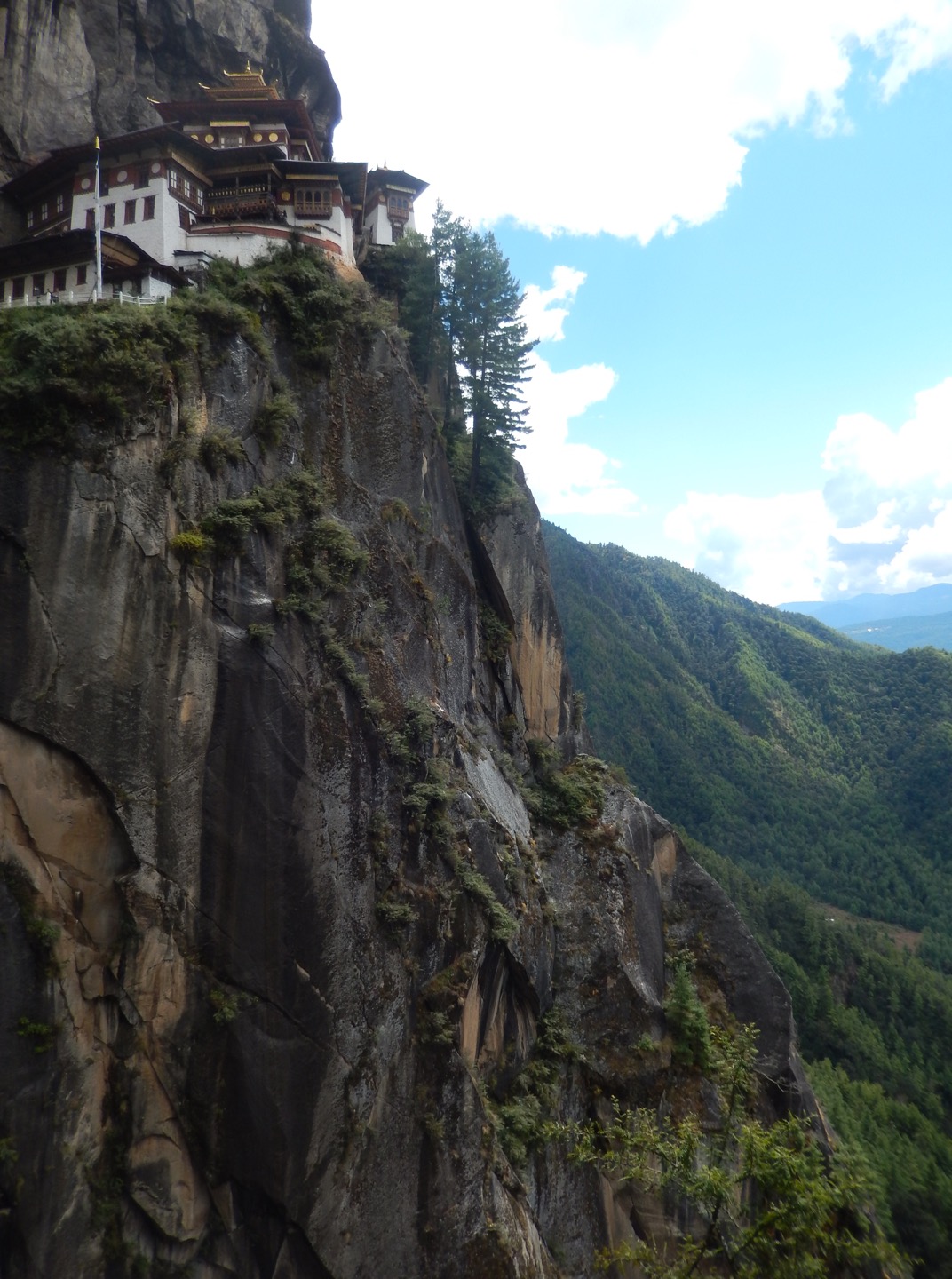
Our first full day we are up early to hike to the tiger’s nest, which if you have EVER seen a photo of Bhutan is probably what you saw. It is a series of buddhist temples illogically clinging to the side of a mountain.

image
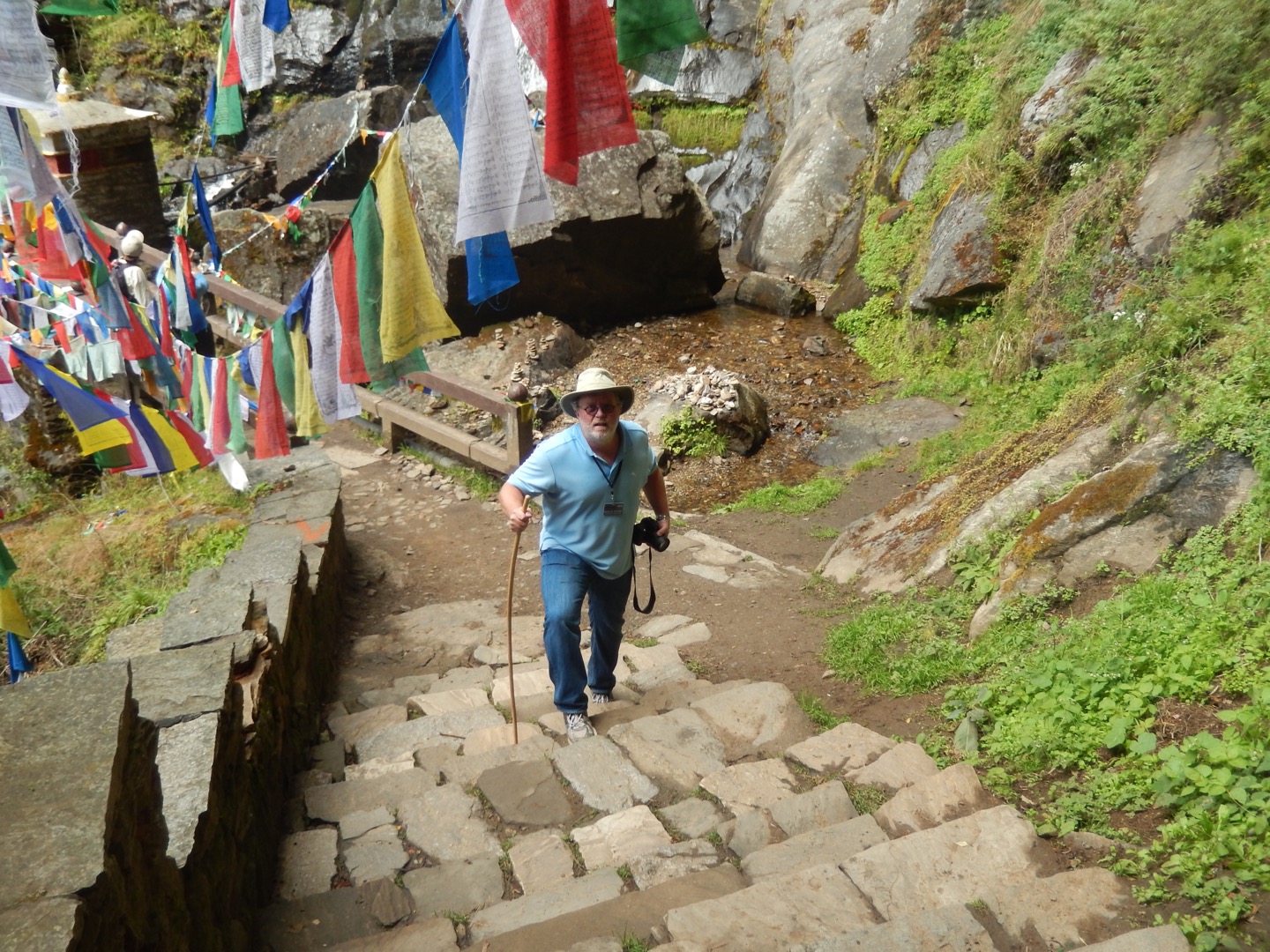
The hike is a challenging 5 hour round trip of about 1650 feet of elevation. Of the 70 people on our tour, 50 attempt it, but only around 20 complete it (this may make it sound more difficult than it was. Kev and I are of average fitness, but accustomed to hiking in altitude and younger than most of our fellow travelers) imageHalfway up there is a imagetea house where you can stop and rest and determine if you have had enough. Beyond that is a lookout point where everyone stops for the ‘iconic’ photo, and then there are a series of hundreds of steps the first descend into the gorge and then climb out of it. image As you arrive at the temples, you must remove your shoes and leave your cameras and backpacks behind. Once within the arrangement of temples, the monks are friendly, inviting you to meditate, anointing you with saffron water, instructing you in the Buddhist ways. To become a ‘master’ in the Buddhist faith, these monks must complete a solitary meditation of 3 years, 3months, 3 weeks, 3 days…and they cannot see or listen or speak to another person during this time, or their meditation is broken, and they must begin again. There are a few small ‘meditation’ houses above the tiger’s nest, and the monks handle the feeding and protection of the monks inside.image
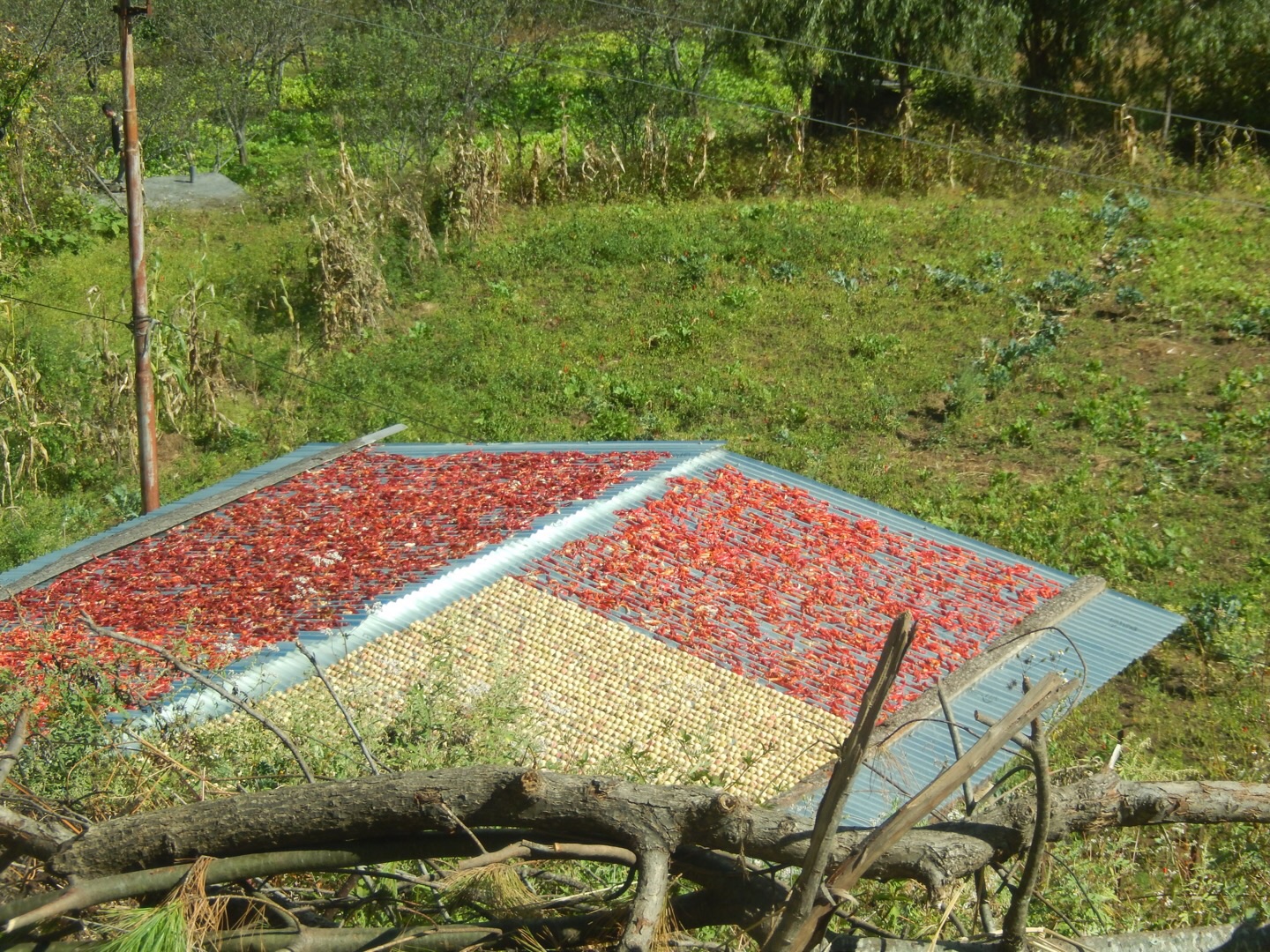
We descend and stop at the tea house, where they have set up a typical Bhutanese buffet for us, the red rice they farm all over, baked scrambled eggs, and the national dish of emadatshi, made of spicy green chiles and cheese. The Bhutanese love chiles, and you see them drying on the roofs of the valley houses as you drive by.image
On the long bus ride back, we learn even more about the People. They are all Buddhist, but not necessarily vegetarian. But since part of their faith is protection of all animals, the meat must be imported from India (they cannot slaughter) which seems a pretty slippery slope to me.

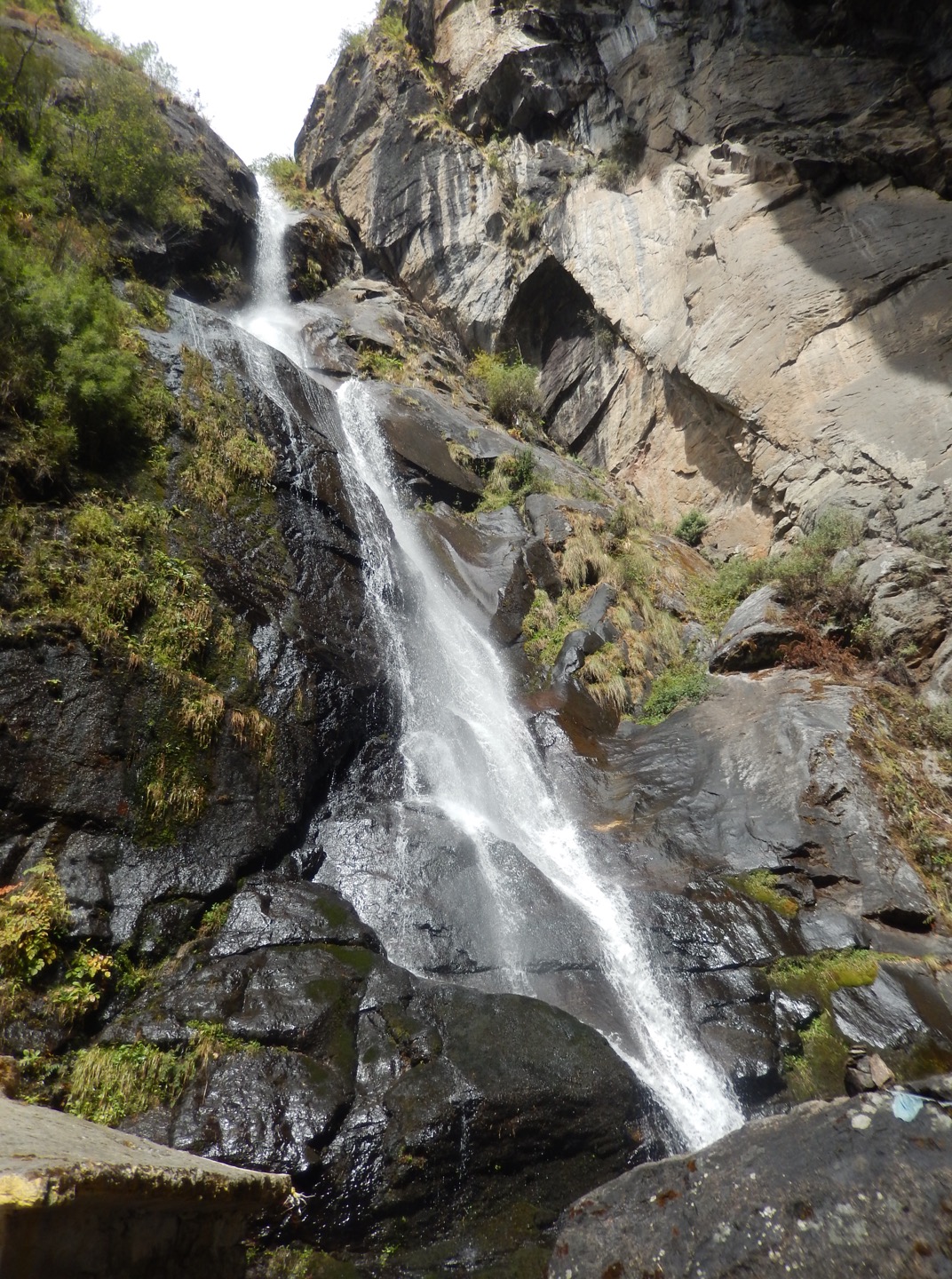
Along the roadside, tucked into creases in the cliffside, you can find tiny stupas, or funerary monuments. These are made of the powdered skull of the departed (Buddhists cremate the dead) mixed with milk and whatever to make a sort of plaster offering roughly the size and shape of a macaroon cookie. imageWe saw some of these stupas in a cove next to a waterfall near the entrance to the tiger’s nest. If I drop dead on this trip, I would not mind if someone made a paste of my pulverized skull, baked it into a cookie, and left it there. It seems a romantic notion.
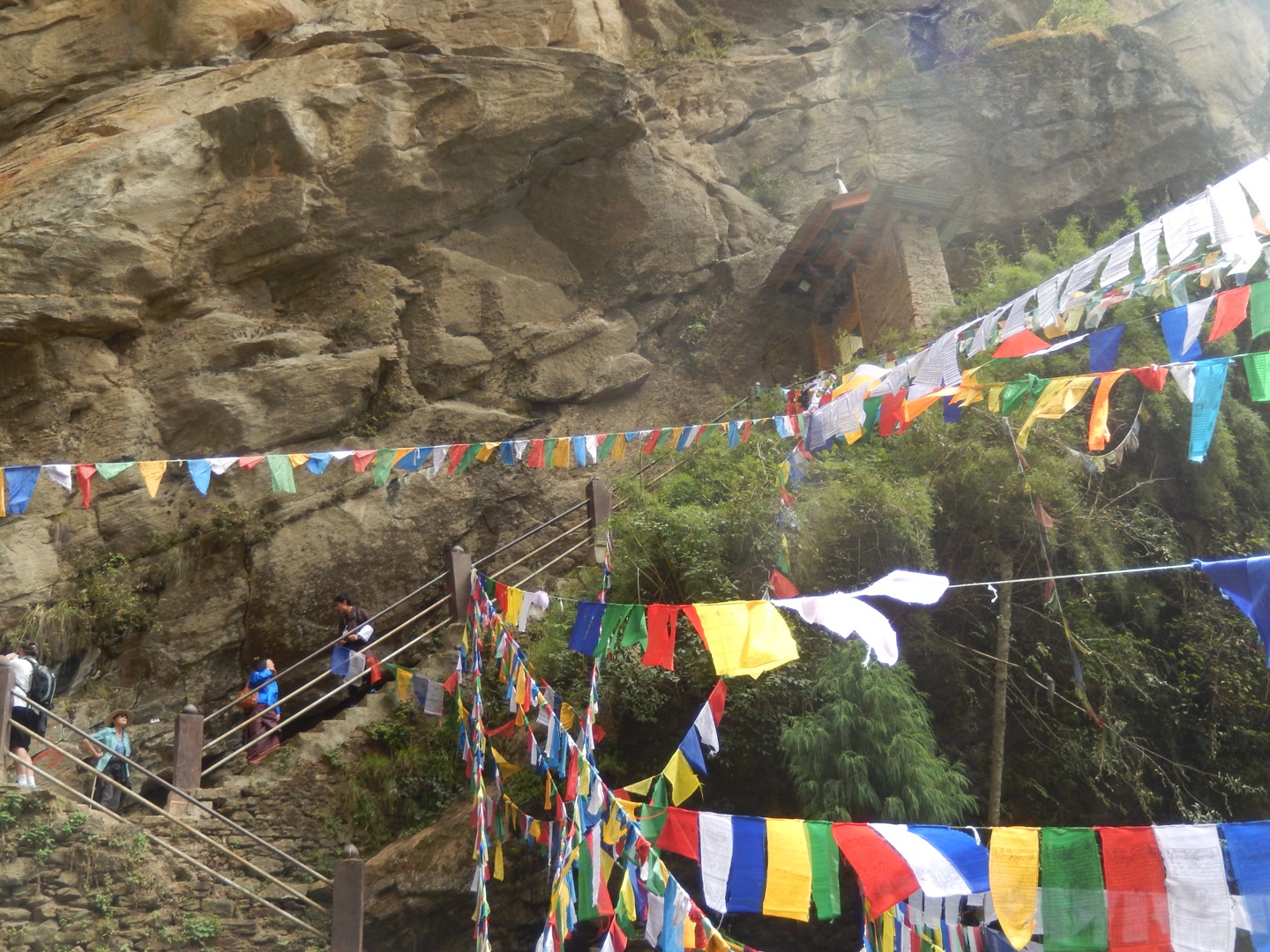
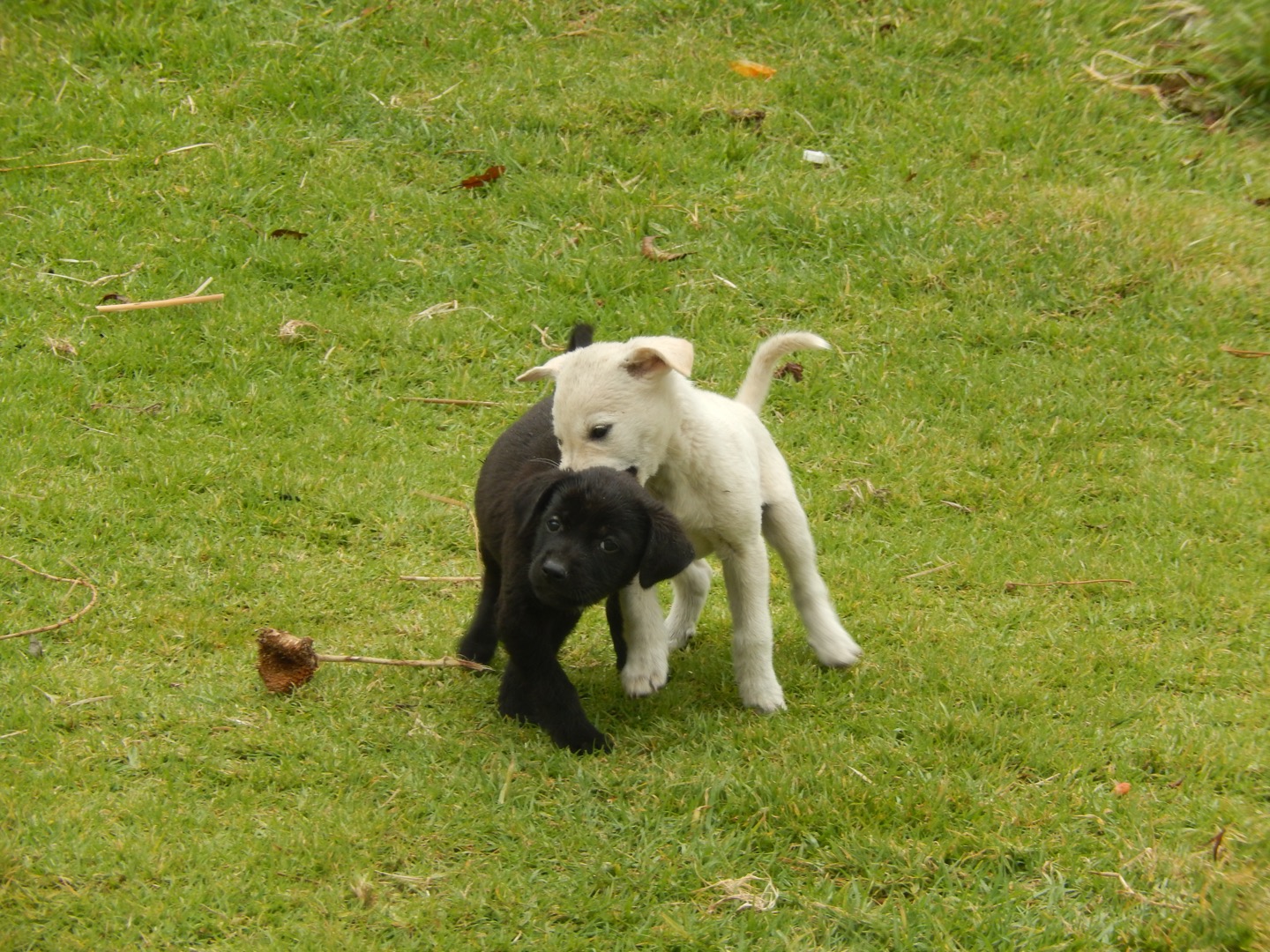
Ribbons of prayer flags festoon every hillside like a giant auto dealership until they are shredded to nothing by the wind. imageDogs are everywhere, which is adorable until dawn when they howl and bark like mad. But the feral dogs are beloved because it is believed that they are closest to human in the circle of rebirth. imageFeeding the street dogs is a way to gain points toward enlightenment. Additionally, in Bhutan, all babies born are taken to the monastery to receive a blessing and their name, which is pulled out of a jar. There are no surnames.
Back at the hotel we skip the evening lecture and instead head to the spa for a nice long massage and rejuvenated cups of ginger tea. Brilliant! The next morning we awaken with no post-hike soreness. We learn later the lecture was about the tigers of Bhutan, apparently there are 200 or so of them in the woods. Yikes.

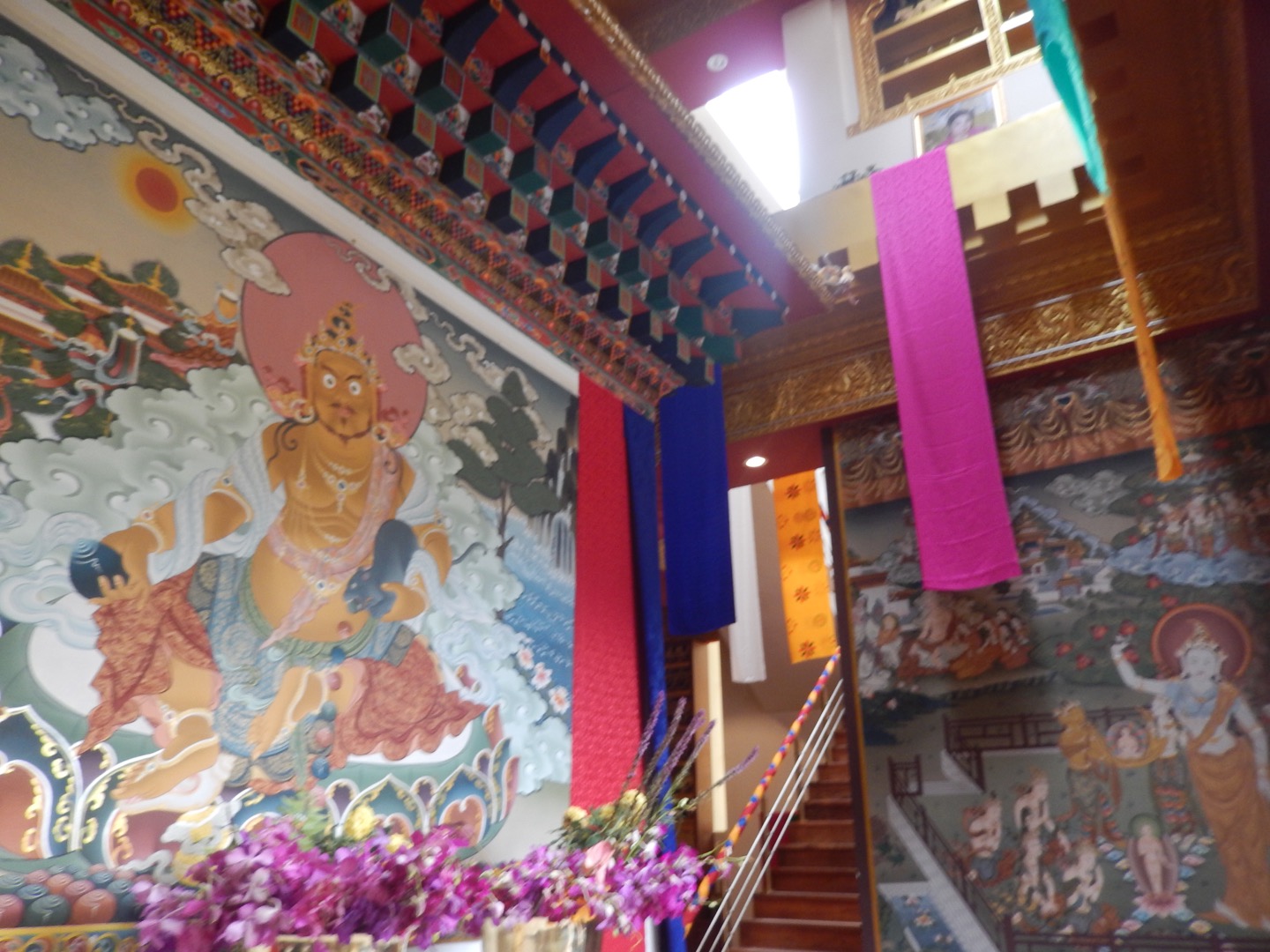
The following day we tour Buddha point with its humongous statue. imageBecause the imageinterior temple is still under construction, and not yet consecrated, we are allowed to take photos inside (but still must remove shoes, which we have become accustomed to doing everywhere we go at this point)image  image

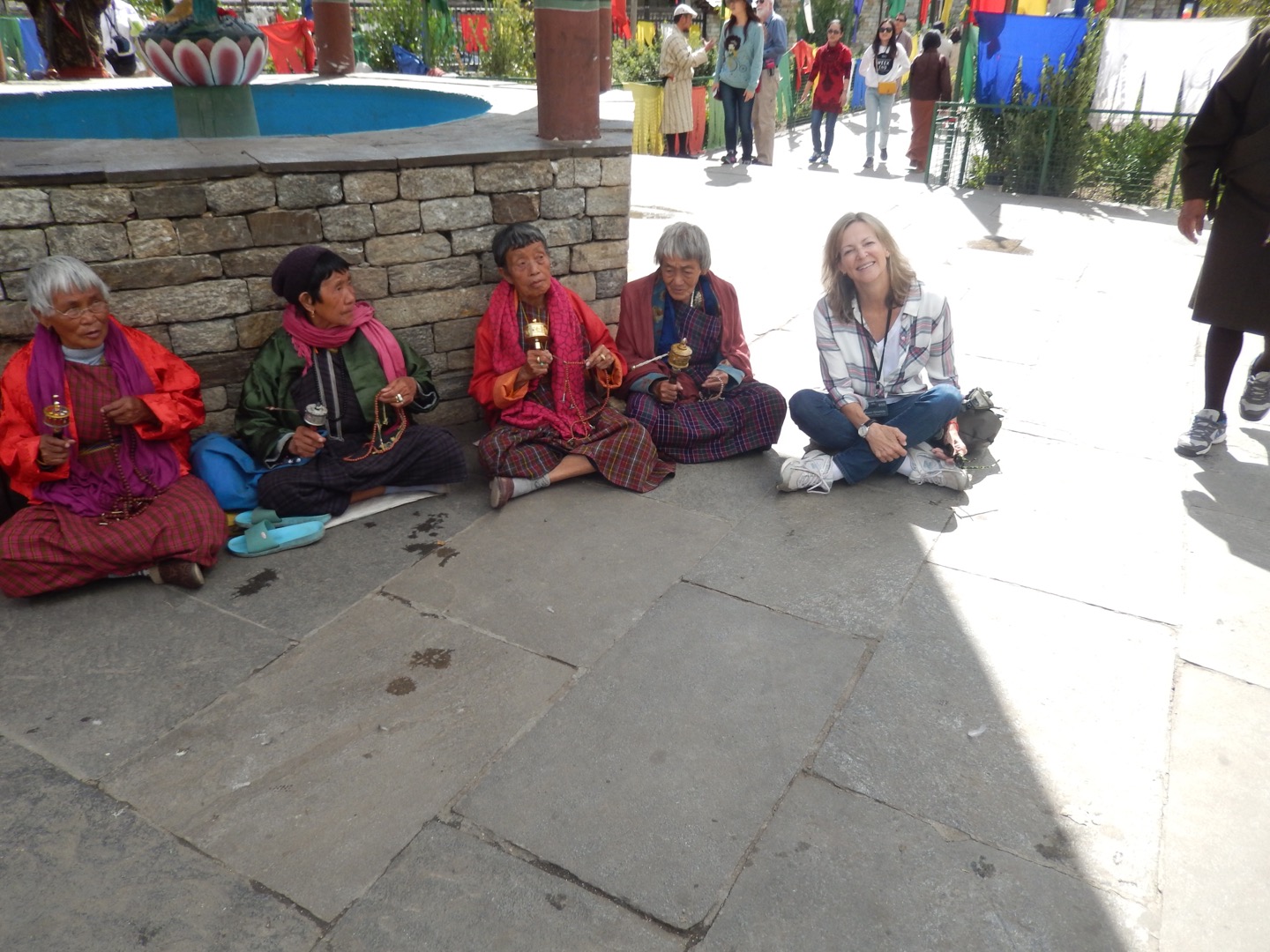
After that we visit memorial Chorten, which is the massive form of the tiny stupa memorials we’ve seen scattered about, erected by the ‘Royal grandmother’ after the death of her son, the third King. imageThis has become a popular local meeting place for the senior citizens of Bhutan, who gather and pray and gossip. imageThere are prayer wheels and butter lamps and the giant stupa around which people circle with their prayer beads. Each rotation is one prayer or chant and to complete the ritual you make 108 rotations (we make one)image the beads insure you don’t lose count.

Then we head to Dechen Phrodrang Monastery, a monastic school full of young monks in training.image It is as much an honor in Bhutan to have a son at the monastery as it used to be for an Irish family to have a son in the priesthood. While we are visiting the boys are learning English, which is taught in all Bhutan schools. Not all of these young men will be cut out for the life of a monk, imageand as it is not compulsory, many of them will eventually return home.

That evening we are greatly honored to be invited to the home of the queen mother, her majesty Ashi Sangay Choden Wangchuck. We know a bit about her, as like people everywhere, the Bhutan like to gossip about the royal family. Bhutan models their democracy on the UK, so they have elected officials alongside the Royal family, but the government is new and most people still speak as if they live under a monarchy. imageThis queen is a 4th wife of the retired (not current) king who married 4 sisters simultaneously. Polygamy was practiced widely in Bhutan until recently, although this may partly be due to farms passing through the daughters – so rather than split the farm among more than one daughter, if a man married all the farmer’s daughters, he’d get the whole farm.
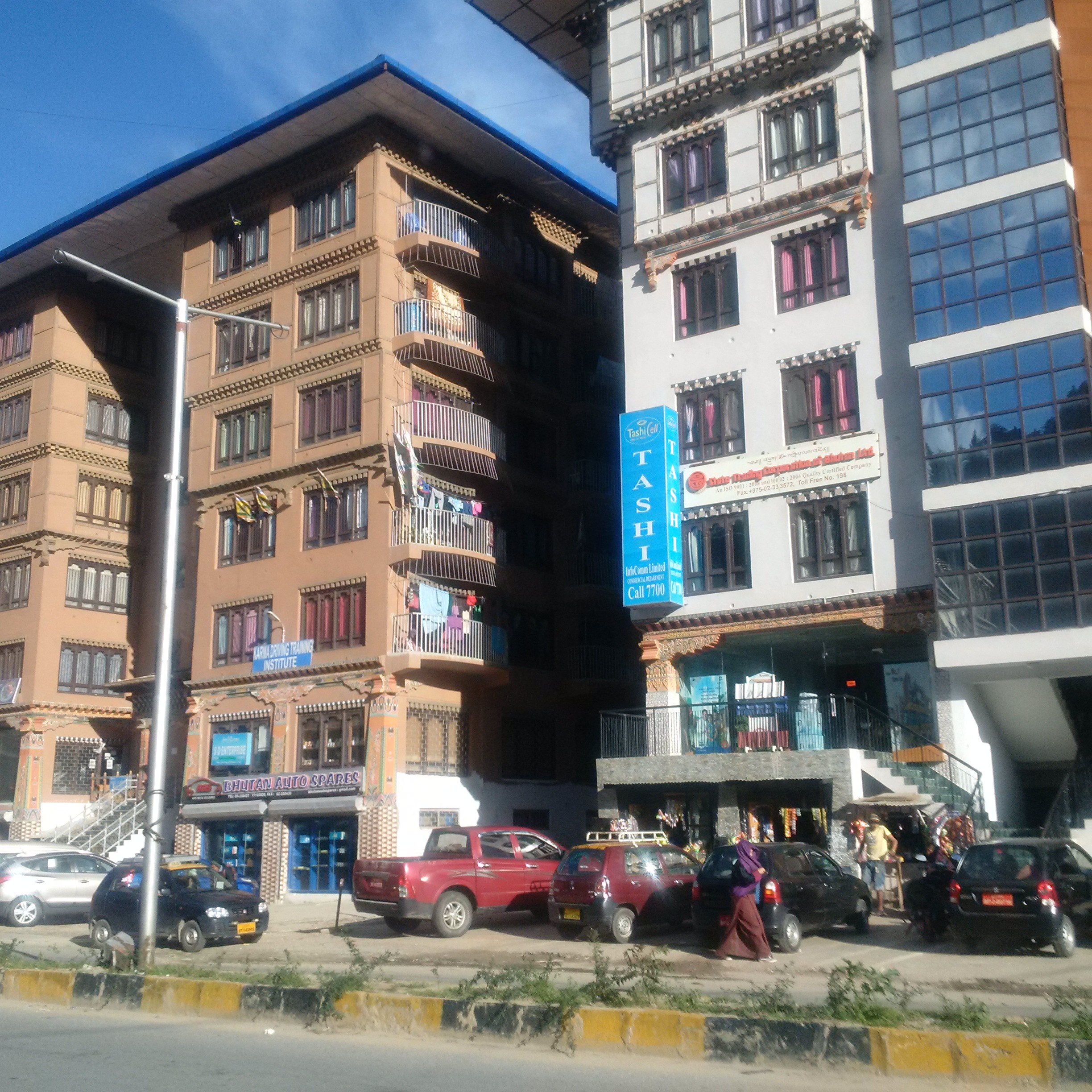
The queen’s home is lovely, and she is gracious. (We learn later she has a daughter attending school at Georgetown with our daughter) The Bhutanese in attendance are all big mucky mucks, and we meet an executive from Tashi, who sort of confirms some of our feelings that the gross national happiness, and the intense focus on Buddhism which opposes attachment to material things, means with all of this rapid growth, someone in Bhutan is raking it in. Tashi owns the airlines. They also own the cellphone service (everyone in this country has a cellphone, even the monks, even the ancient aunties who don’t read or write) imagethey also own the Coca Cola bottling plant. They also own the bank and the tourist industry.

This is where my husband the businessman comes in handy. Talking shop with the Tashi guy, he learns that here in “Shangri-la'” if you want to own a home you must put up 40 percent of the down payment, as the bank will only finance 60 percent, and they won’t do that until you have already invested your money and started construction. Loans are made at 12% for 20 years. There is no such thing as refinancing. Most people make ends meet by renting out all the other rooms in their home to other families. Business loans are made at 15% , and there does not appear to be any shopping around for a better deal.image
It remains to be seen how the influx of western ways via Internet and television (which they only acquired in the 1990’s) changes this unique culture. They are already having the same problems as everyone else with their young people and unemployment. Drug and alcohol abuse are not strangers here. The queen mother’s charity is a basically a battered women’s shelter. India and China are ‘investing’ like mad.
For now, Bhutan remains beautiful and mysterious and entirely unique. But if you plan to visit, I suggest you do it soon.

Sweating in Cambodia

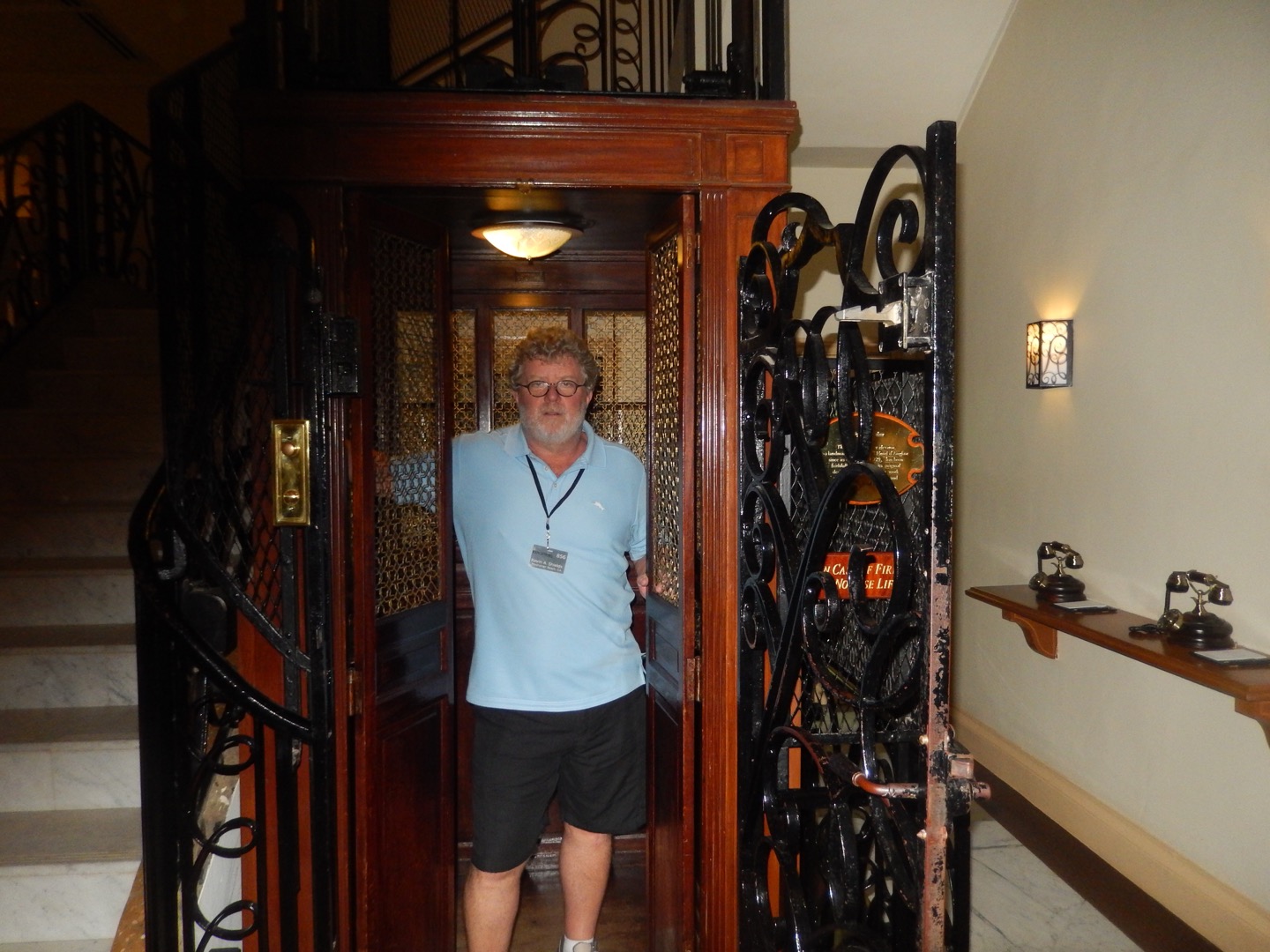
Raffles hotel in Siem Reap is gorgeous- like a glamorous movie set about colonialism and espionage and French spies; complete with an old timey elevator.image

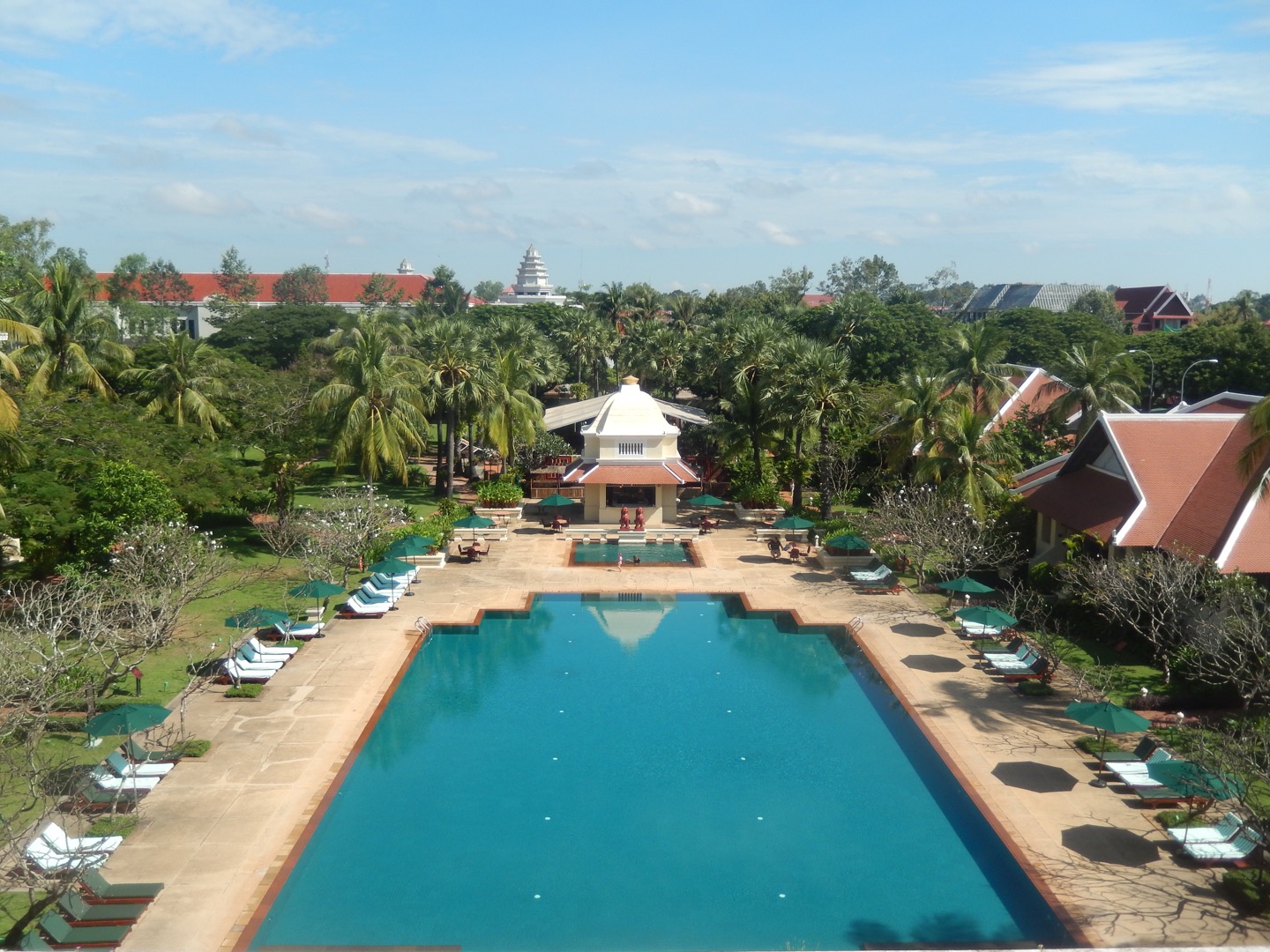
Siem Reap is the ‘ancient capital’ of Cambodia. Thirty years ago there were just a couple of run down hotels, now there are nearly 300. In fact, a few years ago, before it was restored, Raffles had a tree growing in the middle of the swimming pool. War and neglect and the jungle will do that to you.
At the entrance, the beautiful Kmer (Cambodian people) greet you with a cool towel each time you return from an outing, because this country is as hot and wet as a dryer full of sheets.
The view from our balcony looks like this image so we are in that pool in a minute and it is fabulous. Then cocktails in the lounge with the gregarious piano player that performs American standards and occasionally tries to sing along in a wobbly alto.
By now the gears in our body clocks are totally busted, so we have no hesitation volunteering for the 5am ‘sunrise over Angkor Wat’ tour our first morning out. It beats staring at the ceiling (which has a slow rotating fan a’la Apocalypse Now) and asking each other what time it is, like a sad mantra. We hope it will also be an escape from the heat, but even at dawn the air is thick and sultry. But there are no bare knees or shoulders allowed inside the temples, even the ruined ones, so it’s sleeves and pants.

The city is full of people. Our guide says it is the end of some festival or another, as they have many festivals. The most popular means of transport here are motor scooters, and they buzz by, each holding 2 or 3 or frequently 4 souls. We see grandmas perched behind mom and dad holding an infant. Few wear helmets.

                   image
An auto made to seat 4 will have 8 to 10 people squeezed inside. They can do this because the people are small, and any child under the age of 6 stands. The streets, particularly once you get off the main thoroughfare are also full of happy cows, and dogs.image image

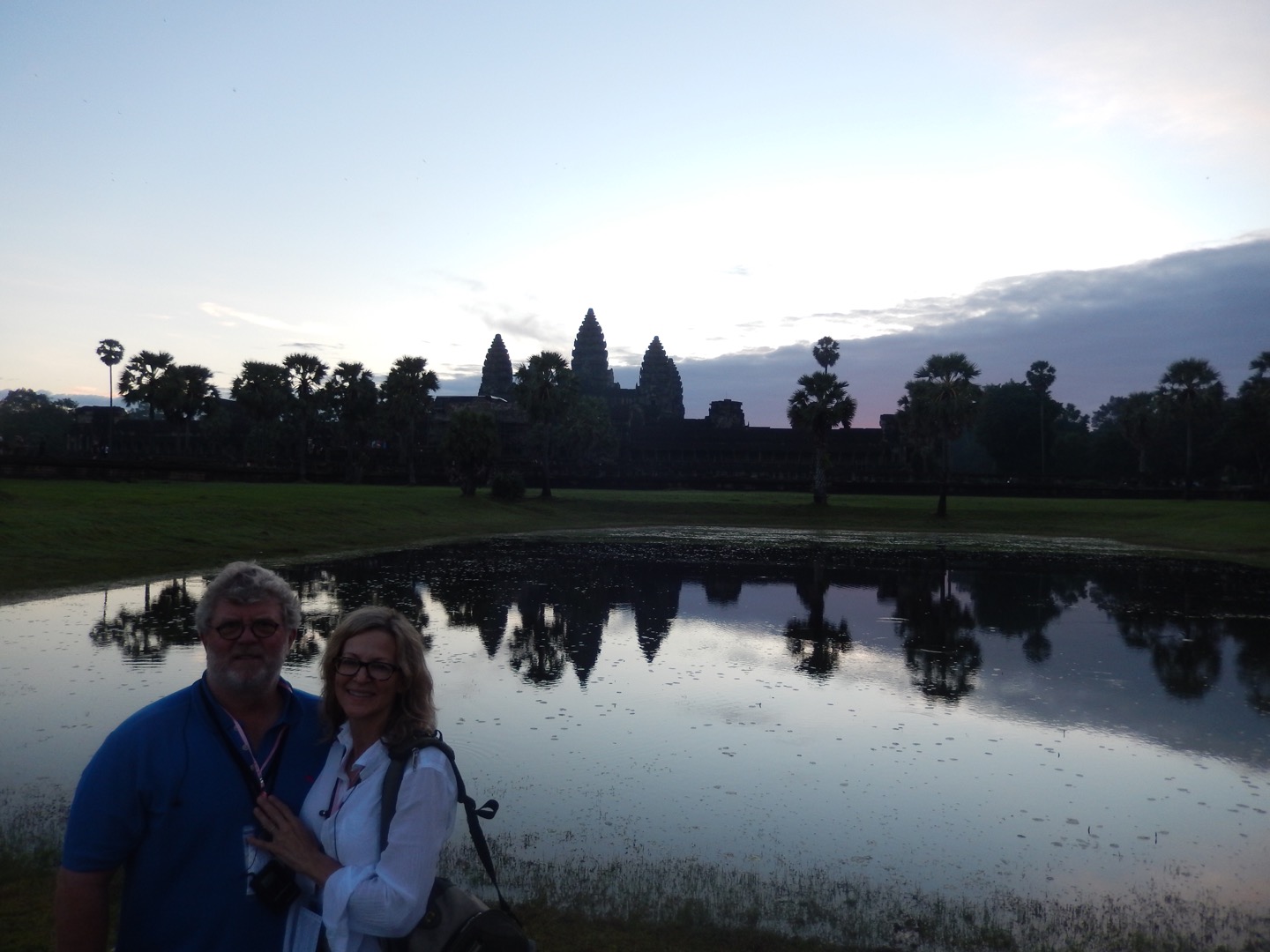
Angkor Wat is a massive temple built by a king with a long unpronounceable name in the 12th century. It was built as a Hindu temple, and you see lots of Hindu relief carvings once you get inside, but is now Buddhist. It has survived a number of wars (not hard to find a gazillion bullet holes) and occupations and at one point was swallowed up by the jungle and dug out again.
At dawn we watch the sun rise with other pilgrims.image

image image

image

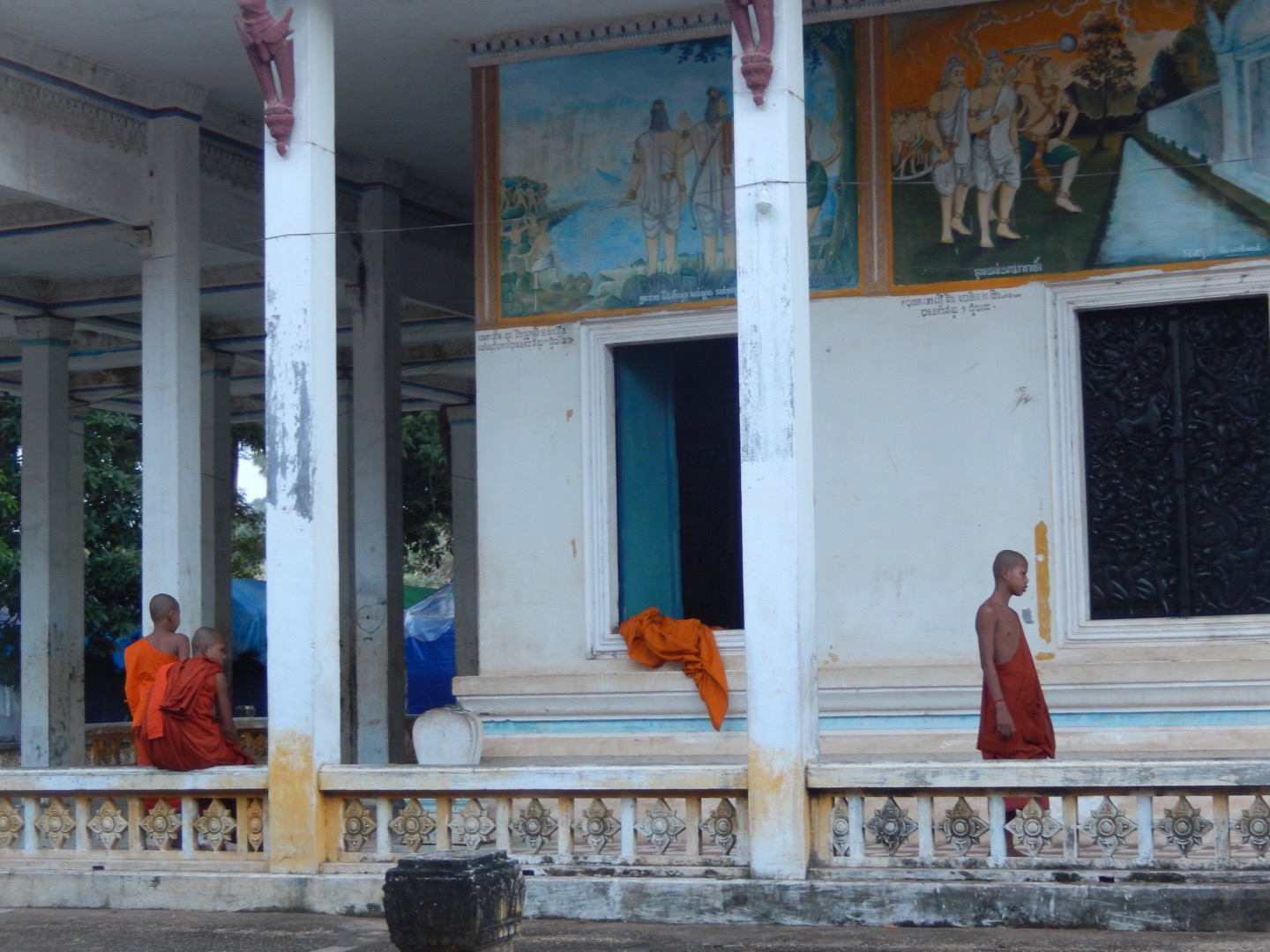
Before touring the site, we visit the monastery image

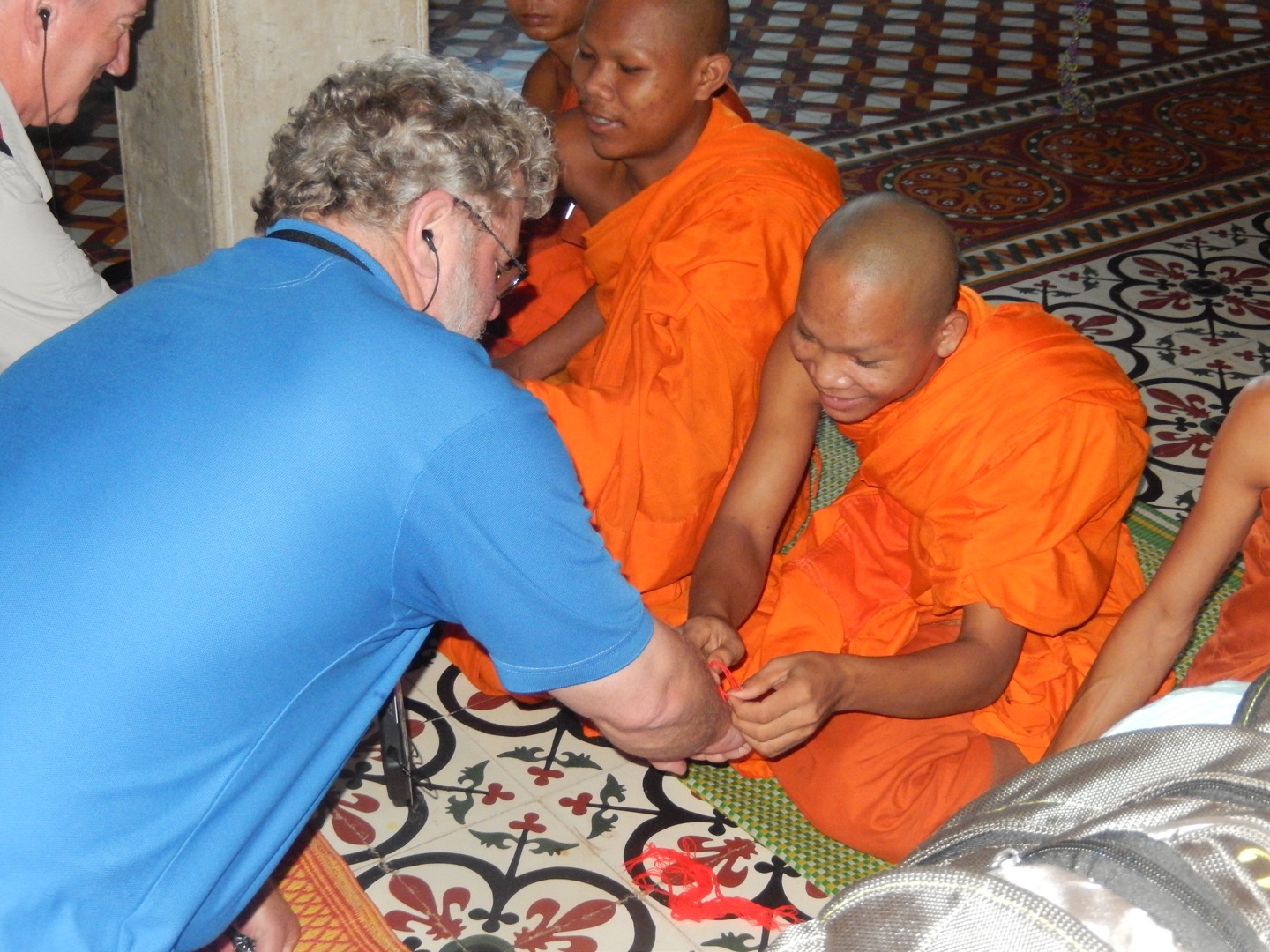
where the monks give us a blessing.image

the temple complex itself is immense and made of sandstone as anything built of wood does not last in this hot, wet climateimage image image image

Kevin imitates the lion image

i liked this girl’s outfitimage

and the surrounding moat had a lily pondimage

We move on to the next temple (there are a ton of ancient temples in Siem Reap, we will visit 3)

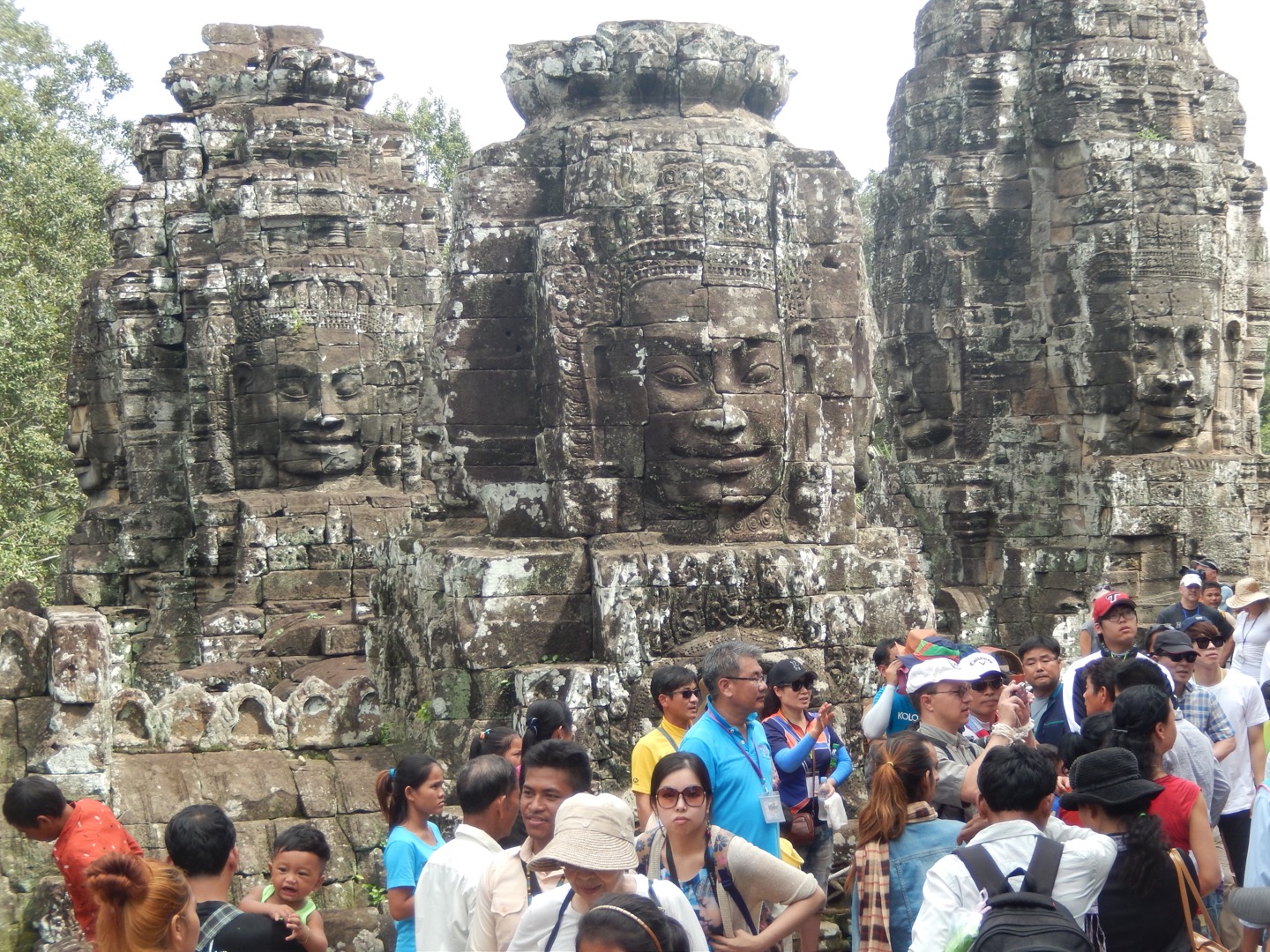
Bayon Temple is famous for all the Buddha faces carved into it, like this:image

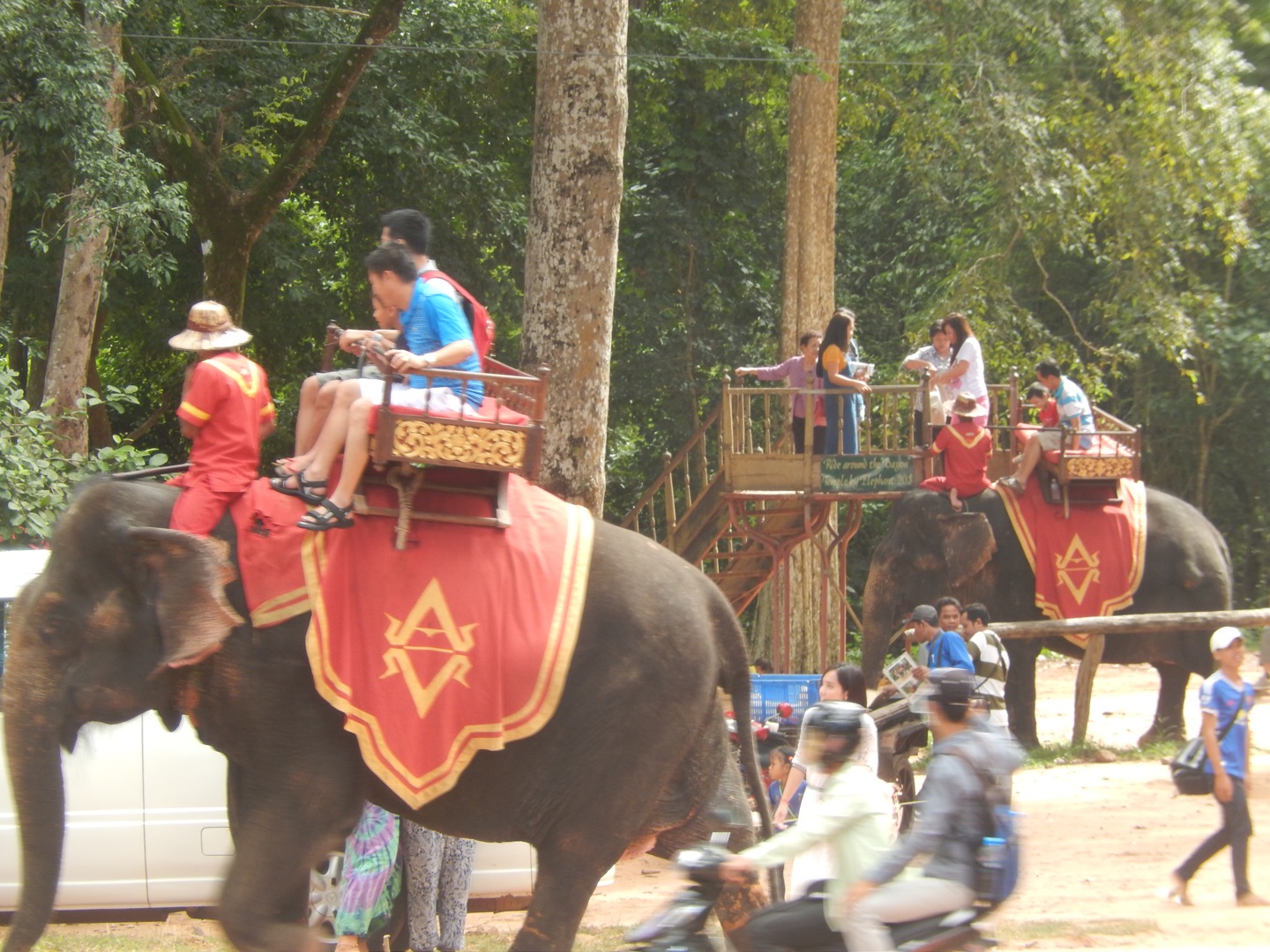
It also offers elephant rides image

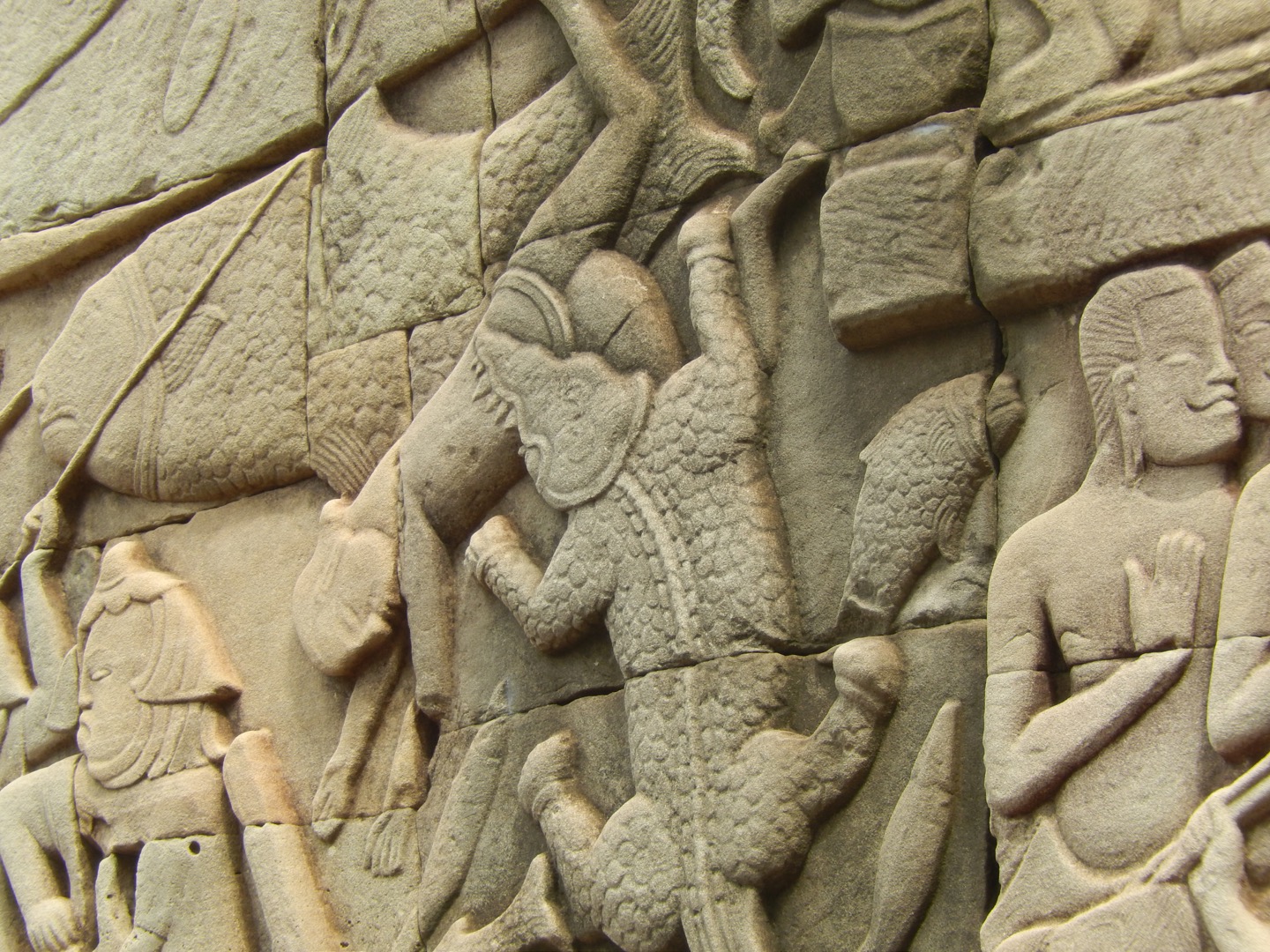
and it is a zooimagewith the Buddhas smiling serenely over the mobs of tourists. It also has some super cool Bas reliefs, some depicting conquests and voyages

image Up close you can see man overboard being eaten by a crocodile image

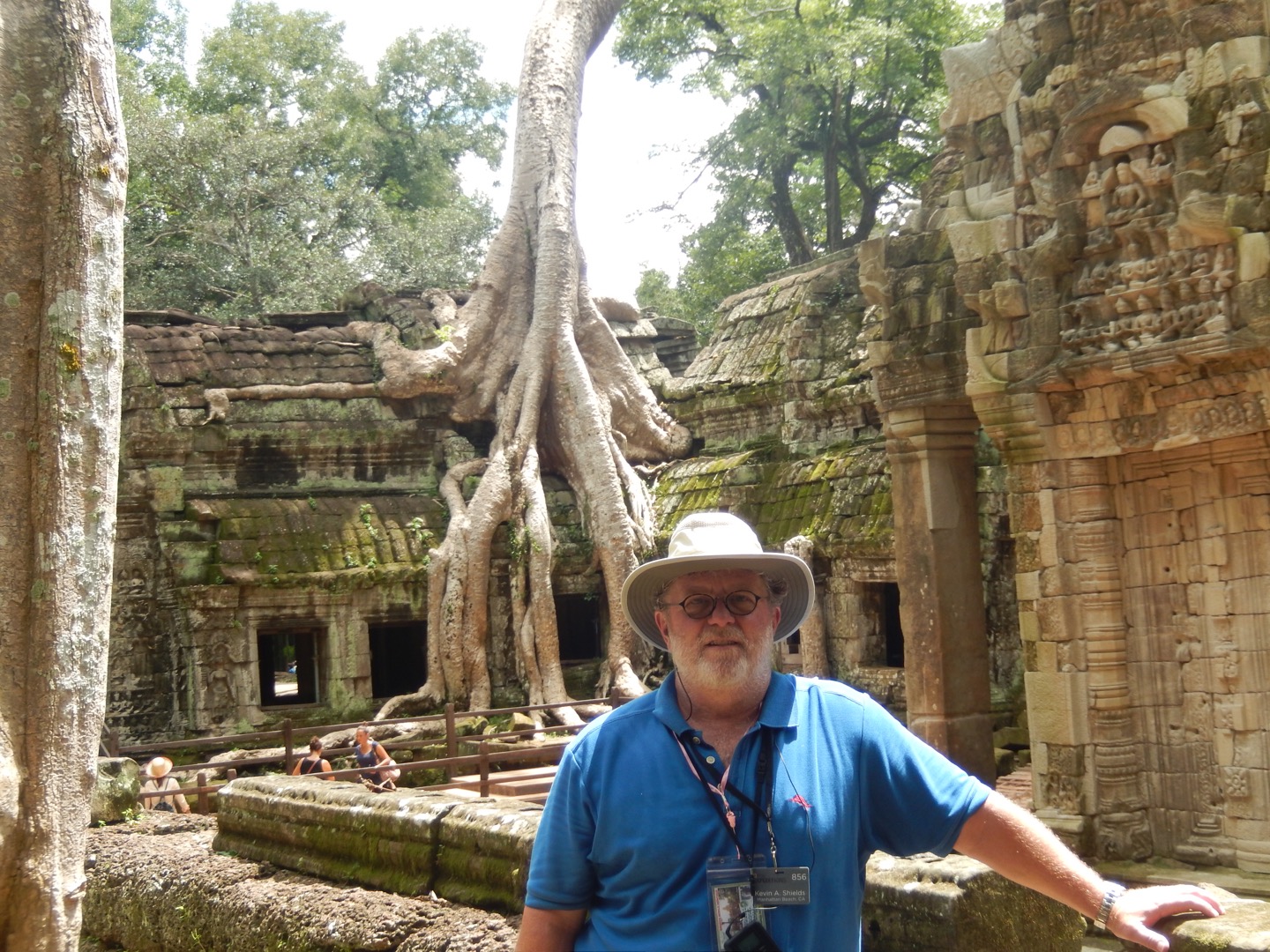
finally we visit Ta Prohm, which is famous for being featured in the tomb raider movie, which is a temple you can watch literally being eaten by the jungle.

image image

imageWe are woozy with heat when we return to the hotel, but are committed to seeing the floating villages on Tonie Sap lake, which we are told will be much cooler. To get there we drive down a long, rutted road scattered with small businesses and water buffalo.                                                                                        imageincluding this barber shop.

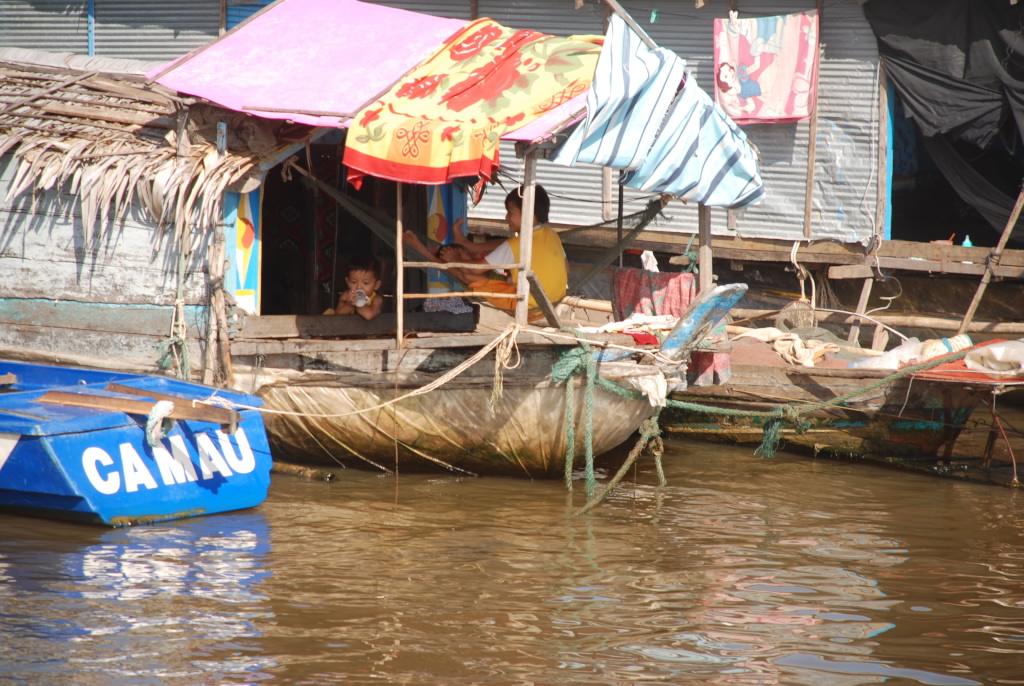
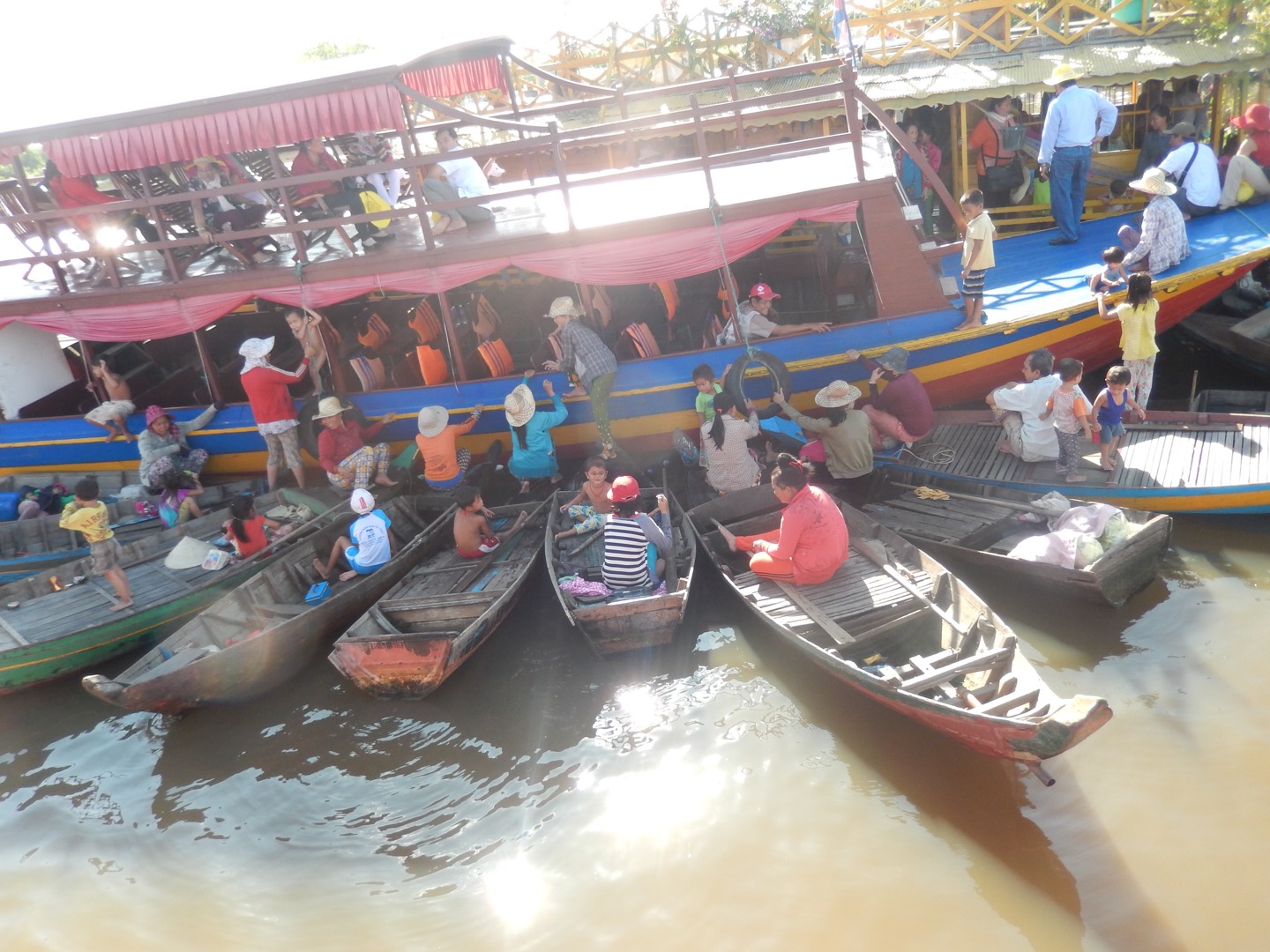
we arrive at the boatimagewhich is sort of delightful. We are at the end of the rainy monsoon season, so the lake is very high. imageThe floating village has moved into the river temporarily, where it is safer until the lake recedes a bit. The village has a church and a school,image

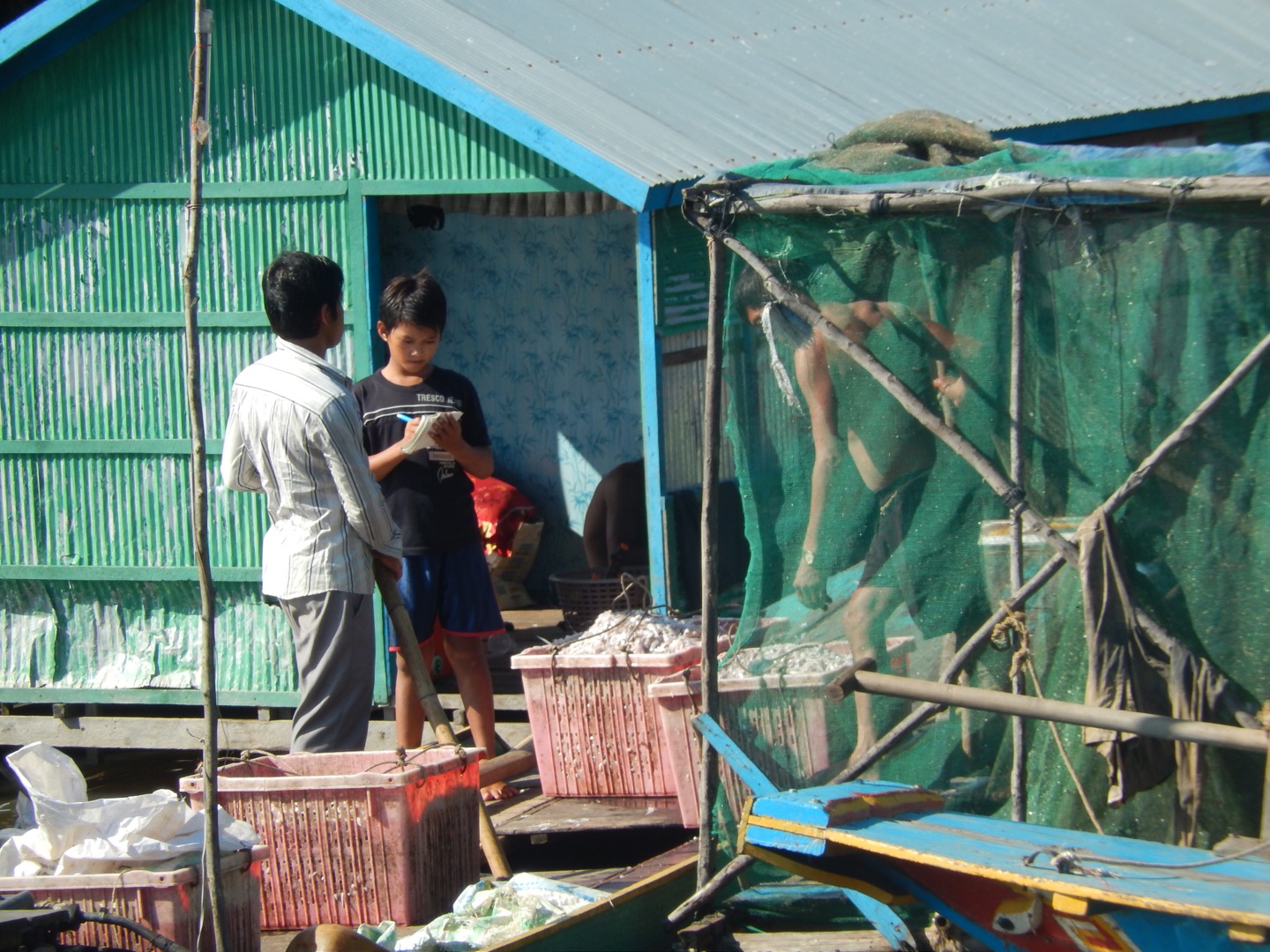
homes, imageimage

and businesses.imageThe life of these people is very simple, but they do not think of themselves as poor. They live with the bloody, and not too distant memory, of the Khmer Rouge. Our guide soberly recounted the daily terror of his childhood. His father was employed in rice delivery, and would skim a little extra for his starving family. When the village elders saw that his family was not quite as skinny as the other families, his father was brought in for questioning. Had he been discovered, he would’ve been killed on the spot. That they now live freely with relative prosperity makes the Cambodians a very contented people, warm and generous and quick to laugh.

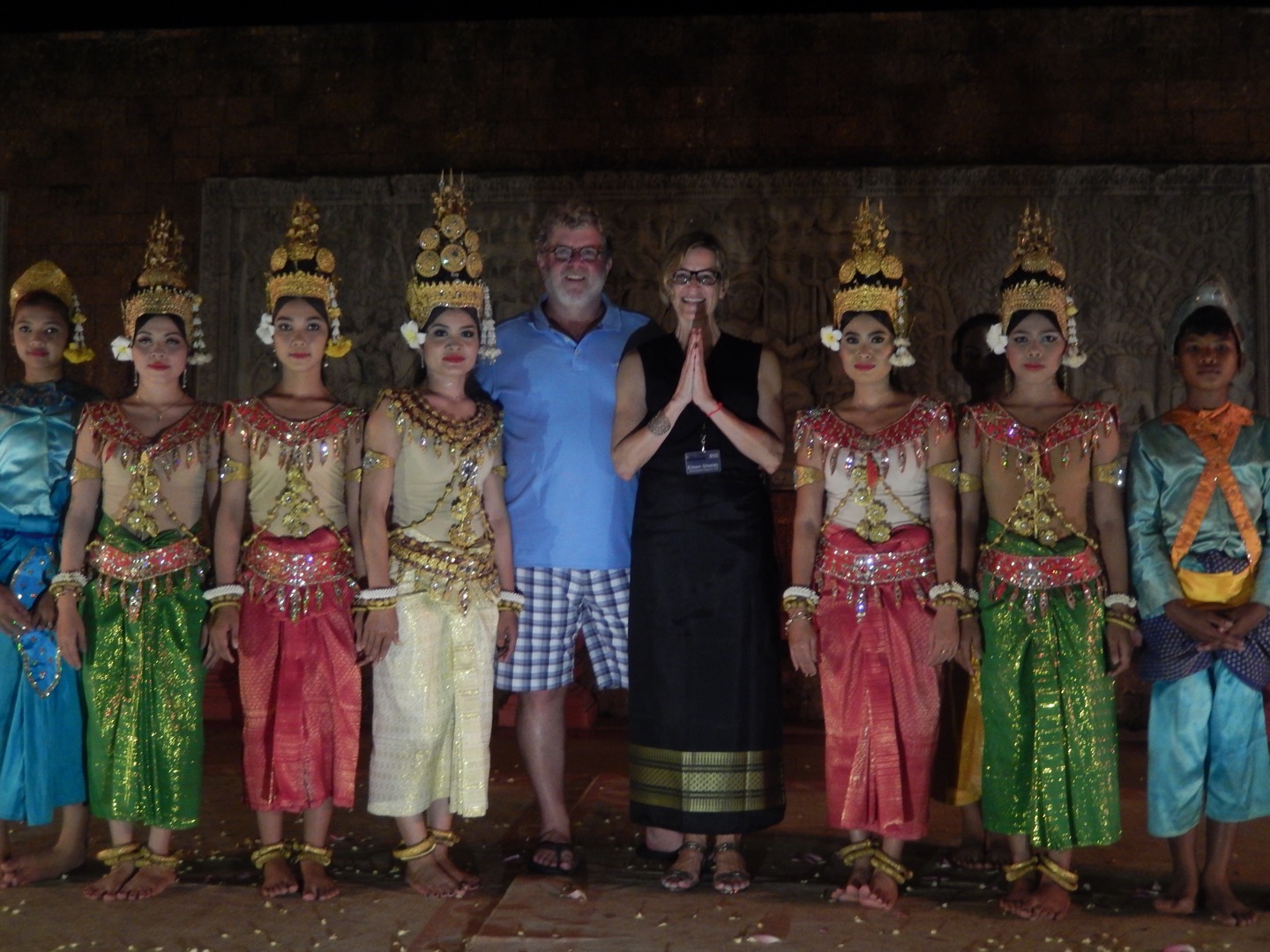
That evening we enjoy massages at the spa (excellent) and a big Cambodian food cart buffet (I have a terrific shabu style soup prepared before my eyes with enough chile to water my eyes) followed by a classical performance of the Ramakerti, a theatrical dance in which a monkey king woos a mermaid. We get our photo taken with the troop. The skirt I am wearing is traditional Cambodian and was a gift from NatGeo, they give us a lot of little presents during our travels.

imageSo it’s hard to be too upset when we are told  that China has pulled our landing permit, most likely because they do not want us to visit Tibet. Because they are jerks. I am sad to miss Tibet, but excited that we are being re-routed to …Bhutan!

imageOur stay in Samoa is brief. As we tool in from the airport, our guide informs that just 5 years ago they switched over from driving on the right side of the street like Americans do, to the left side, because it had become cheaper and easier for the population to purchase cars from Australia. And I wonder what an experiment like that would look like in Los Angeles.
The people of Samoa (which I have always pronounced sam-O-a, but the locals say SAAM-o-a) are almost aggressively friendly. Our late arrival at the hotel in Apia is greeted by what appears to be the entire staff and their cousins, cheering and dancing and handing each of us a coconut with a straw in it, the water of the fruit milky and sweet. Everywhere we go, we are greeted with warm smiles and loud cries of “Talofa!”
We opt to spend our short day on this island doing very little. We stroll the beach, charmed by the delicate twigs of bleached coral that litter the sand along with a small gang of hermit crabs. imageIt is very warm, despite patchy clouds, and very humid. The Pacific here is turquoise, and warm and flat.                                                  image

Lunch is a buffet where I try their version of creamed spinach, which is taro leaves in coconut milk…followed by a Fiafia (traditional performance with fire dancers). imageToo soon we are back on the plane bound for Australia.

We fly over the barrier reef into Cairns (pronounced cans) image
and head an hour to our hotel in Port Douglas. We pass a park that is overrun by small kangaroos which seems so crazy.
Port Douglas is a touristy seaside town, existing mostly as the best launching point for visiting the Great Barrier Reef. We arrive in time for a late supper with a ‘special guest,’ that turns out to be a koala, which is very strange looking up close. It’s a very quiet animal, like a stuffed toy with knubbly grey fur.

image
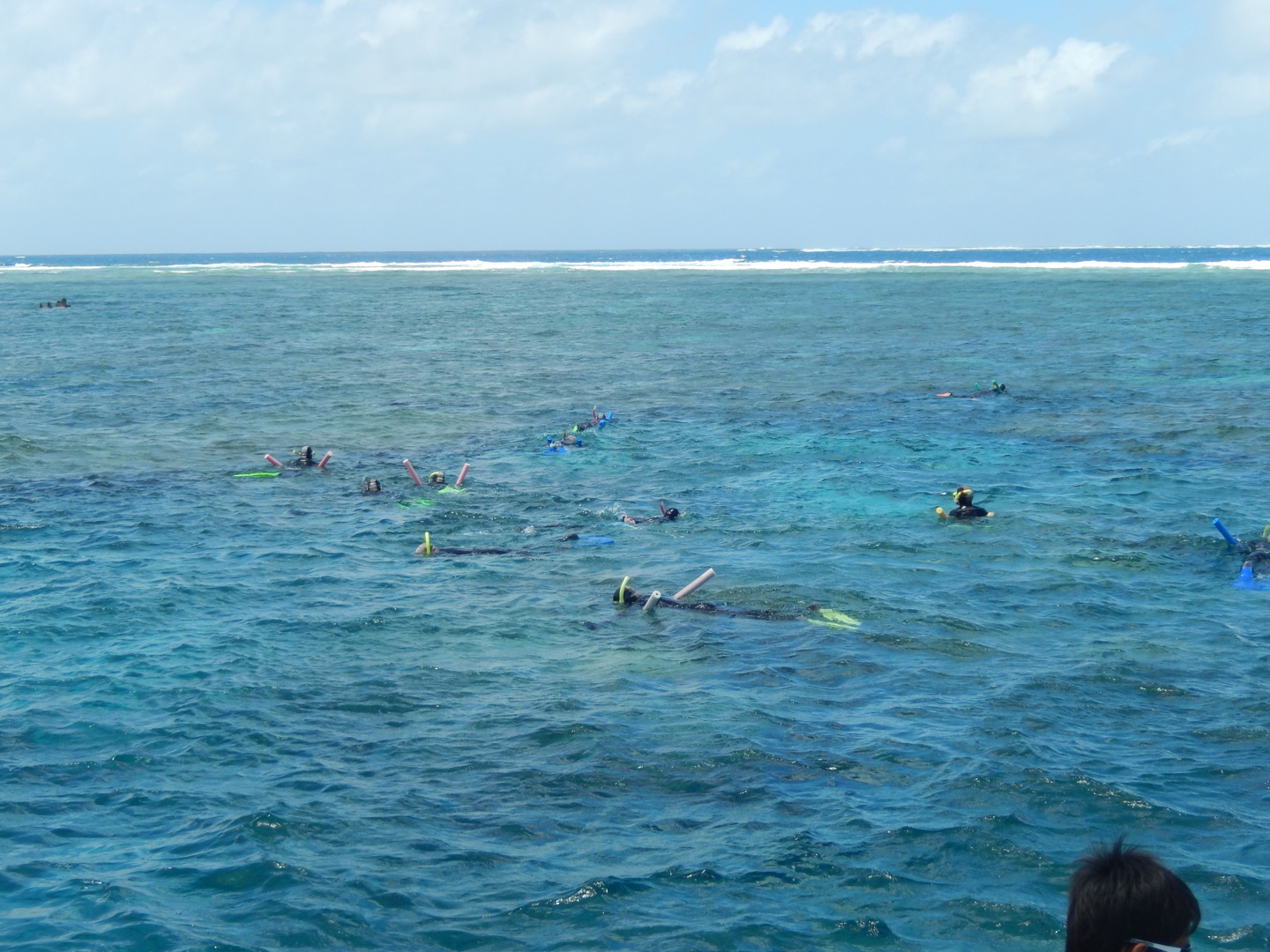
First thing in the morning we head to the marina and board a large, very fast boat for the reef. Even so, it takes nearly an hour to arrive, during which time we are fitted for snorkel gear, or in Kevin’s case, given a beginner diving lesson.

                                 image
I have an abject fear of underwater activities. Snorkel gear gives me claustrophobia, and just the idea of scuba diving makes me break out in hives (which I cannot afford as my Machu Picchu bug bites have not faded) but I am not about to fly halfway round the world to one of the seven natural wonders and sit on my hands. Or so I tell myself.
The staff is all young and charming and very thorough. I was sitting with a couple Seniors when the crew sat down with us and, having reviewed their medical history, gave them pink snorkels which is how they mark people they want to keep a close eye on. But apparently phobias and hyperventilating do not merit a pink snorkel.

Before we got into the water ourselves, they pulled our boat alongside a semi-submersible…which is a lot like the submarine ride at Disneyland. A long narrow belly in which you can only sit 2 across, so you each get a window. And like Disneyland, the hold in the rear stays open the entire time, therefore all claustrophobic are seated back there (it was nice to find my clique).

The submersible then took a tour of the reef, a pretty kiwi girl up front pointing out all the coral and animals species as we passed over. Honestly, it was hard to believe it was real and not some animatronic theme park ride. There were turtlesimage
And giant clams

image
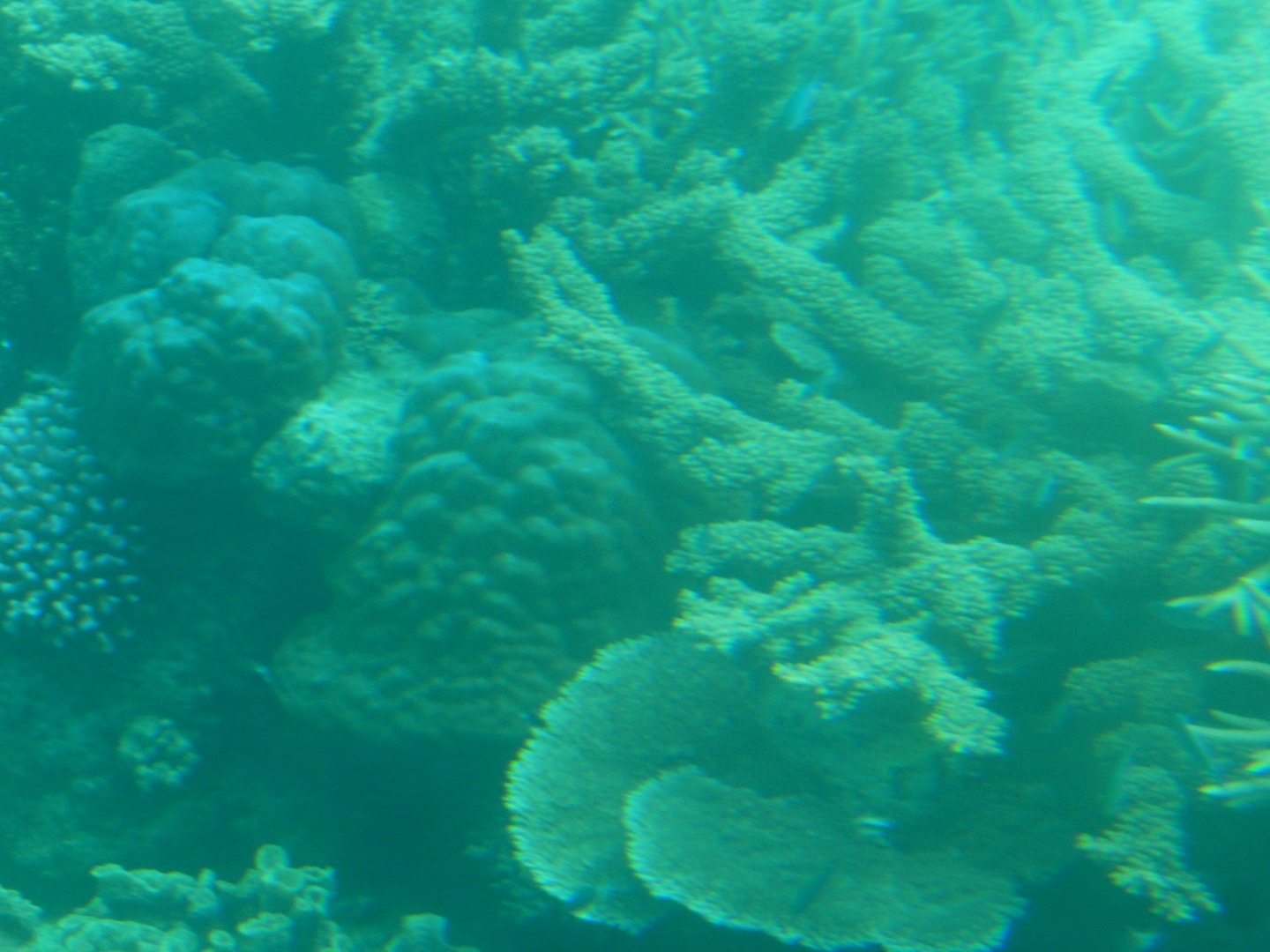
And a variety of fish and coral so brilliant and gaudy in color

image
It was surreal.

Disembarking the sub, I told myself if I chickened out it wasn’t so bad, after all I had seen much of the reef. There were about a dozen people who were opting out of the snorkeling, admittedly, most of them had bad tickers, or didn’t know how to swim.
They handed out Lycra suits to everyone who was going in the water. I accepted mine and put it on. I watched as Kevin got his tank and jumped in. I watched as a dozen women 15 years older than myself gleefully donned their fins and mask, and grabbing a colorful noodle floaty, leapt into the Pacific.

image

I sat on the steps at the rear of the boat, fins in hand, and told myself over and over that I was a chickenshit fool for being afraid of an activity that most kids learn at summer camp….when they are 8. But phobias are thick and unreasonable things. I might get tangled in the snorkel and mask, or be attacked by a school of sharks, or get caught in a current and swept out to sea.
Finally one of the crew members, assuming I was afraid because I couldn’t swim (which is not true, I can, I just never put my face in the water) offered to take me out. He waited while I put on the mask and snorkel, waited while I practiced breathing, freaked out, took it off, put it back on, started over. He waited till I said it was okay, and then gently pulled me into the ocean. He waited while I slowly, so slowly put my face in. And what I saw I will remember until my final breath.

The world is a miracle. You’d be a fool to miss it.

image

PS: the best thing to eat in Australia is something called Maggie beer ice cream. It comes in flavored like burnt fig honeycomb and caramel or vanilla bean and elderflower.

Moai Goodness

imageEaster island is the most remote inhabited island in the world. The native people call it Rapa Nui, they call their language Rapa Nui and they call themselves Rapa Nui. Easter was the name given it by some white guy because he ‘discovered’ it on Easter Day.
Given that it is only just over 60 square miles, I wouldn’t expect it to have an airport big enough to accommodate our jet. But a decade back the USA installed a huge runway there for the space shuttle, in case it ever accidentally came in over that area of the Pacific where there is nothing else but water for over a thousand miles.

My first introduction to this island of mystery was in a cheeseball book (and film) of the 70s called ‘Chariots of the Gods’ that suggested the massive stone heads the island is famous for are evidence that aliens have visited earth. image

It was a bestseller.

I am thrilled to arrive, but the flight was long and my bug bites are itchy and inflamed we go straight to our room and call the trip doctor for some Benadryl and steroids.image

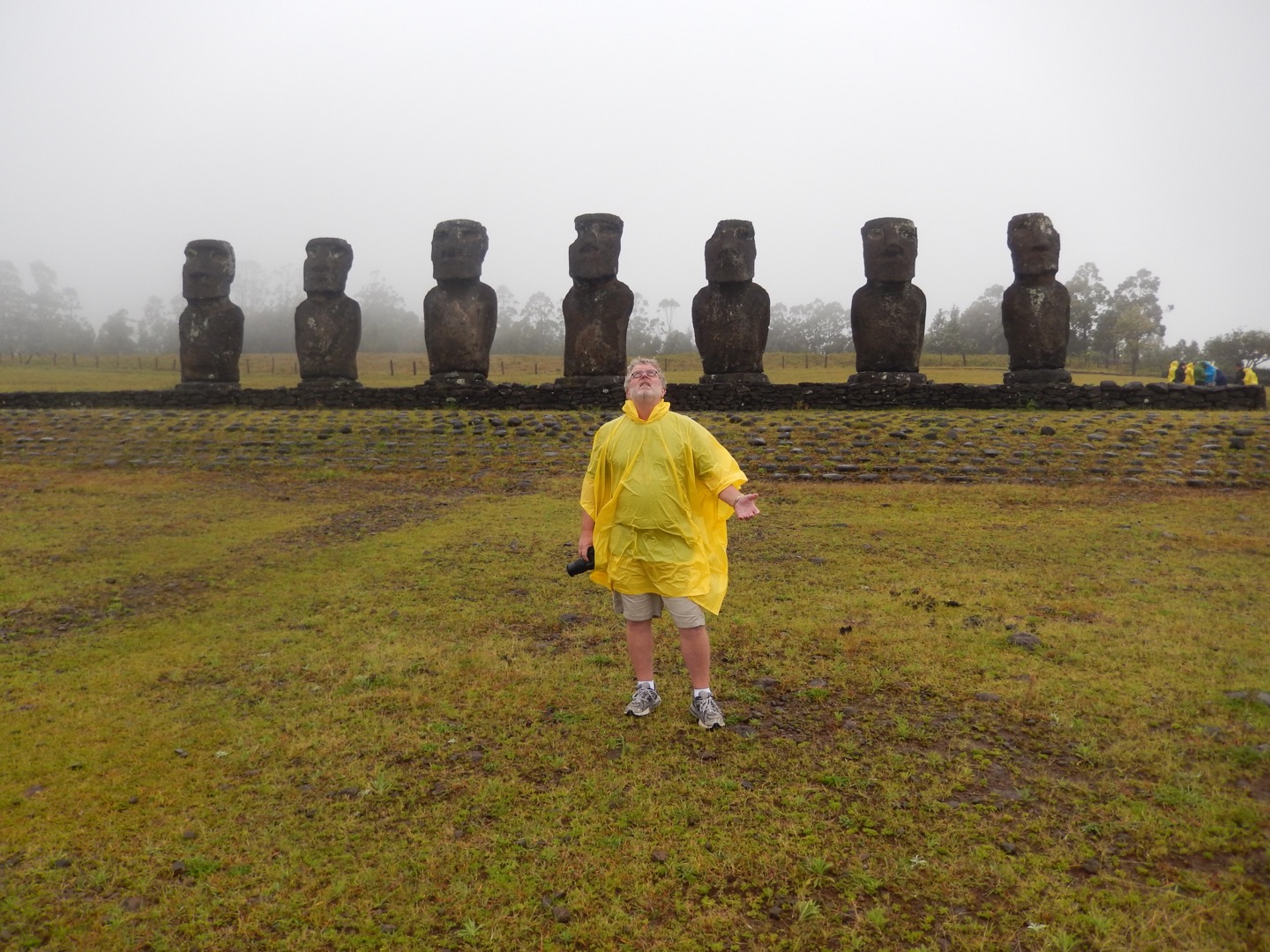
In Rapa Nui the weather is wildly unpredictable. In a mater of minutes it will go from toasty hot, to hurricane windy, followed by a torrential downpour. By the time you locate, unfold, and snap up your yellow plastic rain poncho, it’s toasty again.image

The food is also not good…at all. The bread is dense and tasteless, the ‘sweet potatoes’ green and unpleasant. But the people are warm and the hotel was nice. You very much feel the influence of Chile, the closest country.

But it’s ridiculously far from anything, so the only reason anyone travels here is to see the Moai.

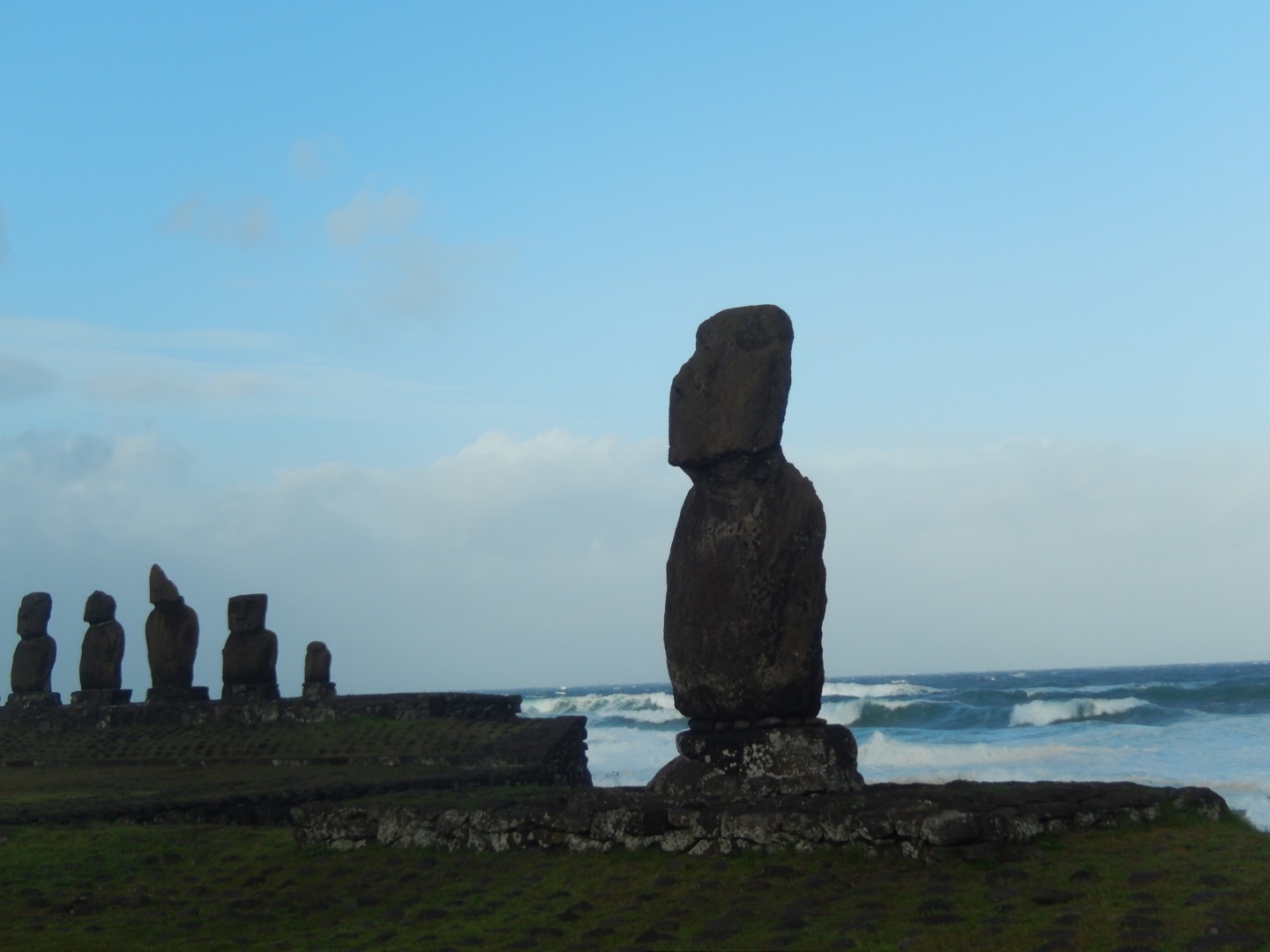
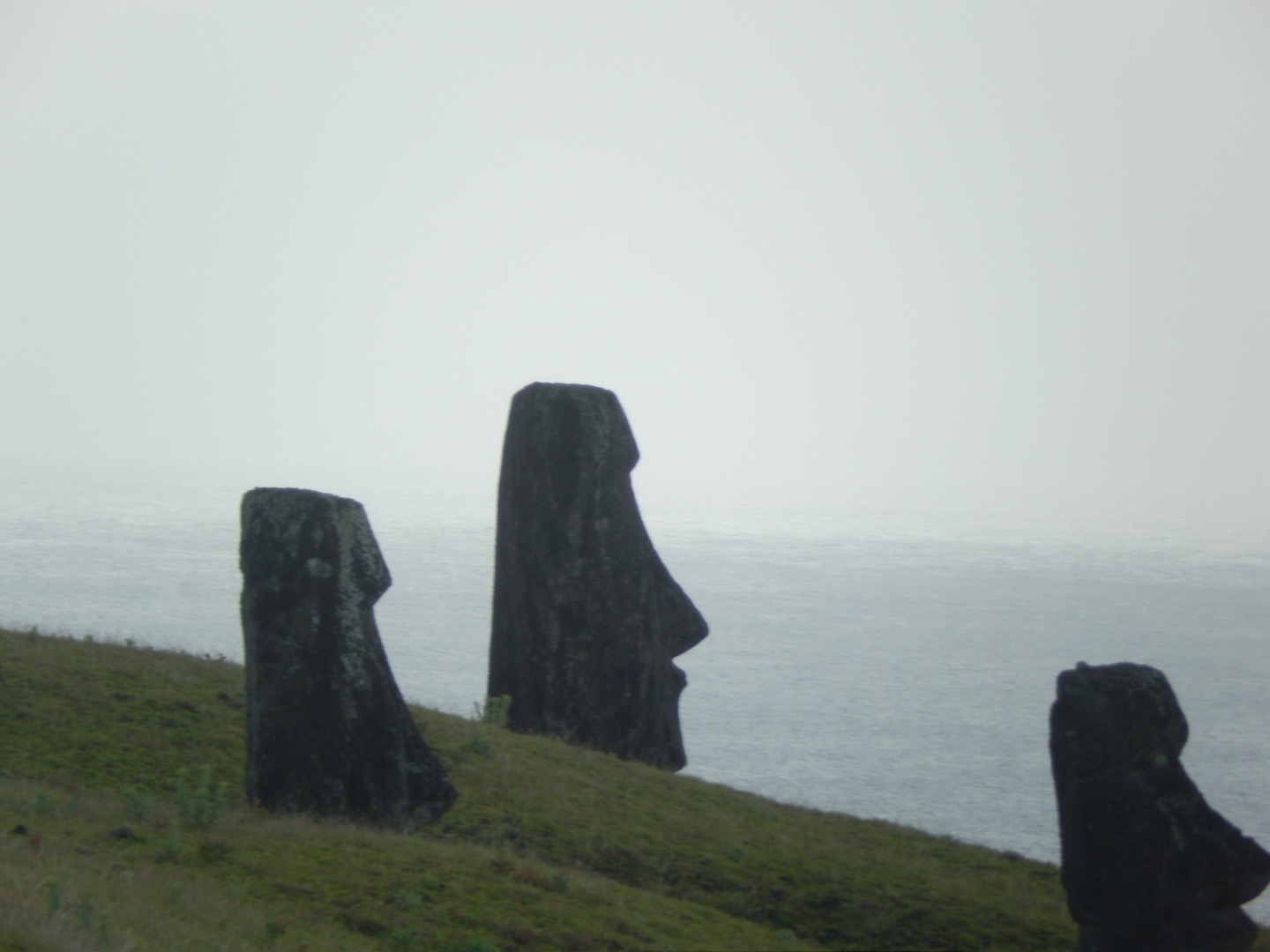
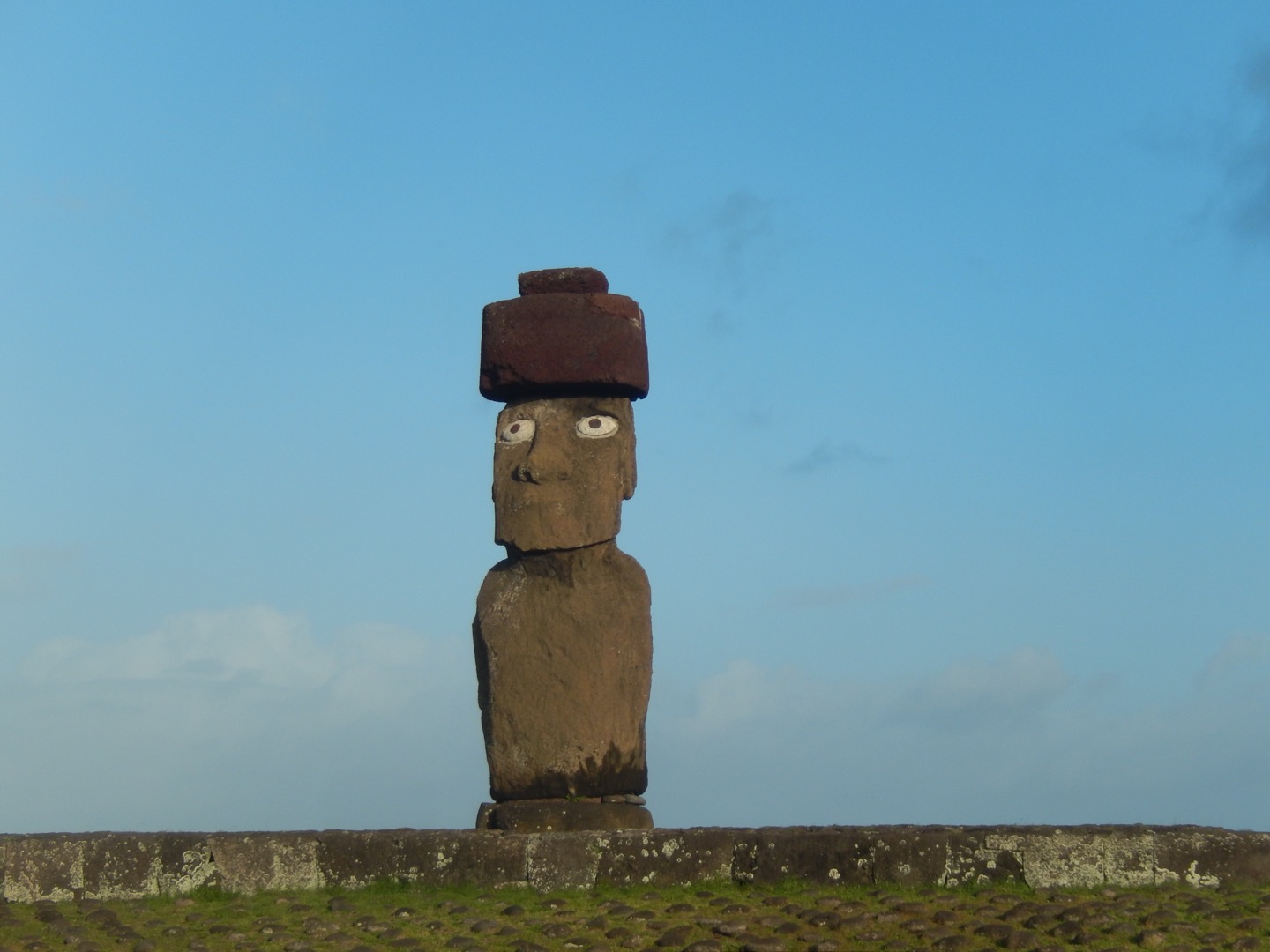
They do not disappoint. Huge, fierce, and majestic, they loom over the island like the deified protector Chiefs they represent.image

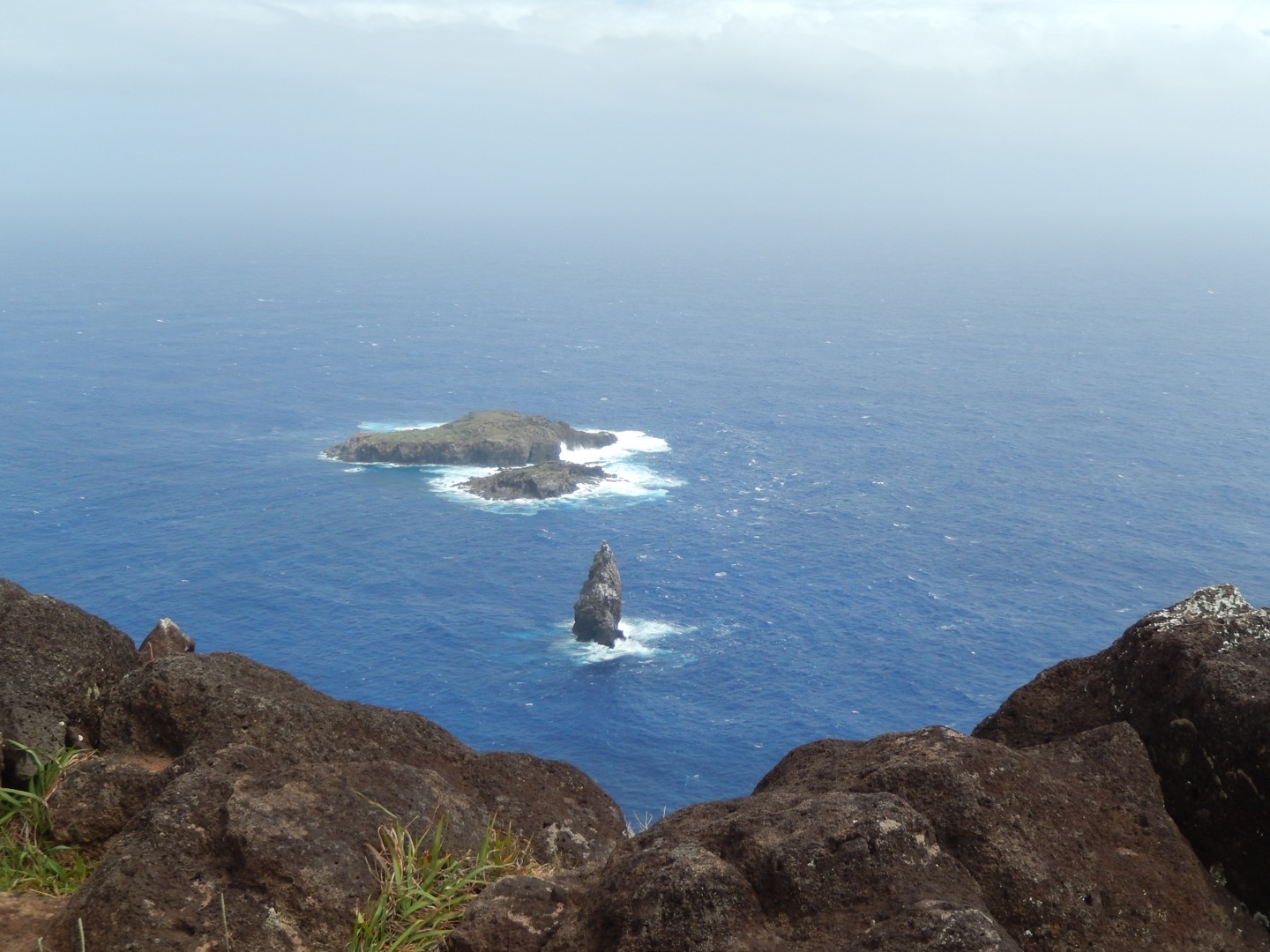
But first we visited Orongo, the ceremonial center of the bird man cult. This is a crazy story. At some point around the 16th century (dates here are pretty vague) there arose an annual competition for who would be chief of the island (6000 people live there now, but in those days it was more like 600. Each candidate would choose a champion who would live in these weird round coastal dwellings with an entrance so small they had to crawl in. When the sacred bird showed up, they had to swim to the bird island and fetch an egg the bird laid and bring it back.

                                      image

The candidate whose champion brought back the first egg became the birdman, or chief…until the next year when they did the whole thing again. Until the missionaries showed up and shut that pagan shit down.
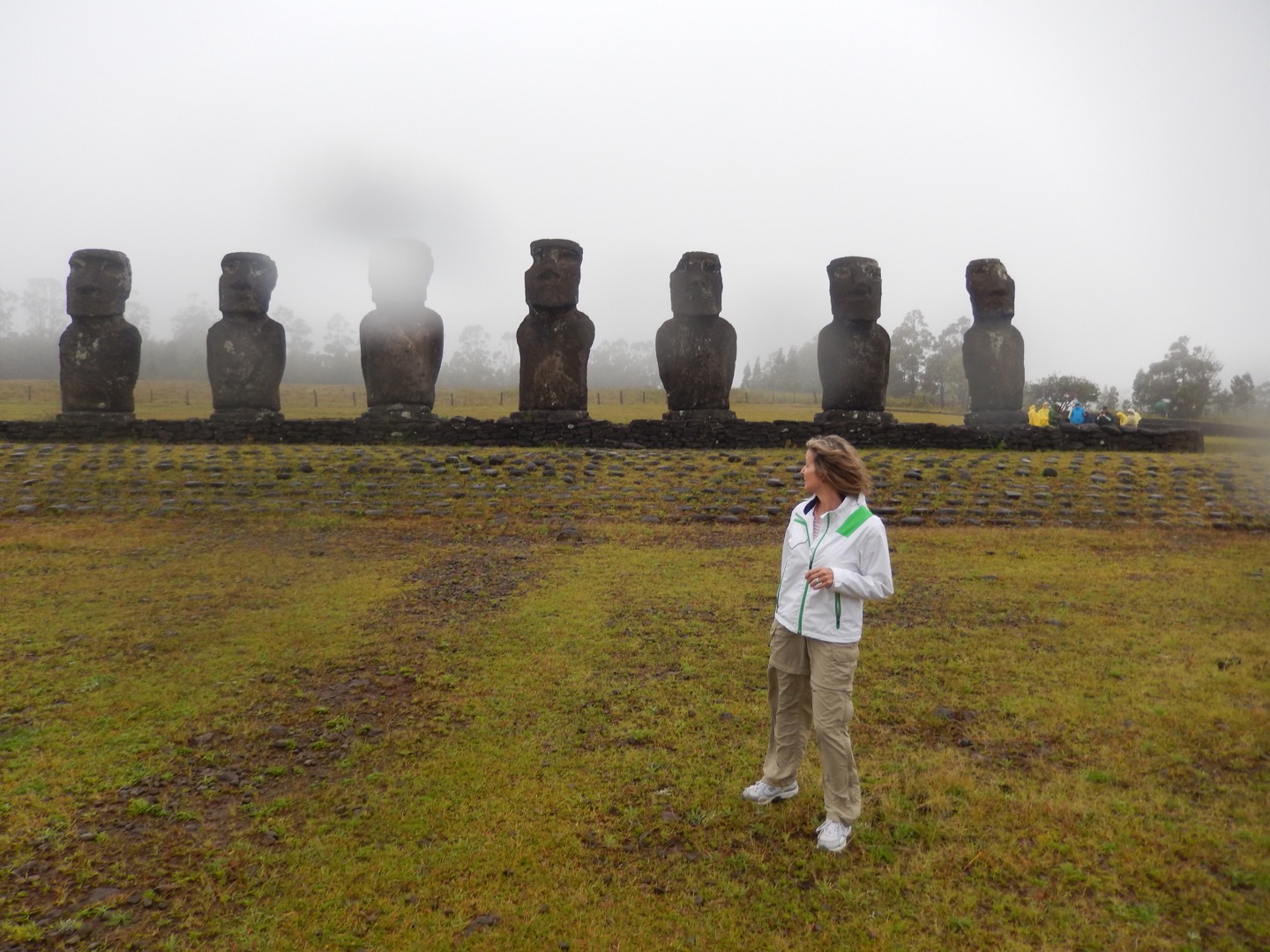
Then we go to Ahu Akivi to see the seven Moai. Among our guides are the three people who worked (with a crew of 40 locals) for 4 years to restore these tremendous edifices after they were toppled by the tsunami following the massive 1960 earthquake in Chile.

image

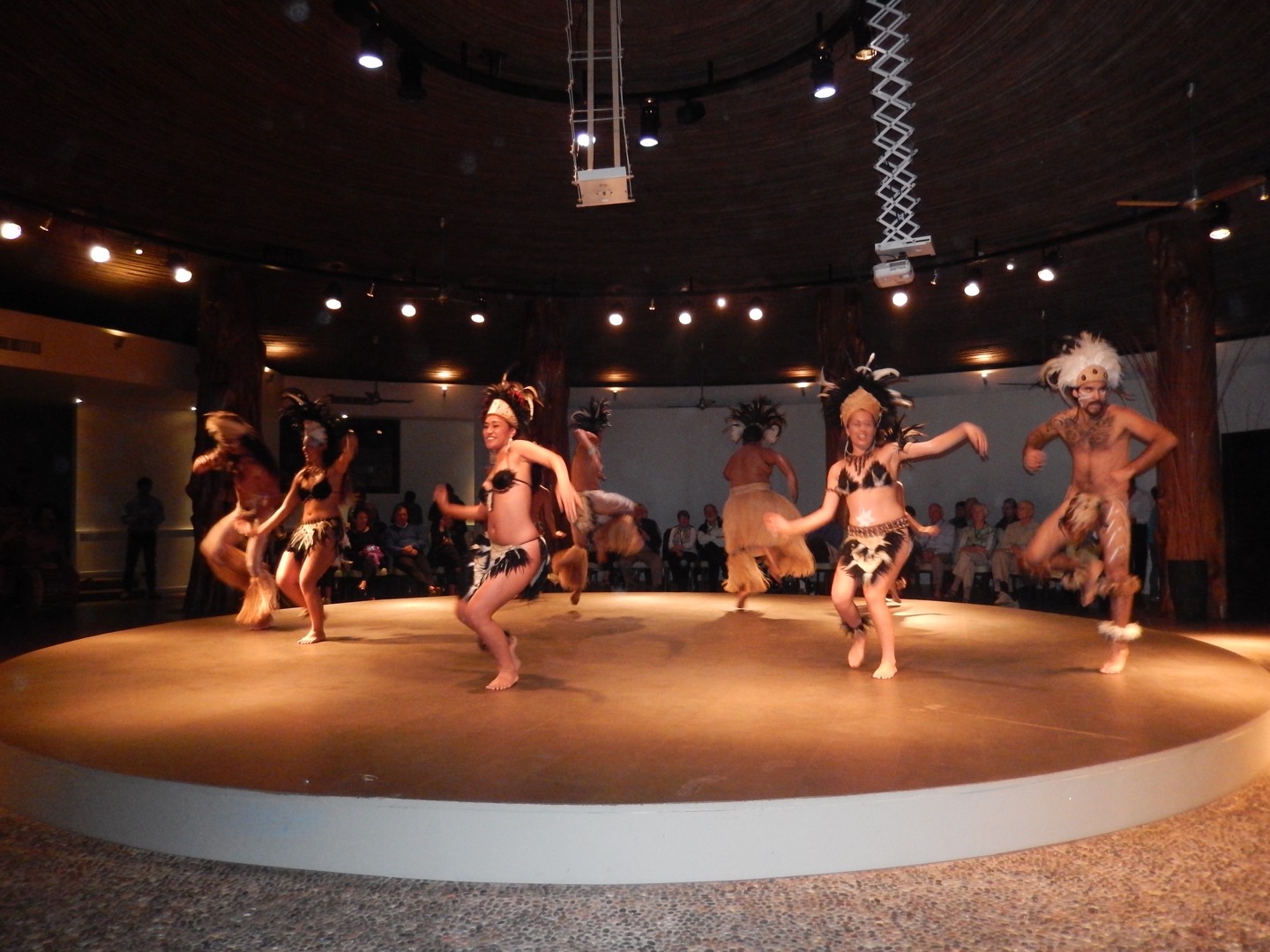
That evening we gather in a round house auditorium and listen to the 3 anthropologists as they discuss the struggles and triumphs of this restoration. This is followed by some fabulous local music and traditional dance.      image

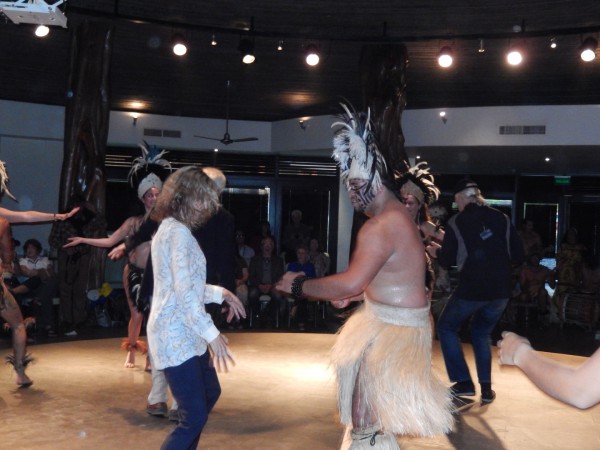
At the end of which we are both pulled onstage to participate.

image

I get the big guy, and you know how I love a big guy who can move.

image

The next day we visit two additional Moai sites, Ahu Tahai, which is overrun with good looking dogs and beautiful horses.image

The on to Rano quarry, where all those ‘heads’ are – which by the way they have found through excavation are 20-40 foot complete statues that were in the process of being dragged through the chute the Rapa Nui people used to transport them when they were abandoned and buried by time and wind with sediment. So apparently NOT the work of aliens.

image

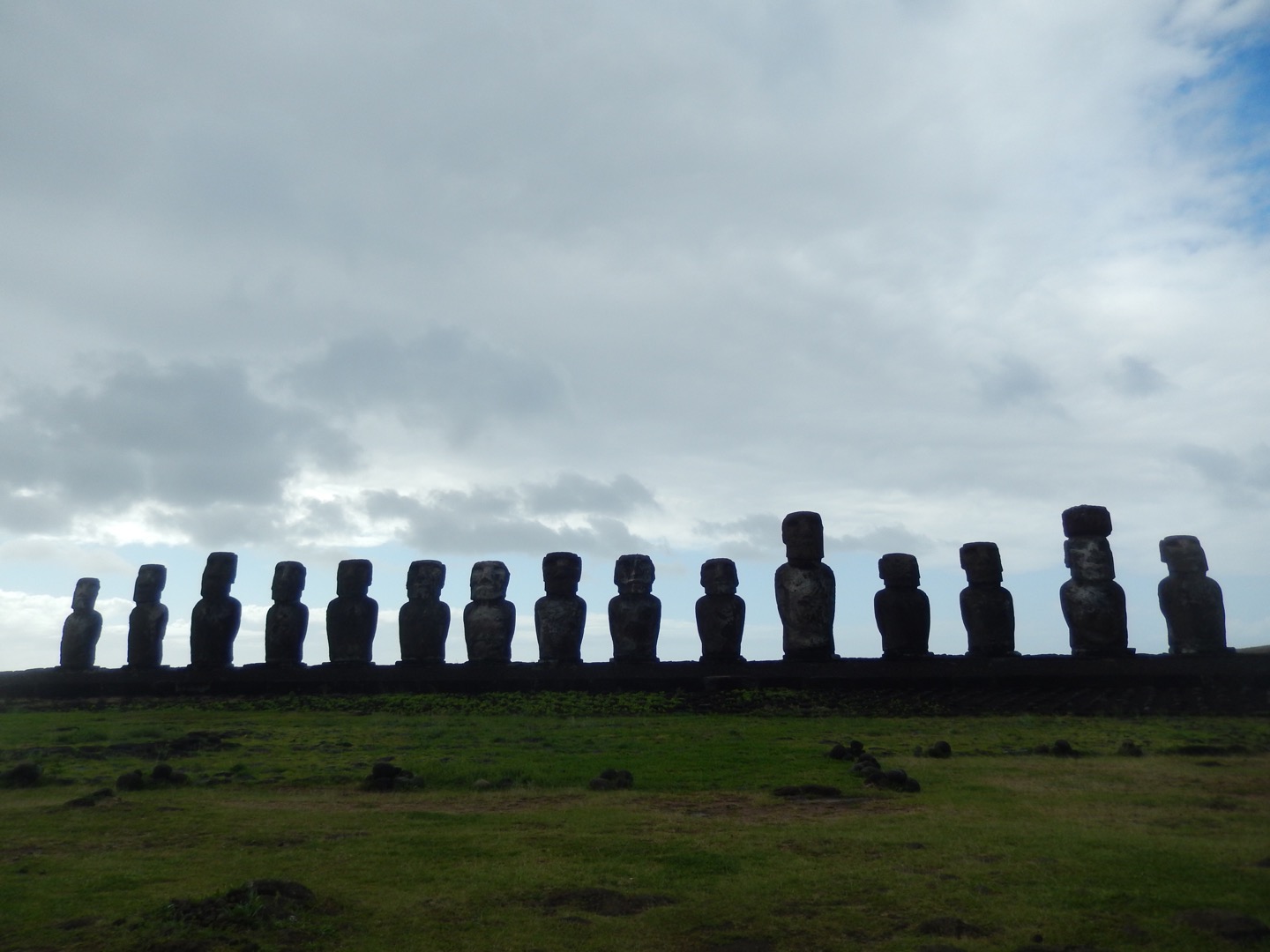
Finally we go to visit Ahu Tongariki – the altar of the fifteen Moai. It is huge and astounding and thrilling and creepy. image

On our flight the NatGeo resident historian gave us a lecture about the island, and I was surprised to learn the earliest ethnographic research of the island (still used today) was done by a woman, a British archaeologist named Katherine Routledge. She later developed paranoid schizophrenia and died in an insane asylum. I find my thoughts drifting to her many times in this wild and eerie place, it would be easy to lose a slippery grip on reality here.

image

Pumas and condors and snakes….oh my!

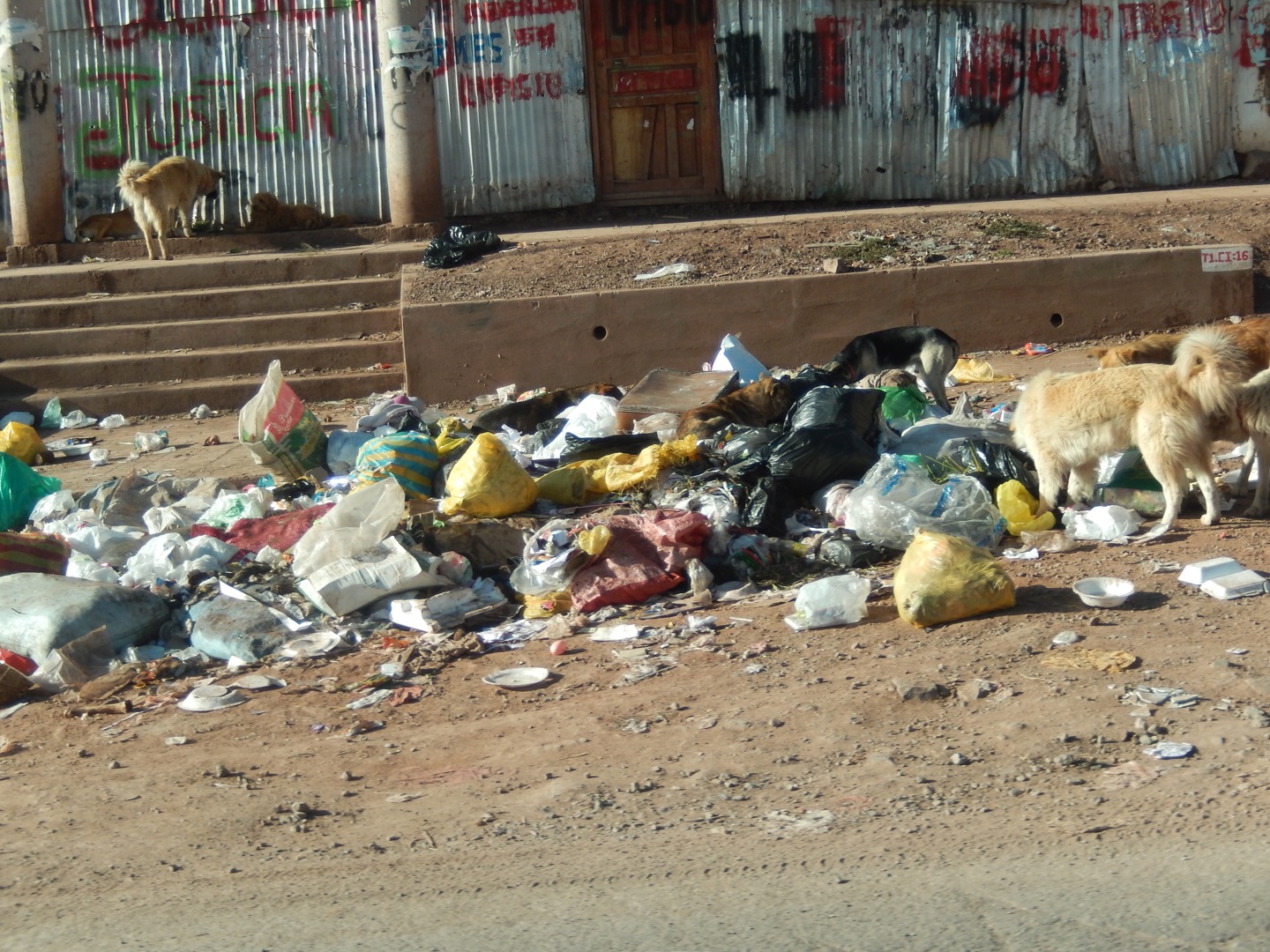
imageIn the morning, some of us take bus to Ollantaytambo in the sacred valley of the Incas. It’s a 2 hour drive through the Urubamba valley. Tiny villages with rustic, dirt floor homes and crumbling cinder block shops (many emblazoned with the name of political candidates, their version of campaigning) appear every fifteen minutes or so. The people in the countryside still dress much the same way as they have for centuries; black wide-brimmed hats and colorful shawls. Everyone has straight inky hair, usually thickly braided, and they don’t seem to ever go grey. There are scads of dogs in every conceivable breed, but no leashes or collars, they belong to everyone and no one. In one town the garbage collectors had been on strike, and the hounds were having a field day.image

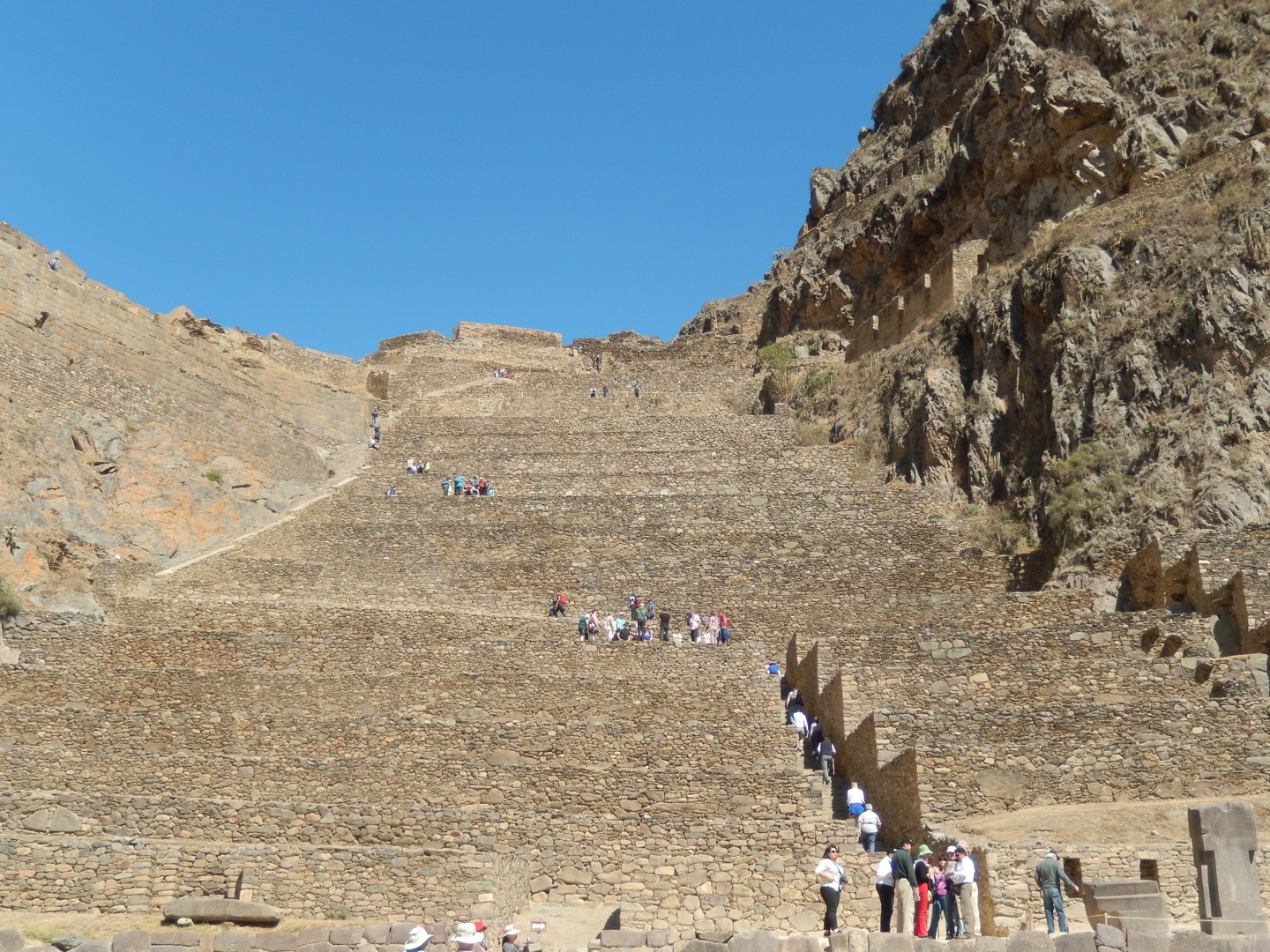
Ollantaytambo is the Incan version of Rocky Balboa’s stairs. At the base where we park is a marketplace with cheesy ‘authentic’, souvenirs that our guide confides are mostly from China. There are also a few restaurants that proudly serve Guinea pig (billboards advertising this dining experience complete with disturbingly cuddly rodents nearly winking at you can be found on the roadsides). These are tourist joints. Our guide insists that in the cities no one eats Guinea pig anymore, it is only eaten in the villages. I have no feelings about eating them one way or another, but sophisticated Peruvians seem put-off when you ask about it, as if a tourist came to the USA and assumed we all gnawed on squirrel because they saw it in some hillbilly movie.
We ascend the steps of Ollantaytambo slowly; wheezing and gasping, the altitude getting the best of us. Also there is the constant obstruction of other tourists…some ambitious grandmas struggling with walking sticks (these are sold at the cheesey marketplace – supply and demand!) creating gridlock.image

At the top it is impossible not to be awed by the tremendous undertaking of this fortress. Today’s guide has a lot more answers about the enigma of the Incans, although it soon becomes clear he is making a lot of shit up. The guy has brought a binder with him with Google earth photos he traced over that ‘prove’ that pretty much everything built by the Incans is in the shape of a puma or a condor or a snake (the sacred animals). After much squinting we all give up and give in and agree with him. Whatever – the guy can tell a story.

From there it is a short trip to the train station. We board the Hiram Bingham – named for the explorer who ‘discovered’ Machu Picchu, whom I will hear about endlessly while in Peru.
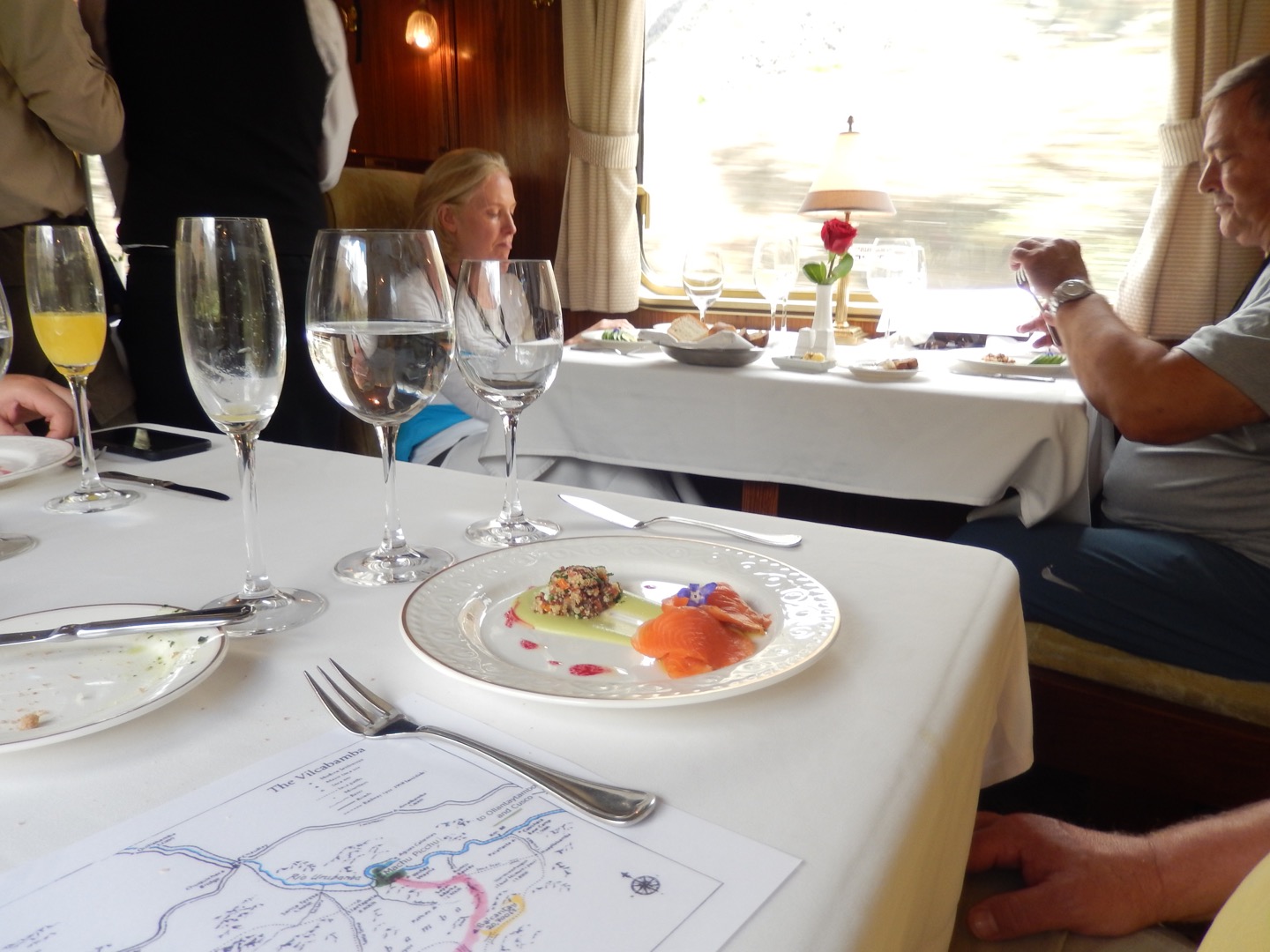
The train is luxurious; white tablecloths, fine china, tulip sconces, all wood paneling and brass. The curtains tied back at the windows sway with the rhythm of the tracks. We are served a lavish multi course lunch, and I feel like I’m in a Merchant-Ivory film.image

A NatGeo historian gives a brief lecture on Bingham, who discovered the Machu Picchu site (which had been swallowed up by the jungle) a little over one-hundred years ago. His first photo spread was (surprise!) in National Geographic, the publication that created a major tourist destination the Peruvian government has been forced in recent years to cap at 2500 visitors a day (although my guide confides the authorities play loose and fast with that number).

Arriving in Machu Picchu we are divided into 3 groups; one will go on a fairly rigorous hike to the sun gate, the second a ‘gentle walk’ and the third a brief tour of the Citadel before sitting down to tea. Kev and I opt for the hike. We end up in a group of 6, including Chris, the NatGeo photographer who is along to give us pointers. The folks in the group are mostly the same people that opted for the Incan stairs this morning.
NOTE :Since we’ve been on this group trip, I’ve noticed a small group of old dudes who dress in safari gear every day. I mean full on Ernest Hemingway. NONE of these men choose to hike. Nor did they visit Ollantaytambo (the day trips are optional). Apparently they need that gear for napping.
The men on the hike are either in khakis, or Tommy Bahama drinking shorts (Kevin) I am in yoga pants, and the only other woman on the hike is wearing lucky bootcut jeans with a long sleeve shirt and jacket (She is also the only smoker on the trip. Kevin who fights the habit, watches her longingly each time she ducks in an alcove and lights up).

image
I should add that it is 80 degrees and humid.

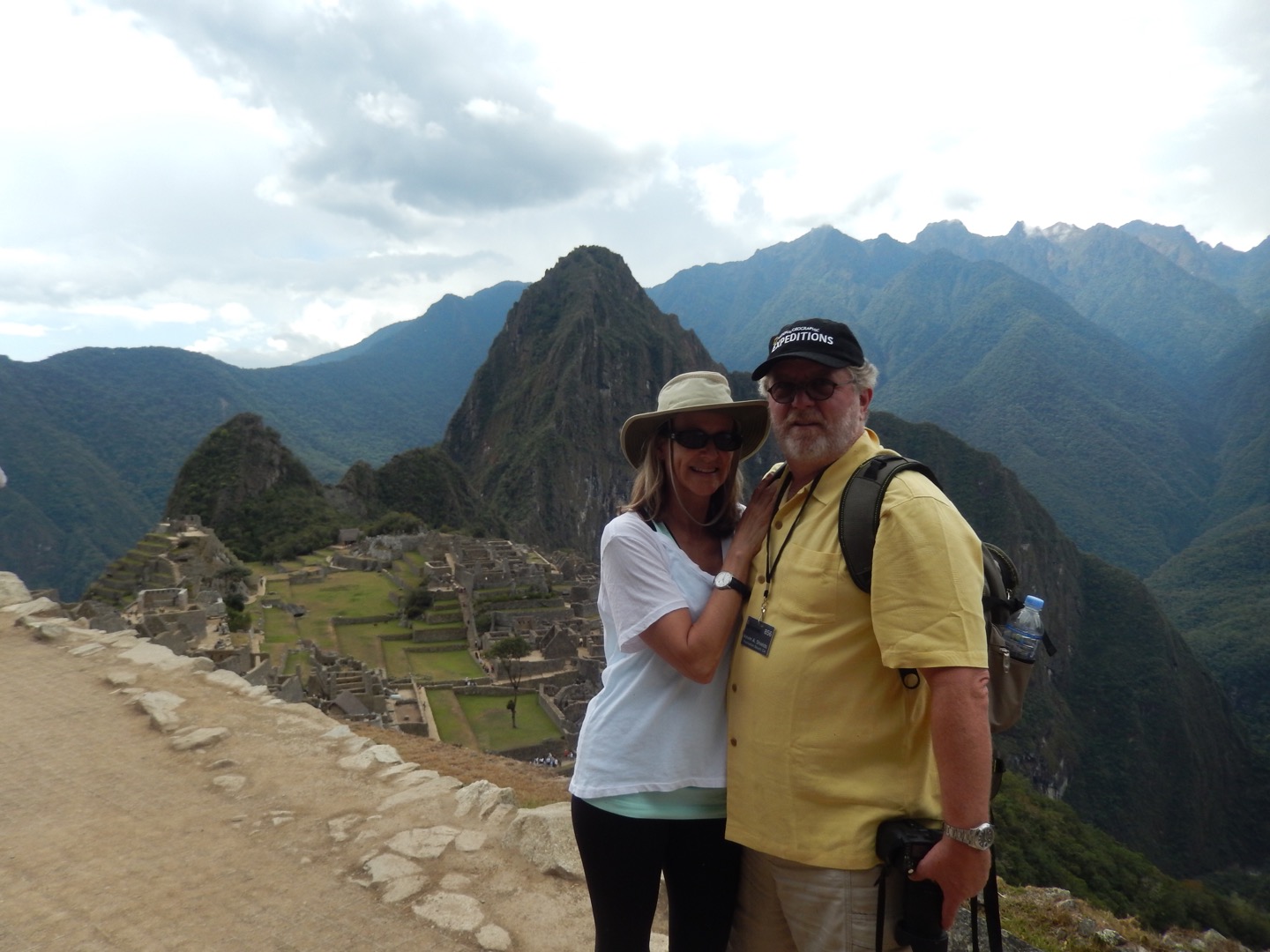
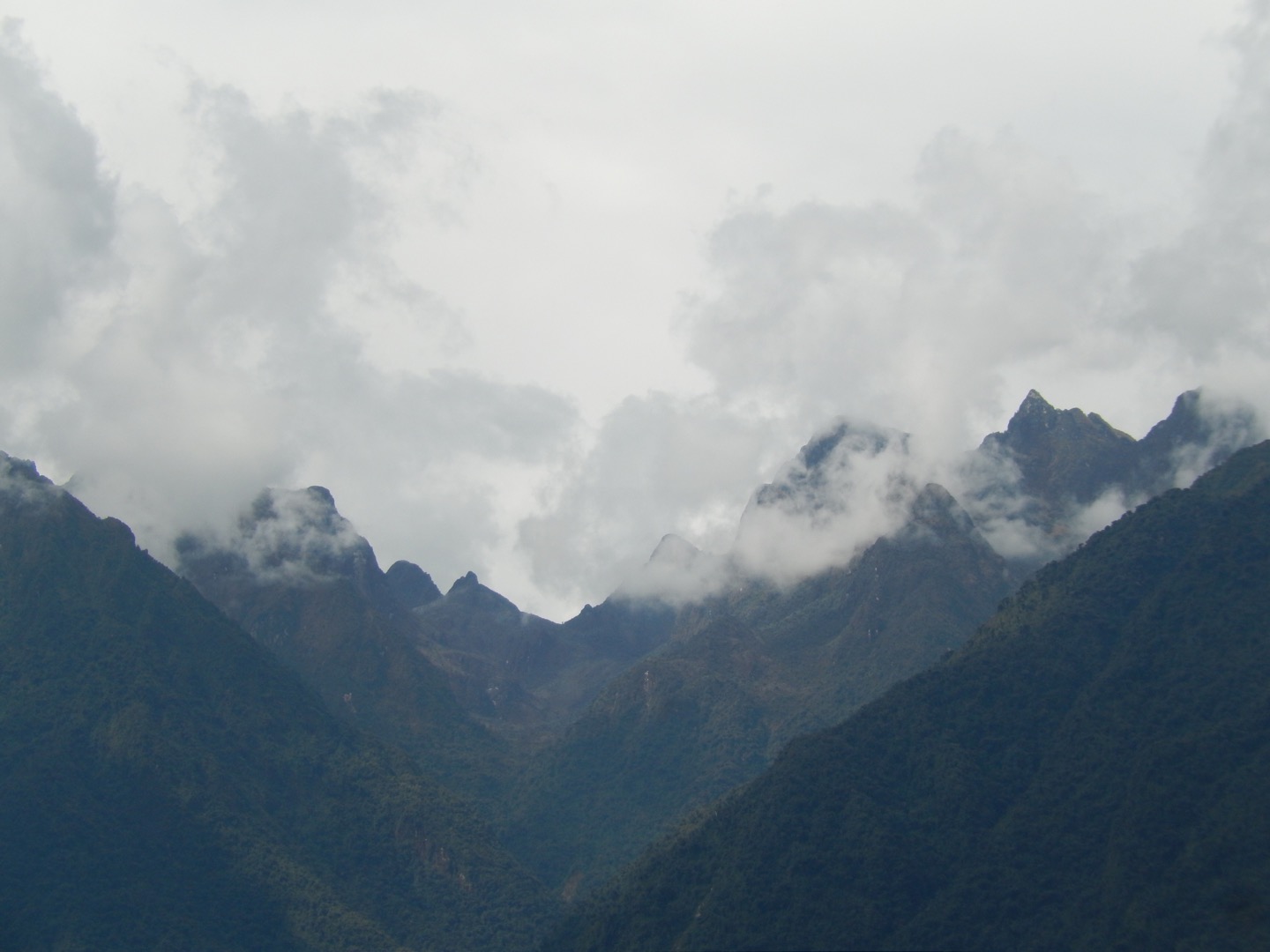
imageThe hike to the sun gate consists of miles of steep, stone steps winding around a mountain surrounded by lush green forest. As you rise up over the valley, you get an amazing perspective of Machu Picchu and encroaching jungle. It can be best described as something out of the original Jurassic park movie. Primitive and surreal.image
There are also bugs, and despite spraying ourselves liberally, we get bit up.image

We have just enough time for some reviving tea at the Sanctuary Lodge before boarding the Hiram Bingham back to Cusco. Everyone is in a celebratory mood and the bar car is jammed with pisco drinking and a Peruvian band that plays some traditional music before segueing into a cover of ‘Satisfaction,’ with the crowd yelling ‘I Can’t Get No..!’ and dancing in the aisle. Another fancy train multi-course dinner and we are back at the hotel where I scratch like a hound in my sleep till morning.

Cusco means Pisco

imageView from our room at hotel Miraflores in  Lima which we enjoyed for a matter of seconds before rushing down to the bus.

We depart for our early flight to Cusco. I’m a little nervous as everyone else has been taking altitude meds so they don’t get sick (Cusco is  11,000 feet) but I am allergic. As an alternative my doc gave me ginseng, but she’s as dubious about the herbs efficacy as I am.
After setting off every security bell in the airport with the multitude of artificial hips and knees in this troop, we board, and I am offered my first cup of coca tee, which is the local’s cure for altitude sickness. It’s made from the same plant from which cocaine is derived, pale and mild, like green tea. We fly over the snow capped Andes, and all I can think of is that movie about the Chilean soccer team that crashed there and ended up eating each other.
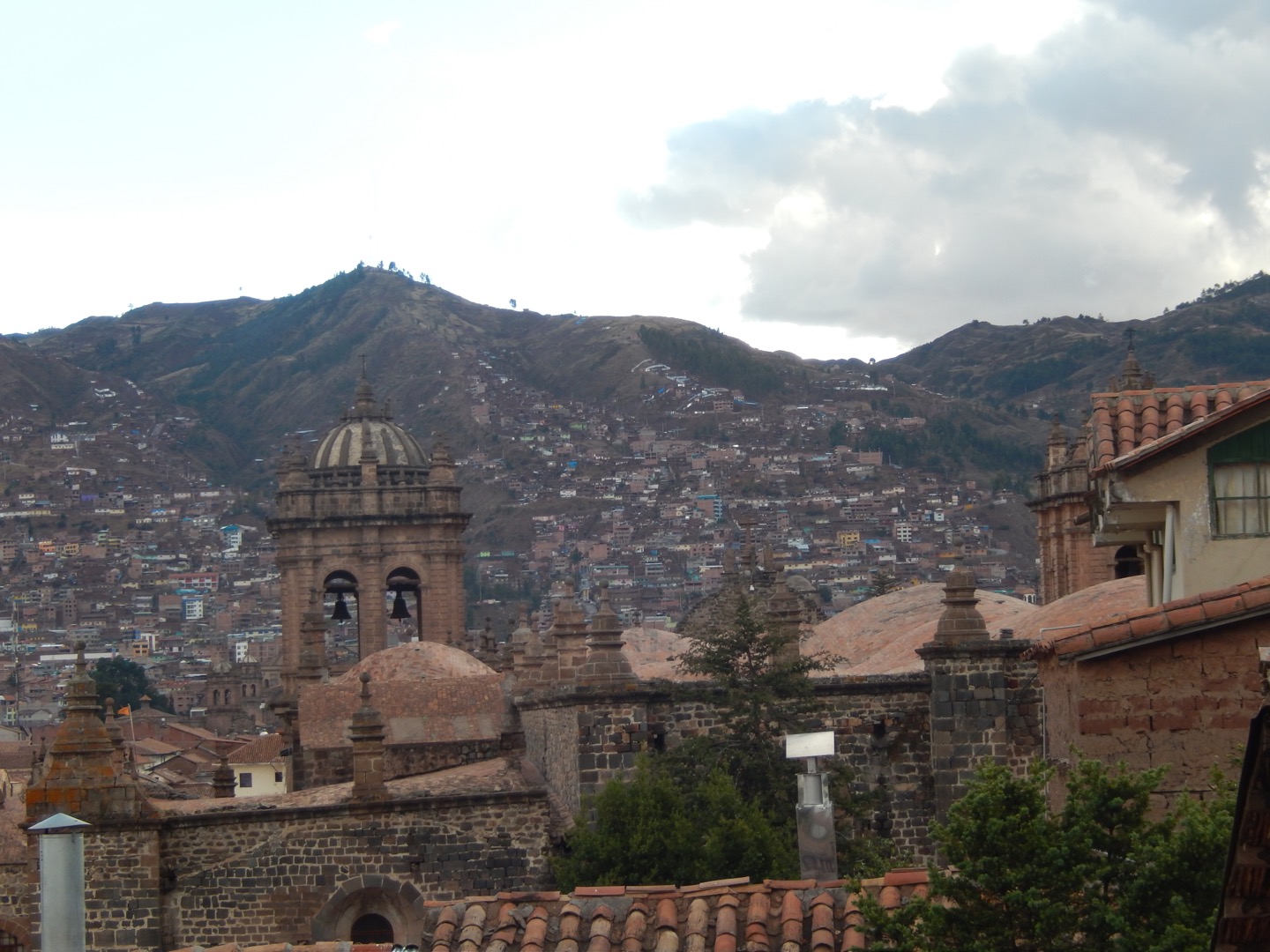
As soon as we land, we are whisked off to ‘Sacsayhuaman’ which when pronounced correctly sounds like ‘sexy woman.’  It is a cool archeological site with gigantic stone walls erected without mortar, the boulders painstakingly carved and smoothed to fit into each other at jigsaw angles.   image

Then head to the hotel Monasterio where we are greeted with more coca tea and pisco sours. We’d also been offered pisco sours when we arrived in Lima, and at the museum.  We will, in fact be offered pisco sours every place we go in Peru. They are sort of like a margarita but with the addition of egg white froth, like a Ramos fizz.

image

Hotel Monasterio is, as you would imagine, an old refurbished monastery…with the only unfortunate element being the tea servers are wearing tacky monks robes straight from Party City.
After a yummy buffet lunch that is both touristy (Caesar salad)  and Peruvian (variations on yucca and quinoa) we strap on our cameras and head out again for Korikancha, the temple of the sun and the moon, a stunning if incredibly crowded example of Incan architecture in the middle of the city. Think Peruvian Acropolis.

Following this we go to the massive cathedral built by the Spanish, which is filled with a curious blend of Peruvian filtered through Catholic artwork; a painting of the Virgin Mary holding Jesus’s hand while hugely pregnant (because in Peru you never have just one child), a crucifix upon which Christ wears a colorful Inca warrior ‘skirt’ rather than a loincloth, and a painting of the last supper in which the platter in front of Jesus and the apostles is piled with roasted, pink Guinea pig. You will need to use your imagination, as photography is forbidden there.
We meander back to the hotel through the town square packed with street vendors and women in traditional Peruvian garb carrying baby llamas so you will take photos with them. It is a very homogeneous culture – everybody who isn’t a tourist is roughly the same size (short) and coloring (brown). I have rarely felt so tall or so white.
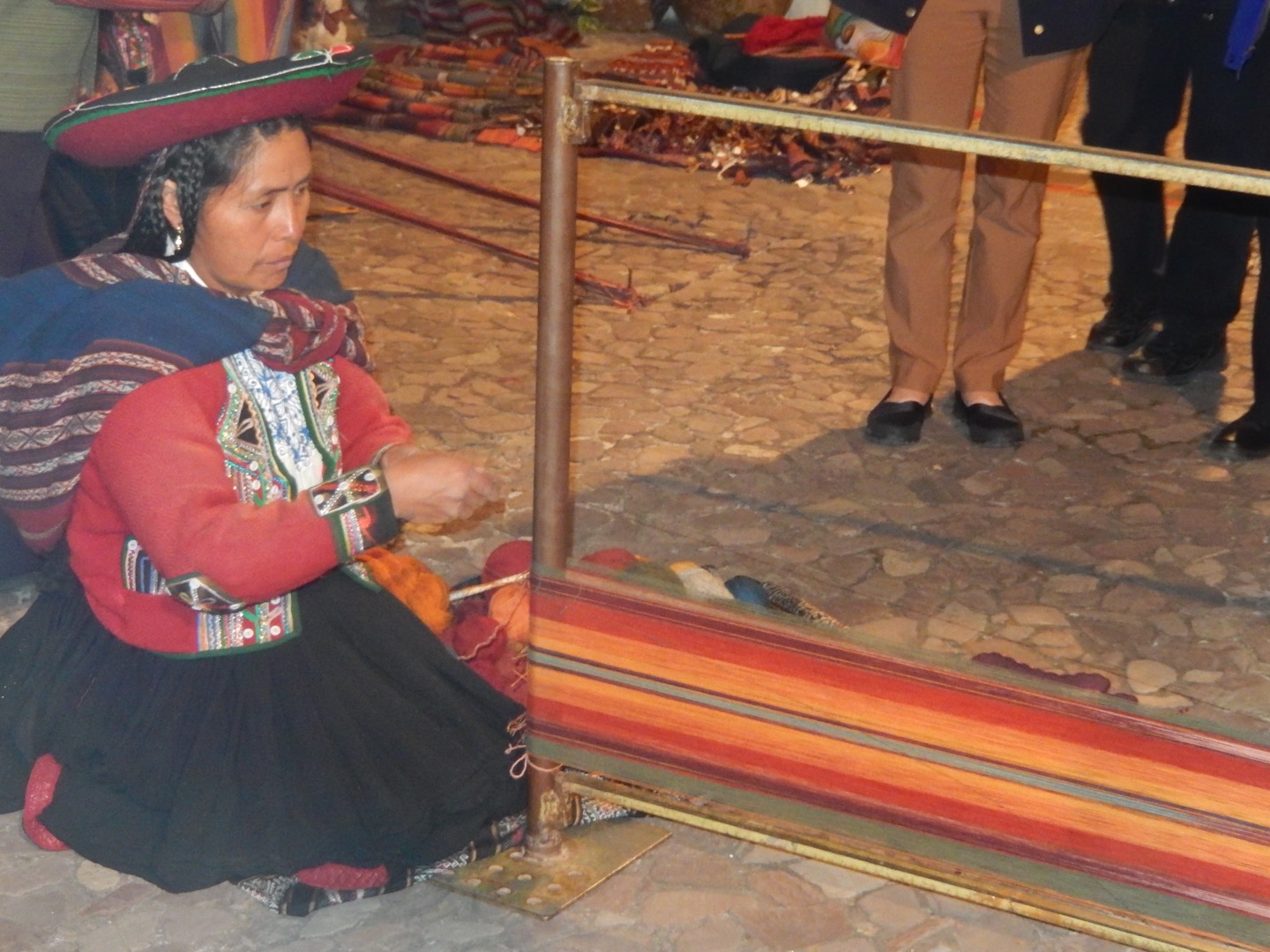
In the evening we head to the courtyard of the Pre-Columbian art museum to watch a demonstration of local women weavers whose indigenous textiles are supported by the National Geographic society.(where we are offered pisco sours)

imageThe skill and artistry is pretty astounding. I buy an alpaca blanket created by a weaver named Adela. As she walks me past her cadre to the register, I think about my own artistic labor being passed around back home – what it means to work intensively for years, only to put your novel, or your weaving, out there for strangers to judge its value, and maybe buy it, but (more often) not. Adela stands beside me, her blanket clutched to her chest, proud to have sold it, but still so protective of it.
Dinner back at the hotel is delicious; pumpkin soup, and quinoa ravioli and gooseberry ice cream. We compare stories with our fellow travelers to see whose guide spun the most entertaining tales. Since the Incans had no (surviving) written language, there is a pretty free hand when it comes to the details about hidden treasure and human sacrifices – and they know what people want to hear.